


If your water bill just jumped like a mullet in the Tolomato River, you’re not alone. Across Jacksonville, St. Augustine, St. Johns County, and the surrounding neighborhoods, we see it all the time: a normal bill suddenly doubles or triples. Nine times out of ten, the culprit isn’t a dramatic burst pipe—it’s an “invisible” leak. These sneaky water-wasters hide under slabs, seep quietly through toilet flappers, trickle from irrigation valves, or discharge from a water heater relief valve straight into a drain where no one looks.
As a local, family-run plumbing team serving Northeast Florida, we’ve tracked down thousands of these ghosts. This guide is our no-nonsense playbook to help you figure out what’s going on, what you can check yourself, when to call in a pro, and how to avoid reruns of the same problem. Grab a notepad, a flashlight, and maybe a bottle of food coloring—you’re about to win back your water bill.
Why “Invisible” Leaks Love Northeast Florida
Our region’s homes are uniquely set up for stealthy leaks. Why?
- Slab foundations are common here. Supply lines often run under the slab. If one pinholes or a fitting weeps, the water can disappear into sand or the soil void without ever showing up on your floors.
- Sandy soils and high water tables make it tricky. Wet spots can drain quickly or blend with natural ground moisture, so you won’t always see standing water outside.
- Irrigation systems are everywhere. With multiple zones, buried lateral lines, and heads that get clipped by mowers, small breaks can run unnoticed, especially if they only leak when the system is pressurized.
- Warm, humid climate accelerates pipe fatigue for older materials (think brittle CPVC in hot attics) and can mask small leaks with normal condensation.
- Pools and auto-fill valves are common. Evaporation is real, but so are subtle pool and spa leaks that push usage up while the water level looks “normal.”
Invisible leaks love places you don’t look and times you’re not watching—like 2 a.m. when your irrigation runs or your toilet silently cycles every few minutes.
The Usual Suspects (Ranked by “Stealth Factor”)
Here’s where we most often find the ghosts:
- Toilets: Worn flappers or misadjusted fill valves. They can leak thousands of gallons a month without a sound.
- Irrigation Systems: Cracked lateral lines, stuck valves, or broken heads. Often only leaks when the zone is on, so it hides during the day.
- Under-Slab Leaks: Warm floors, faint hissing, or higher-than-normal usage with no visible water.
- Service Line (Meter to House): A slow underground leak that never breaks surface or just creates a greener strip of grass.
- Water Heater & T&P Relief Valve: Discharging to a drain or pan—easy to miss. Expansion tanks that fail can also cause relief valve weeping.
- Appliances: Fridge ice-maker lines, dishwashers, washing machine hoses, and RO systems. Small drips, big bills.
- Pools & Spas: Auto-fill masking a leak, or a filter backwash valve weeping to waste.
- Outdoor Hose Bibbs & Hidden Manifold Leaks: Drips at vacuum breakers or hidden manifold boxes feeding garden/side-yard lines.
We’ll walk you through how to check each—and how to isolate them step-by-step.
Step 1: The 10-Minute Water Meter Test (Your Fast Reality Check)
Before you crawl the attic or dig up the yard, confirm whether you’re actually using water when the house is “off.”
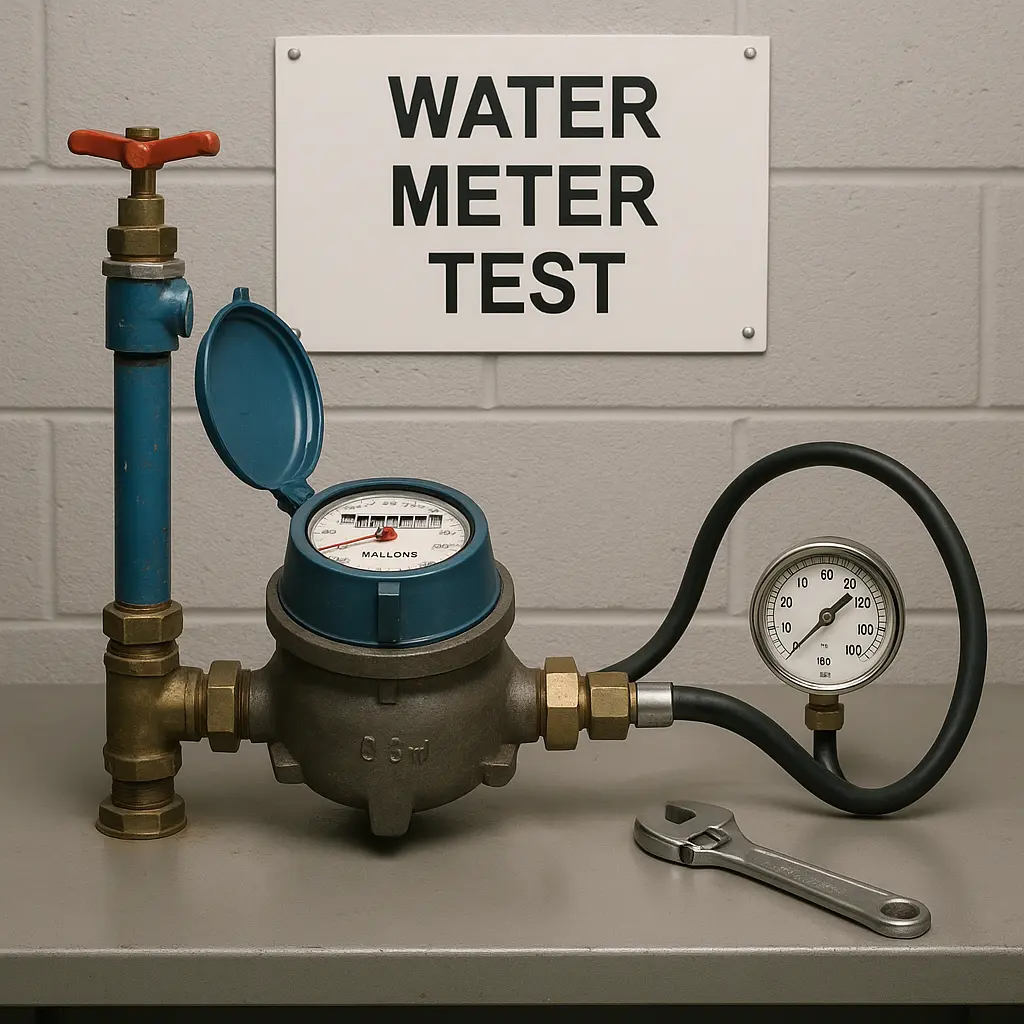
- Turn off all water in the home. No faucets, no laundry, dishwasher off, ice-maker paused, irrigation off, and make sure no one’s showering.
- Find your meter. In Northeast Florida, it’s typically near the street in a ground box. Lift the lid carefully.
- Locate the flow indicator. Most meters have a small dial or triangle that spins with even tiny flows.
- Watch for movement. If the flow indicator spins while everything is off, you’ve got a continuous leak.
- Record the reading. Write down the digits. Wait ten minutes with everything off. If the number changes, even slightly, that’s your proof.
- Pro Tip: If your home has a whole-house shutoff, close it. If the meter stops moving, the leak is in your house or downstream of that shutoff. If it still moves, the leak is between the meter and the shutoff—usually your service line.
This simple test saves hours of guesswork and gives you a plan: isolate and conquer.
Step 2: The Overnight “No-Use” Test (Catches Intermittent Leaks)
Some leaks are shy—they only show up when a toilet refills or your irrigation runs. Try this:
- Pick a night when no one will run water after, say, 10 p.m.
- Turn off ice-makers and any auto-fills (pool if possible).
- Make a note of the meter reading right before bed.
- Check again first thing in the morning, before anyone uses water.
If the reading increased, you’ve got an intermittent leak (toilet cycling, irrigation valve weeping, or something using water on a schedule).
Step 3: Isolate the House from the Yard (Narrow the Suspects)
- Main shutoff near the house: Close it, then check the meter.
- Meter stops: The leak is inside the house (or attached fixtures like water heater, fridge, etc.).
- Meter keeps spinning: The leak is outside—service line, irrigation, or pool fill.
- Irrigation shutoff or backflow valve: If you have a dedicated shutoff for irrigation, close it and re-check the meter.
- Stops now? The leak is in the irrigation system.
- Still spinning? You’ve likely got a service line leak or pool-related issue.
Break the system into chunks and test one chunk at a time. This simple isolation routine solves most mysteries in under an hour.
Toilets: Silent Water Hogs and the Cheapest Fix on Earth
Toilets are the single most common source of invisible leaks. Here’s how to diagnose:
- Dye Test: Put 8–10 drops of food coloring in the tank (not the bowl). Wait 10–15 minutes without flushing. If color appears in the bowl, the flapper isn’t sealing.
- Listen for refilling: If you hear periodic hissing or a short refill every few minutes, water is escaping from the tank. The fill valve might be topping off due to a leak past the flapper or through the flush valve seat.
- Check water level: If water is dribbling into the overflow tube, the fill valve is set too high or misadjusted.
- Jiggle Test: If gently pressing on the flapper stops water noise, it’s worn or warped.
Fixes:
- Replace the flapper (often $5–$20). Bring the old one to match the brand and size.
- Adjust or replace the fill valve (usually $15–$30).
- Clean mineral buildup on the flapper seat with a non-scratch pad.
A toilet leak can add thousands of gallons a month. This is the first, easiest, and cheapest fix to try.
Irrigation Systems: Leaks That Hide in Plain Sight
Northeast Florida lawns lean on irrigation, and that means lots of underground piping and valves. Common issues:
- Stuck zone valve that weeps water even when off.
- Cracked lateral line from roots or mower damage.
- Broken sprinkler head that dribbles when the system pressurizes.
- Leaking backflow preventer at the side yard.
How to check:
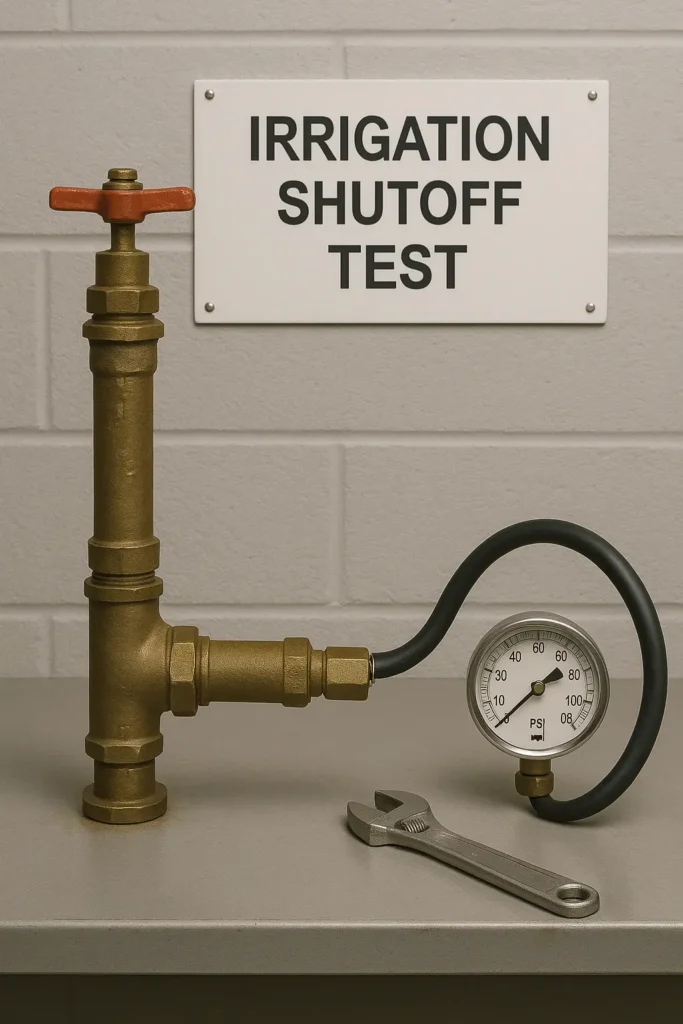
- Find the irrigation shutoff and close it. Re-run the meter test. If the meter stops, your irrigation is the culprit.
- Turn zones on one at a time and walk the yard. Listen for hissing. Look for soft spots, lush green stripes, or puddles that weren’t there yesterday.
- Inspect the valve box. If it’s full of water or always damp with no recent rain, you may have a weeping solenoid or a cracked fitting.
- Watch the backflow preventer for slow leaks at unions or test cocks.
Fixes:
- Replace broken heads and nozzles, straighten tilted heads, and repair lateral line breaks.
- If a valve weeps, replace the solenoid or the valve diaphragm.
- Keep irrigation on a reasonable schedule—overwatering masks leaks and costs twice: water + repairs later.
Slab Leaks: The Sneaky Underfoot Problem
A slab leak is water escaping from a pressurized line beneath your concrete foundation. Signs include:
- Warm floor areas (if it’s a hot water line leaking).
- Hissing near walls or floors when the house is QUIET.
- Mildew smell or unexplained dampness in specific rooms.
- High bill with no visible leaks and toilets passing dye tests.
Why they happen here:
- Minor foundation settling, abrasion of copper lines, corrosion over time, or stressed fittings in older homes.
- High water pressure and thermal expansion can accelerate wear on lines and joints.
What pros do:
- Acoustic leak detection: Sensitive mics “listen” for the leak under the slab.
- Thermal imaging: Finds warm anomalies from hot water leaks.
- Tracer gas (nitrogen/hydrogen mix) and sniffers to pinpoint the exact spot.
- Static pressure testing: Confirms which branch is leaking before opening floors.
Repair options:
- Spot repair: Open slab and fix the single failure.
- Reroute: Abandon the leaking under-slab section and run new lines overhead or through walls/attic.
- Repiping: If multiple failures or very old piping, a full repipe might be cost-effective long-term.
Service Line Leaks: Between Meter and House
If the meter spins with the house valve closed, the leak sits between the meter and your main shutoff. In Northeast Florida:
- Sandy soil can quickly “drink” the leak so you never see pooling.
- You might spot a greener strip of grass or feel cool dampness along the path from the street to the house.
- Sometimes you’ll notice a faint whoosh at the meter box.
What to do:
- Mark the line path (often straight from meter to the nearest exterior wall entry).
- A plumber can pinpoint with acoustic gear or tracer gas and make a localized repair.
- If the line is older or shows multiple issues, replacement with modern materials can save money down the road.
Water Heaters: The T&P Valve and Expansion Tank Trap
Two big gotchas:
- Temperature & Pressure (T&P) Relief Valve: This safety valve opens if pressure or temperature gets too high. Many discharge into a drain or to the exterior, so homeowners never see the water. If your bill is up, check the T&P outlet for signs of intermittent discharge.
- Expansion Tank: On closed systems (often when a pressure regulator or check valve is present), thermal expansion from your water heater needs a cushion. A failed or waterlogged expansion tank can cause pressure spikes and make your T&P weep.
How to check:
- Touch the expansion tank: if the entire tank feels full of water and heavy, it’s likely failed.
- Put a cup under the T&P outlet or tape a small bag to collect drips for 24 hours—any water means it’s opening.
Fixes:
- Replace a failed expansion tank and set the air charge to match system pressure.
- If the T&P is opening due to high pressure, install or service a pressure reducing valve (PRV) and confirm system pressures (aim ~55–65 psi in most homes).
Appliances & Fixtures: The Drips That Add Up
- Refrigerators/Icemakers: Plastic saddle-valve feeds are notorious. Inspect the line and floor behind the fridge.
- Dishwashers: Look for moisture or swelling in adjacent cabinetry. Check the air gap (if present) for trickle.
- Washing Machines: Old rubber hoses can bulge and drip. Upgrade to braided stainless hoses and check shutoff valves for weeping.
- Under-Sink RO Systems: Small drain line leaks can go unnoticed while constantly wasting water.
Pro Tip: Put a dry paper towel under suspect valves/hoses. Check back in a day—any damp rings are a giveaway.
Pools & Spas: Is It Evaporation or a Leak?
Florida heat can evaporate water fast, but leaks will outrun normal loss. Try the Bucket Test:
- Fill a bucket with pool water and place it on a step so water levels inside and outside start equal.
- Mark both levels. After 24–48 hours (with auto-fill off), compare.
- If the pool level drops more than the bucket, you likely have a leak.
Also check:
- Auto-fill valves masking a leak by constantly topping off.
- Backwash valve on the filter (multiport valves can leak to waste).
- Plumbing lines to equipment—look for damp soil near buried suction/return lines.
Not a Plumbing Leak: HVAC Condensate & Roof Intruders
Sometimes the “leak” isn’t plumbing:
- HVAC condensate lines can clog and overflow, especially with algae growth. That’s not metered water usage, but it can cause damage and confusion.
- Dehumidifiers and attic air handlers can also create puddles.
- Roof or window leaks during storms can mimic plumbing failures.
If your water bill is high, it’s metered water. These issues won’t move the meter, so use the meter test to rule them out.
Handy Homeowner Tools (And How to Use Them)
- Food coloring for toilet dye tests.
- Water pressure gauge (attach to a hose bib): Test static pressure. We like 55–65 psi for most homes. Over 80 psi? Install or service a PRV.
- Smart leak sensors: Battery sensors under sinks, behind toilets, and near the water heater can alert you to drips.
- Whole-home monitors: Some systems clamp on your main line and “learn” usage patterns to notify you of continuous flow or unusual activity.
- Moisture meter: Useful around baseboards, cabinets, and suspected areas.
- Flashlight & paper towels: Simple, effective, and cheap.
How Pros Pinpoint Invisible Leaks (What We Bring to the Door)
When DIY checks hit a wall, professional tools speed up resolution:
- Acoustic leak detection: Pinpoints pressurized leaks under slabs or in walls by listening for the leak’s “signature.”
- Thermal imaging: Finds hot-water anomalies without opening walls.
- Tracer gas (nitrogen/hydrogen): Non-toxic, superb for locating exact leak points when sound is muffled.
- Endoscopic cameras/borescopes: Peek into tight spaces.
- Static & dynamic pressure testing: Confirms which branch is leaking, isolates circuits, and validates repairs before we close things up.
- Line tracing: Locates buried service lines and irrigation laterals to minimize digging.
Faster diagnosis means smaller holes, less mess, and lower total cost.
Water Pressure & Thermal Expansion: Quiet Pipe Killers
High pressure strains fittings and accelerates small weeps into big problems. In our region, pressure at the meter can ride high depending on the neighborhood. Test it:
- Screw a cheap pressure gauge on an outside hose bib.
- Check static pressure (no water running). If it’s above 75–80 psi, consider a PRV.
- Turn on hot water, then shut it. If pressure spikes afterward, you may need a properly charged expansion tank to absorb thermal expansion.
Benefits of keeping pressure in range:
- Fewer leaks, quieter pipes, longer appliance life, and more predictable bills.
Hard Water, Corrosion, and Aging Materials
While Northeast Florida’s water varies, mineral content and chlorine can still take a toll:
- Copper pinholes can develop over time, especially at high velocity elbows or where water chemistry stresses the pipe.
- CPVC brittleness in hot attics is common in older installs—tiny stress cracks can leak intermittently.
- Galvanized remnants (in very old homes) corrode inside, restricting flow and leading to corrosion leaks at threads.
Mitigation:
- If you’re seeing recurring leaks, talk to us about repiping sections with PEX or updated materials.
- Consider conditioning/filtration strategies suited to your neighborhood’s water profile.
- Keep pressure moderated and expansion controlled—that alone prevents a surprising number of failures.
Seasonal & Preventive Checklist for NE Florida Homes
Run through this quick list each quarter or when your bill seems off:
- Dye test all toilets.
- Inspect under every sink with a flashlight—feel supply lines and shutoffs.
- Check behind the fridge and around the dishwasher.
- Look in valve boxes and around the backflow preventer for irrigation.
- Inspect the water heater pan, T&P discharge, and expansion tank.
- Walk the yard along the service line path; feel for cool damp spots.
- Check hose bibbs and vacuum breakers for drips.
- Verify pressure with a gauge; note anything above 75–80 psi.
- Review pool water level; do the bucket test if you’re topping off more than usual.
- Run the meter test monthly. It takes ten minutes and can save hundreds.
What to Do the Moment You Find a Leak
- Shut it down: Use the nearest fixture shutoff, the appliance valve, or the whole-house valve if needed.
- Capture water: Towels, buckets, and a wet/dry vac help minimize damage.
- Document: Snap photos and short videos before cleanup—useful for insurance or warranty discussions.
- Protect power: If water is near outlets or appliances, cut power to the area until it’s safe.
- Call a pro if it’s beyond a easy fix. The faster we can isolate and repair, the less you’ll spend on damage.
Expected Costs in Northeast Florida (Honest, Ballpark Numbers)
Every home is different, but typical ranges we see:
- Toilet repairs (flapper/fill valve): $10–$80 DIY parts; $125–$250 with professional service.
- Irrigation repairs (heads/solenoids/lateral breaks): $75–$300 per issue; complex breaks more.
- Service line spot repair: $400–$1,200 depending on access; full replacement might run $1,200–$3,500+ depending on length and obstacles.
- Slab leak detection: $150–$500 for detection only; repairs vary widely.
- Slab leak spot repair: $800–$3,000+ depending on access, flooring, and pipe condition.
- Reroutes/repiping sections: $1,000–$6,000 depending on scope; whole-home repipes cost more but can end the “mystery leak” cycle.
- PRV install or replacement: Often $350–$700.
- Expansion tank: $150–$350 installed.
These are typical local ranges—not quotes—but they’ll help you plan and avoid sticker shock.
Utility Leak Adjustments & Why Acting Fast Matters
Many utilities consider leak adjustments for proven, repaired leaks. Policies vary, but documentation is key:
- Keep photos, invoices, and repair notes.
- Record meter readings before and after repair to show resolution.
- The sooner you fix it, the stronger your case for an adjustment—and, of course, the less you’ll pay for ongoing usage.
Regardless of adjustments, every day you delay is water (and money) down the drain.
DIY or Call a Pro? A Simple Decision Guide
- Definitely DIY: Toilet dye tests, adjusting fill valves, replacing flappers, easy hose/line swaps under sinks, tightening a dripping showerhead, the basic meter test.
- DIY if handy: Replacing washing machine hoses, swapping a leaking shutoff valve if you can shut water off and have the right tools, simple irrigation head/nozzle replacements.
- Call a pro: Under-slab leaks, suspected service line leaks, recurring toilet leaks that flunk multiple fixes, irrigation valve box mysteries, persistent meter movement you can’t isolate, pressure issues (PRV/expansion), and anything near electrical or behind finished walls/floors.
If you’re not comfortable or the stakes are high (flooring, cabinetry, slab), it’s cheaper to do it once with the right gear.
Real-World Northeast Florida Case Files (Names Changed, Problems Real)
Case 1: The “Clean Garage” Leak – St. Johns
Mrs. L’s bill doubled. No visible water anywhere. Meter spun with house valve open, stopped when closed: leak inside. Acoustic test found a hot-water under-slab leak feeding the kitchen. We rerouted the hot line overhead with minimal drywall cuts and avoided jackhammering her brand-new garage epoxy floor. Bill back to normal the next cycle.
Case 2: The Lush Strip – Jacksonville
Mr. W noticed one green stripe of grass from sidewalk to the front corner. The meter kept spinning with the house shutoff closed. We pinpointed a pinhole in the service line and did a surgical dig/repair. Total yard impact: two square feet.
Case 3: The Phantom Irrigation – St. Augustine
A family returned from vacation to a 3x bill. Toilets passed dye tests; house fixtures fine. Closing the irrigation shutoff stopped the meter. We found a cracked lateral line feeding a side-yard zone. Repaired the section and re-leveled a few tilted heads. Bill normalized next month.
Insurance, Permits, and Protecting Your Home Value
- Insurance: Sudden and accidental leaks may be covered for damage (not always the repair to the failed part). Document everything and act promptly to prevent mold.
- Permits: Some leak repairs (especially reroutes or repipes) require permits. We handle the process so you don’t have to.
- Resale value: Clean, permitted repairs and modernized piping can increase buyer confidence and appraisal perception.
Keep It From Happening Again: Prevention That Works
- Set and forget pressure: Install/maintain a PRV and keep it around 55–65 psi.
- Support thermal expansion: A healthy expansion tank protects valves and your water heater’s T&P.
- Replace aging supply lines: Braided stainless on washers, dishwashers, and faucets is cheap insurance.
- Right-size irrigation schedules: Avoid overpressurizing and overwatering; fix low heads and leaky valves quickly.
- Annual mini-audit: Do a quick meter test and toilet dye checks every quarter—put a reminder in your phone.
- Material upgrades: If you keep chasing leaks in old CPVC or pitted copper, budget to repipe the worst sections.
An ounce of prevention here in NE Florida is worth a whole lot of flooring.
Quick-Answer FAQ
Why did my water bill spike when I didn’t change habits?
Invisible leaks—most often a toilet or irrigation—can run 24/7 without obvious signs.
How can I tell if my toilet leaks without tools?
Listen for periodic refills. Better yet, do a 10-minute dye test with food coloring.
What’s a “good” water pressure for my house?
Aim for 55–65 psi. Above 75–80 psi, consider a pressure-reducing valve.
Do slab leaks always require breaking the floor?
Not always. Rerouting above the slab is often cleaner, faster, and less disruptive.
Could my water heater be leaking even if I don’t see water?
Yes—your T&P valve might discharge to a drain. Check the outlet and the expansion tank.
If I shut the house valve and the meter still moves, what’s wrong?
Likely a service line or irrigation leak. Close the irrigation shutoff to separate those two.
What’s the fastest way to confirm a leak tonight?
Do the overnight no-use test and compare meter readings in the morning.
Your Next Steps (A Simple Action Plan)
- Run the 10-minute meter test with everything off. If it moves, you have a leak.
- Close the house valve to see if it’s indoor vs. outdoor.
- Close the irrigation shutoff if needed to isolate that system.
- Dye test all toilets.
- Check high-likelihood areas: water heater T&P discharge, expansion tank, fridge line, dishwasher, washer hoses, yard valve boxes.
- Record findings and meter readings.
- Call us if you still see movement or you’ve found a problem you don’t want to tackle yourself.
Why Kingdom Based Plumbing?
We live and work right here in Northeast Florida. We know the quirks of slab-on-grade homes in St. Johns, the irrigation tendencies in Nocatee and Fruit Cove, the pool setups near the Intracoastal, and the older copper-and-CPVC concoctions in historic pockets of Jacksonville and St. Augustine.
- Local experts: We’ve solved thousands of invisible leaks in our neighborhoods.
- Low-disruption repairs: Targeted detection means smaller holes and faster fixes.
- Straight talk: Clear pricing, smart options (spot repair vs. reroute), and honest guidance about long-term prevention.
If your bill has you worried—or you just want peace of mind—let’s get you back to normal.
The Bottom Line
Water doesn’t need to be dramatic to be expensive. In Northeast Florida, invisible leaks are common, but they’re beatable with a little method and a few smart checks. Start at the meter, isolate by system, test the usual suspects, and don’t ignore pressure and expansion. Whether it’s a toilet flapper or a slab leak, the right steps turn a confusing bill into a solved problem.
Ready to stop the surprise water bill?
Reach out to Kingdom Based Plumbing. We’ll find the leak, fix it right, and help you prevent the next one—so your water bill goes back to being boring.


