

A plumbing problem does not always begin with a burst pipe or sewage backup. Sometimes the first warning is a higher water bill, a slow drain that keeps returning, unexplained moisture beneath a cabinet, or a water heater that no longer performs the way it should.
A professional plumbing inspection service can help identify visible warning signs, evaluate specific plumbing concerns, and determine whether additional testing or repairs are needed.
For homeowners, property managers, and businesses in St. Johns County, Jacksonville, St. Augustine, Ponte Vedra, and surrounding Northeast Florida communities, understanding the condition of a plumbing system can make future repairs easier to plan.
At Kingdom Based Plumbing Inc., we believe good plumbing service begins with identifying the actual problem, explaining the findings, and recommending work that makes sense for the property.
Clean work. Proper installation. No shortcuts.
What Is a Plumbing Inspection Service?
A plumbing inspection service is a professional evaluation of plumbing components, operating conditions, and potential problems within a home or building.
The inspection may focus on a specific concern, such as a suspected water leak, poor drainage, low water pressure, or water heater performance. A broader inspection may review multiple accessible plumbing components.
The exact scope should be established before the inspection begins.
A visual plumbing inspection is not the same as a comprehensive evaluation of every concealed water line, underground sewer pipe, or hidden connection.
Specialized services such as sewer camera inspections, leak locating, or additional diagnostic testing may be recommended separately when the symptoms justify them.
The goal is to provide useful information about the plumbing system without making assumptions about conditions that cannot be observed.
What Does a Plumbing Inspection Include?
The components evaluated depend on the property’s plumbing system, accessibility, and the purpose of the visit.
A professional plumber may examine accessible fixtures, water supply connections, drains, valves, and water-heating equipment while looking for signs of leakage, deterioration, improper operation, or other concerns.
Water Supply Pipes and Shutoff Valves
Water supply piping carries pressurized water throughout the property.
During an inspection, accessible piping and connections may be checked for corrosion, moisture, staining, deterioration, or signs of previous leaks.
Shutoff valves are also important because they allow water to be isolated during maintenance or an emergency.
An older valve that is corroded, leaking, or difficult to operate may require further evaluation.
Not every valve should be forced or operated during an inspection, particularly when its condition suggests that movement could cause a failure.
Faucets, Toilets, and Plumbing Fixtures
Everyday plumbing fixtures can reveal early signs of problems.
A dripping faucet may have a worn cartridge or internal seal. A toilet that refills repeatedly may be losing water through the flush valve or overflowing into the bowl.
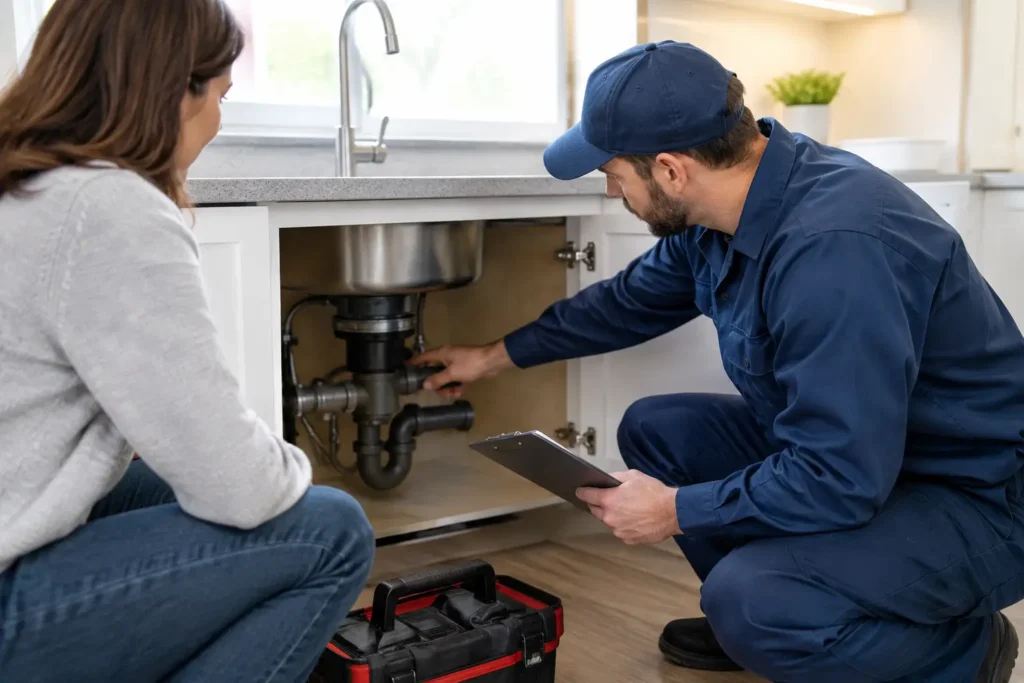
Moisture beneath a sink may come from a supply connection, drain assembly, faucet body, or another nearby component.
An inspection can help narrow down the likely source before parts are replaced unnecessarily.
A fixture problem that appears minor can become more expensive when water repeatedly reaches cabinetry, drywall, or flooring.
Drains and Sewer Connections
Drainage problems often develop gradually.
Slow drains, recurring clogs, gurgling toilets, and unpleasant sewer odors can indicate a restriction or other drainage concern.
A problem affecting only one sink may be localized. When several fixtures back up together, the issue may involve a shared branch drain or main sewer line.
An inspection can help determine whether professional drain cleaning or additional sewer diagnostics should be considered.
A sewer camera inspection is not automatically included in a general plumbing inspection. It may be recommended when recurring symptoms or the condition of the property justify a closer look inside the line.
Water Heater Condition and Connections
Water heaters are another important part of a plumbing evaluation.
Depending on the equipment and inspection scope, a plumber may look for visible leaks, corrosion, deteriorated connections, valve concerns, and signs of installation or performance problems.
A tank-style water heater, tankless system, and hybrid heat pump water heater have different operating requirements and maintenance considerations.
A visual inspection cannot establish the complete internal condition of a water heater or guarantee how much service life remains.
However, visible conditions and reported symptoms can help determine whether additional diagnosis, maintenance, repair, or replacement should be discussed.
When Should You Schedule a Plumbing Inspection?
Homeowners do not need to wait for a major plumbing emergency before requesting an evaluation.
A plumbing inspection may be useful when something changes unexpectedly or when the property’s plumbing history is uncertain.
Common reasons to schedule an inspection include:
- An unexplained increase in water usage
- Recurring drain clogs or sewer backups
- Water stains on ceilings, walls, or flooring
- Dampness beneath sinks or around toilets
- Weak or fluctuating water pressure
- Water heater leaks or inconsistent hot water
- Aging or deteriorating plumbing components
- Concerns identified during a home inspection
- Planning a kitchen or bathroom remodel
- Repeated plumbing repairs at the same property
The more information a homeowner can provide about the symptoms, the easier it is to focus the evaluation on the likely source.
Plumbing Inspections Before Buying a Home
Buying a home is a significant investment, and plumbing problems are not always obvious during a walkthrough.
A general home inspector may identify visible concerns, but certain plumbing conditions require a more focused evaluation by a licensed plumbing contractor.
A plumbing inspection service may be worth considering when a home has older piping, previous water damage, recurring drain problems, or an unknown sewer maintenance history.
For example, a home may have clean-looking bathrooms while the underground sewer line contains root intrusion, separated joints, or other defects.
A sewer camera inspection may provide additional information when there is a reason to investigate the buried line.
However, no visual plumbing inspection can guarantee that every concealed or underground component is free of defects.
Homebuyers should understand exactly which components and diagnostic services are included before relying on the inspection findings.
Plumbing Inspections Before a Bathroom or Kitchen Remodel
A renovation creates an opportunity to evaluate plumbing that may soon become difficult to access.
Replacing cabinets, countertops, tile, or fixtures without reviewing the existing plumbing can leave underlying problems unresolved.
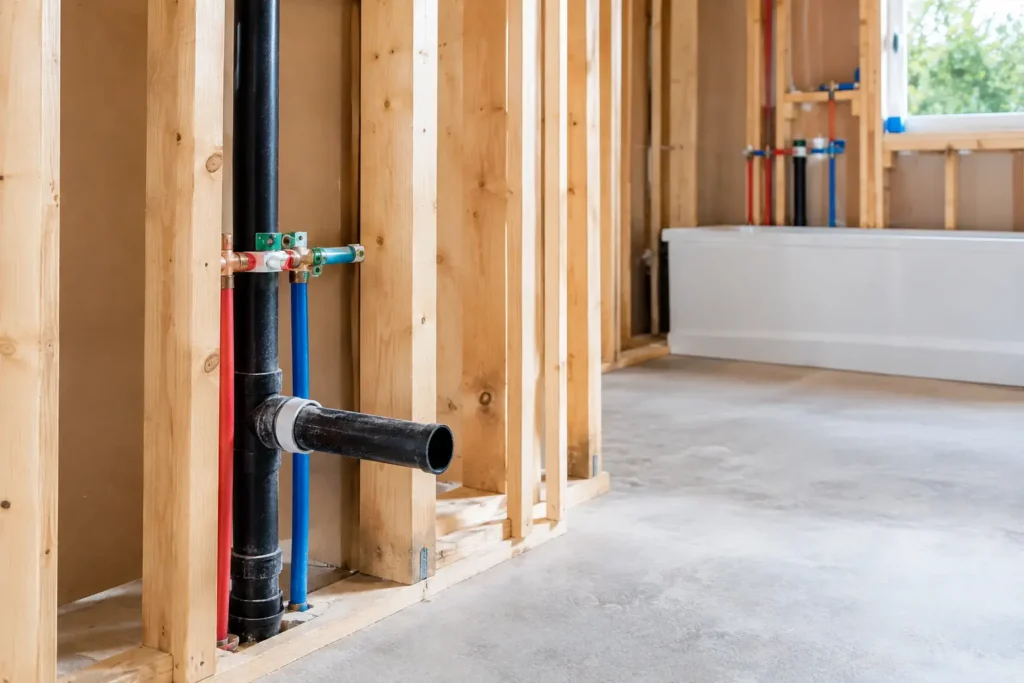
Before a bathroom remodel, a plumber may need to evaluate the drain and vent layout, supply connections, shower valve locations, toilet placement, and existing pipe condition.
A kitchen remodel may involve changes to sink drains, dishwasher connections, garbage disposal piping, refrigerator supply lines, or water filtration equipment.
When fixtures are relocated, additional rough-in plumbing may be required.
The best time to identify a questionable valve, deteriorating pipe, or recurring drainage problem is before the finished surfaces are installed.
Early coordination between the homeowner, plumbing contractor, and other trades can reduce unnecessary demolition and rework.
Why Hidden Water Leaks Need Additional Diagnosis
Some plumbing leaks are easy to identify. Others remain hidden behind walls, beneath floors, or underground.
Warning signs may include a rising water bill, damp drywall, warped flooring, unexplained moisture, or water movement when no fixtures are being used.
A general plumbing inspection may identify evidence suggesting a concealed leak, but locating the actual source can require additional diagnostic work.
Professional leak detection can help narrow down the source before unnecessary openings are made in walls or flooring.
Finding the source matters because water does not always appear directly below the failed pipe or connection.
Once a leak is located, the appropriate repair depends on the pipe material, accessibility, condition, and history of previous failures.
A single damaged connection may require a targeted repair, while repeated leaks in deteriorating piping may justify discussing more extensive replacement.
What About Sewer Camera Inspections?
A sewer camera inspection is a specialized diagnostic service used to view the inside of accessible drain or sewer piping.
It may help identify conditions such as:
- Root intrusion
- Heavy buildup
- Cracked or damaged pipe
- Separated or offset joints
- Standing water in low sections
- Obstructions affecting drainage
The camera’s effectiveness depends on access, pipe condition, visibility, and whether the camera can travel through the line.
A heavy blockage may need to be cleared before the camera can provide a useful view.
Camera inspection does not automatically establish the condition of every branch or buried pipe on the property.
For homeowners dealing with recurring backups, the findings can help determine whether cleaning, targeted repair, replacement, or further evaluation is appropriate.
Plumbing Inspection vs. Plumbing Repair
An inspection and a repair serve different purposes.
An inspection evaluates conditions and helps identify possible problems.
A repair addresses a specific failure or condition once the necessary work has been determined and authorized.
Sometimes the issue is straightforward, such as a leaking supply connection or worn fixture component.
Other situations require additional testing before the plumber can responsibly recommend a repair.
A professional contractor should explain what was observed, what remains uncertain, and what additional work may be necessary.
At Kingdom Based Plumbing, we believe homeowners should understand the recommended scope before authorizing plumbing repairs.
The goal is to address the actual problem rather than replace components simply because they are old or difficult to inspect.
What Happens After a Plumbing Inspection?
After the evaluation, the property owner should receive a clear explanation of the findings.
Some conditions may need prompt attention, while others may be monitored or addressed during planned maintenance.
The next step depends on the severity of the issue.
An active water leak, sewage backup, or water near electrical equipment may require urgent action.
A deteriorating shutoff valve or minor fixture concern may allow more time to plan the appropriate repair, depending on its condition.
When repairs are recommended, the homeowner should understand the proposed work, any access requirements, and what is included in the estimate.
If water damage is discovered, drying and restoration may also be necessary. Plumbing repairs stop the source of water, but they do not automatically resolve damage to building materials.
Kingdom Based Plumbing can discuss a restoration referral when water damage warrants professional evaluation.
Frequently Asked Questions About Plumbing Inspections
What does a plumbing inspection service check?
A plumbing inspection may evaluate accessible water supply piping, fixtures, shutoff valves, drains, water heater connections, and visible signs of leaks or deterioration. The exact scope depends on the property and the inspection requested.
Does a plumbing inspection include a sewer camera?
Not necessarily. Sewer camera inspection is a specialized diagnostic service and may be recommended separately when recurring backups, older sewer piping, or other concerns justify it.
Can a plumbing inspection find hidden leaks?
An inspection may identify signs of a concealed leak, but locating the source can require specialized leak detection or additional testing.
Should I get a plumbing inspection before buying a house?
A focused plumbing evaluation may be helpful when a home has older plumbing, unexplained water damage, drainage problems, or concerns noted in a general home inspection.
Is a plumbing inspection useful before remodeling?
Yes. Reviewing existing plumbing before a kitchen or bathroom remodel can help identify problems and determine whether new fixture locations require changes to supply, drain, or vent piping.
Does a plumbing inspection mean repairs are required?
No. The purpose is to evaluate the plumbing conditions within the agreed scope. Any repair recommendations should be explained so the property owner can make an informed decision.
Plumbing Inspection Services in St. Johns County and Northeast Florida
Plumbing systems vary from one property to another.
A newer home may have a leaking fixture connection, while an older property may have deteriorating supply piping or an underground sewer issue.
Commercial properties and rental homes may also require focused evaluations when repeated plumbing problems interrupt normal use.
Kingdom Based Plumbing Inc. serves homeowners and property owners throughout St. Johns County, Jacksonville, St. Augustine, Ponte Vedra, Nocatee, and surrounding Northeast Florida communities.
Our approach begins with understanding the concern, evaluating the accessible plumbing involved, and explaining the findings in plain language.
When additional diagnostic services are appropriate, we believe customers should understand why they are recommended before proceeding.
Schedule a Plumbing Evaluation With Kingdom Based Plumbing
If you have noticed unusual water usage, recurring drainage problems, moisture around fixtures, or changes in your plumbing system, it may be time for a professional evaluation.
Kingdom Based Plumbing Inc. can help assess plumbing concerns, identify potential causes, and explain appropriate next steps.
For urgent problems such as active leaks or sewage backups, learn more about our emergency plumbing services.
A useful plumbing inspection should provide more than a list of possible problems. It should help you understand what was observed, what needs attention, and what decisions make sense for your property.
Clean work. Proper installation. No shortcuts.