

How to Choose Water Filtration for Your Home
Learning how to choose water filtration starts with understanding what’s actually in your water.
Cloudy water, white mineral deposits, chlorine taste, unpleasant odors, and staining can all indicate different conditions. Unfortunately, no single filter is designed to correct every water-quality problem.
The right system depends on your water source, test results, household demand, and whether you want treatment at one faucet or throughout the home.
For homeowners in Jacksonville, St. Johns County, Nocatee, Ponte Vedra, and St. Augustine, choosing the correct equipment can help improve water quality and reduce certain scale- or sediment-related problems.
At Kingdom Based Plumbing Inc., we help homeowners evaluate the plumbing requirements for water filtration and softener installations, including piping connections, shutoff valves, drainage, and equipment placement.
Here’s how to compare the options and make an informed decision.
Why Choosing the Right Water Filtration System Matters
Water filtration equipment varies significantly in what it removes.
A sediment filter can capture particles but generally cannot remove dissolved hardness minerals.
A carbon filter may improve chlorine taste and odor but will not necessarily remove bacteria or dissolved contaminants.
A water softener reduces hardness minerals but is not a substitute for drinking-water purification.
Reverse osmosis can reduce many dissolved substances, but it has different installation and maintenance requirements.
The most important principle is simple:
Choose treatment based on a verified water condition, not just the appearance or smell of the water.
A system that does not address the actual problem can add expense and maintenance without providing the intended benefit.
Step 1: Identify Your Water Source
The first step in choosing water filtration is determining where your water comes from.
Municipal Water
Many Northeast Florida homes receive water from a public water utility.
Municipal water is treated and monitored under applicable drinking-water requirements.
However, homeowners may still notice chlorine or chloramine taste, mineral hardness, sediment, or conditions related to their household plumbing.
The utility’s annual water quality report can provide useful information about the supplied water.
Private Well Water
Private well water may have different characteristics.
Depending on the location and groundwater conditions, concerns may include:
- Sediment
- Iron staining
- Sulfur-related odors
- Hardness minerals
- Low pH
- Bacteria
- Other naturally occurring or introduced contaminants
Private well owners are responsible for arranging appropriate testing.
The EPA’s private drinking water well guidance provides information about testing and maintaining private wells.
Plumbing-Related Water Problems
Not every water-quality complaint originates with the water source.
For example:
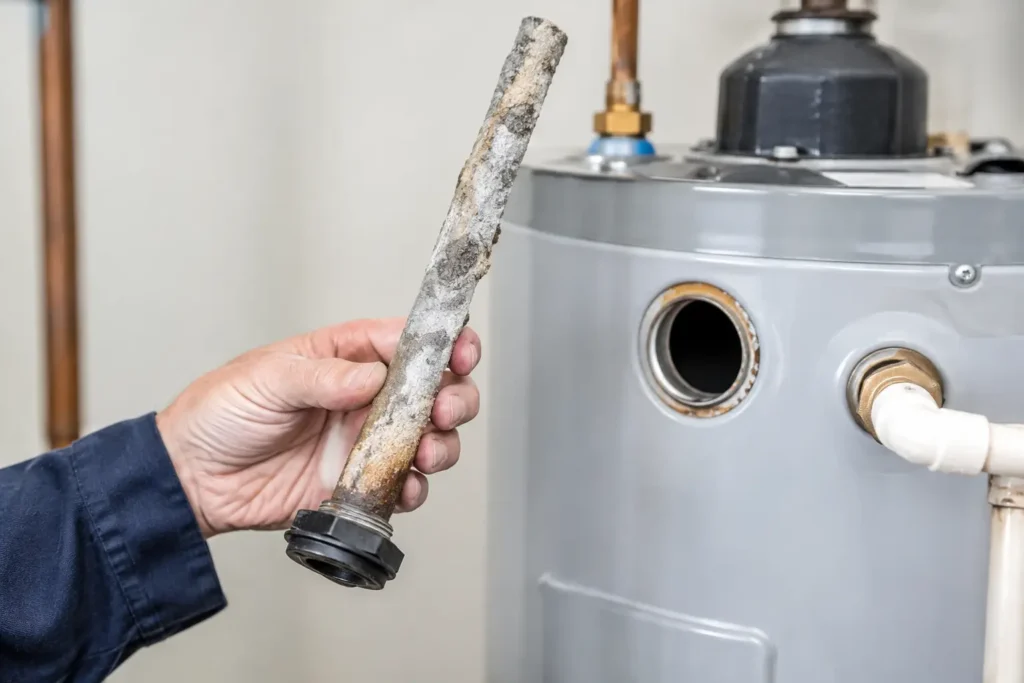
- Discolored water only from hot taps may involve the water heater.
- Particles from one faucet may involve the fixture or nearby piping.
- Sudden pressure loss may indicate a plumbing restriction or supply problem.
- Water appearing around a treatment system may indicate a leaking connection.
Before buying filtration equipment, determine whether the concern involves the incoming water or an existing plumbing problem.
Step 2: Test Your Water Before Choosing Equipment
Water testing helps identify the conditions a treatment system needs to address.
The appropriate testing depends on the water source and symptoms.
Testing for Hardness
Hardness testing measures dissolved calcium and magnesium.
Elevated hardness can contribute to mineral scale in water heaters, fixtures, and appliances.
If hardness is the primary concern, a water softener may be more appropriate than a basic filter.
Testing for Iron
Iron can contribute to reddish-brown staining and other water-quality concerns.
The appropriate treatment depends on the form and concentration of iron, along with other water chemistry factors.
Testing for Bacteria
Private wells and certain other situations may require microbial testing.
If contamination is suspected, use an appropriate certified laboratory and follow public-health guidance.
A standard carbon or sediment filter should not be assumed to make microbiologically unsafe water safe to drink.
Testing for Other Contaminants
Depending on the source and concern, testing may include nitrate, arsenic, lead, or other substances.
The treatment selected should be certified or otherwise appropriately verified for the specific contaminants of concern.
The EPA’s drinking water information provides additional guidance about water sources and drinking-water protection.
Step 3: Match the Filter to the Water Problem
Different treatment technologies serve different purposes.
Sediment Filters
Sediment filters are designed to capture suspended particles such as sand, silt, rust, and debris.
They may be useful when homeowners notice visible particles or when upstream filtration is needed to protect other equipment.
However, sediment filtration does not normally remove dissolved hardness minerals or dissolved contaminants.
Activated Carbon Filters
Activated carbon filters are commonly used to reduce certain taste and odor concerns.
Depending on the product and certification, they may reduce chlorine or other specific substances.
Not every carbon filter is certified for chloramine reduction or particular chemical contaminants.
Choose a product based on verified performance claims.
Water Softeners
Water softeners are designed primarily to reduce calcium and magnesium hardness.
Many residential systems use ion exchange.
They can help reduce mineral scale formation and improve certain water-use characteristics.
However, a softener does not automatically remove bacteria, lead, or every other drinking-water contaminant.
Reverse Osmosis Systems
Reverse osmosis uses a specialized membrane to reduce many dissolved substances.
Residential systems are commonly installed at a kitchen sink for drinking and cooking water.
Performance depends on the equipment and the contaminants it is designed and certified to reduce.
Reverse osmosis systems also require filter changes, membrane maintenance, drainage, and adequate installation space.
Specialty Well-Water Treatment
Some well-water conditions require specialized equipment.
Examples may include iron removal, pH correction, oxidation, disinfection, or other treatment methods.
The correct solution depends on laboratory results and water chemistry.
Installing equipment without testing can leave the original concern unresolved.
Step 4: Compare Whole-House and Under-Sink Water Filtration
One of the most important decisions is where the water needs to be treated.
Whole-House Water Filtration
A whole-house system is generally installed near the water supply entry point.
It treats water before distribution to many or all fixtures, depending on the plumbing layout.
Potential applications include:
- Sediment reduction throughout the home
- Certain chlorine-related taste or odor concerns
- Treatment designed to protect water-using equipment
- Whole-home water softening
The equipment must be sized for household flow demand.
An undersized system can create noticeable flow restrictions during simultaneous water use.
Under-Sink Water Filtration
Under-sink systems treat water at a specific location.
They may be appropriate when the primary concern is drinking and cooking water.
Options include carbon filtration and reverse osmosis.
Installation may require a dedicated faucet, supply connection, and, for many reverse osmosis systems, a drain connection.
Refrigerator Water Filtration
Refrigerator filters can be useful for specific taste and odor concerns.
However, performance depends on the filter’s certification and the contaminants it is designed to reduce.
They should not automatically be considered equivalent to a dedicated drinking-water treatment system.
Can You Use Both Whole-House and Point-of-Use Filtration?
Yes.
Some homes benefit from a whole-home treatment system combined with additional drinking-water filtration.
For example, a softener may reduce hardness throughout the home, while a reverse osmosis system provides additional treatment at the kitchen sink.
The combination should be selected based on actual water conditions and household priorities.
Step 5: Understand Water Softener vs. Water Filter
Homeowners often use these terms interchangeably, but they are not the same.
| Feature | Water Softener | Water Filter | |—|—|—| | Main purpose | Reduce hardness minerals | Reduce specific particles or contaminants | | Common technology | Ion exchange | Sediment, carbon, membrane, or specialty media | | Helps with scale | Yes, when properly selected | Only if designed for hardness reduction | | Improves chlorine taste | Not its primary function | Some certified filters do | | Removes sediment | Not its primary function | Sediment filters do | | Requires maintenance | Yes | Yes | | Installation needs | Water connections and usually regeneration drainage | Varies by system |
A conventional carbon filter does not perform the same function as a water softener.
Likewise, a softener should not be relied upon to address contaminants outside its intended treatment purpose.
Step 6: Check Water Pressure and Flow Requirements
Water filtration equipment must support the household’s normal water demand.
A home with multiple bathrooms, laundry equipment, and frequent simultaneous water use may require a higher-capacity system than a small household.
Why Flow Rate Matters
Every filter creates some resistance to water movement.
As cartridges collect sediment or reach the end of their service life, pressure loss can increase.
An undersized system may noticeably reduce flow during showers or appliance operation.
Pressure Problems Should Be Diagnosed First
If the home already has poor water pressure, adding filtration may make the symptoms worse.
Existing restrictions, a pressure regulator problem, deteriorated piping, or a service-line issue should be evaluated before installation.
Read more about water pressure concerns.
Avoid Oversizing Without a Reason
Bigger equipment is not automatically better.
Some systems require minimum flow conditions, while others have capacity and maintenance trade-offs.
Proper selection should account for both normal and peak household demand.
Step 7: Plan the Plumbing Installation
A properly selected filtration system still needs an appropriate installation.
Existing Water Softener Loops
Some homes have a dedicated water softener loop.
However, the presence of exposed pipes does not automatically confirm that the plumbing is configured correctly.
The loop should be verified before equipment is connected.
Water Supply Connections
The installer should evaluate the existing piping, shutoff valves, and connection points.
Deteriorated valves or improper piping arrangements may require correction.
Bypass Valves
Where appropriate, bypass valves allow treatment equipment to be isolated for maintenance.
This can help simplify future service.
Drainage Requirements
Many water softeners discharge water during regeneration.
Reverse osmosis systems also typically discharge reject water.
The drainage arrangement must follow manufacturer requirements and applicable plumbing rules.
A nearby pipe should not automatically be assumed to be an acceptable drain connection.
Air Gaps and Backflow Protection
Certain treatment installations require appropriate air gaps or other backflow protection.
These details help prevent unintended connections between potable water and drainage systems.
Equipment Location
The location should provide:
- Adequate installation space
- Maintenance access
- Protection from unsuitable weather exposure
- Appropriate electrical access where required
- Suitable drainage
- Accessibility to shutoff and bypass valves
Equipment placement affects long-term serviceability.
Step 8: Understand Filter Certifications
When comparing filtration products, look beyond marketing claims.
Independent certification can help establish whether a system has been evaluated for specific performance requirements.
Common standards include:
- NSF/ANSI 42: Certain aesthetic effects, such as chlorine taste and odor reduction
- NSF/ANSI 53: Certain health-related contaminant reduction claims
- NSF/ANSI 58: Reverse osmosis drinking-water treatment systems
- NSF/ANSI 44: Residential cation exchange water softeners
- NSF/ANSI 55: Ultraviolet microbiological water treatment systems
Certification to a standard does not mean a product removes every contaminant covered by that standard.
Always verify the specific product’s certified reduction claims and operating conditions.
The NSF consumer guide to water treatment provides useful background.
Step 9: Consider Maintenance Before Buying
Every treatment system has maintenance requirements.
Sediment Filters
Cartridges may need periodic replacement based on water conditions, pressure loss, and manufacturer recommendations.
Carbon Filters
Carbon media and cartridges have finite service capacities.
Replacement schedules depend on the product and water conditions.
Water Softeners
Many systems require salt or potassium replenishment and periodic inspection.
Regeneration settings should match the equipment and water conditions.
Reverse Osmosis Systems
Filters and membranes require maintenance.
Storage tanks, fittings, and drain connections should also be checked according to manufacturer instructions.
Specialty Treatment Equipment
Iron removal, neutralization, and other well-water systems may require additional maintenance or periodic testing.
Before purchasing, ask how often service is required, what replacement components cost, and whether parts are readily available.
Step 10: Decide Whether Professional Installation Is Necessary
Some countertop and faucet-mounted filters can be installed without modifying household plumbing.
Whole-home filtration, water softeners, reverse osmosis systems, and specialty treatment equipment often involve more complex installation considerations.
Professional plumbing installation may be especially valuable when:
- The system connects to the main water supply
- Drainage or regeneration discharge is required
- Existing valves or piping need modification
- The home has older plumbing
- Water pressure is already a concern
- Multiple treatment components must be connected
- The installation requires appropriate backflow protection
Kingdom Based Plumbing can evaluate the plumbing connections, equipment location, drainage, and installation requirements.
Water testing, treatment-system performance verification, and specialized equipment servicing may require a qualified water-treatment professional or laboratory depending on the situation.
Common Mistakes When Choosing Water Filtration
Buying Before Testing
A filter may not address the actual condition.
Test first when the concern is persistent, unusual, or potentially health-related.
Assuming All Filters Remove the Same Contaminants
Different technologies have different capabilities.
Review the specific product’s certified claims.
Confusing Hardness With Contamination
Hard water can create scale, but hardness alone does not mean the water is unsafe.
A water softener and drinking-water filtration system serve different purposes.
Ignoring Household Flow Demand
Undersized equipment can create noticeable restrictions.
Overlooking Drainage
Softener regeneration and reverse osmosis reject water require appropriate drainage.
Forgetting Maintenance
Neglected filters can lose effectiveness or create operating problems.
Ignoring Existing Plumbing Problems
A leaking pipe, failed shutoff valve, or deteriorated water service should be addressed independently of treatment equipment.
If a hidden leak is suspected, learn more about leak detection.
Frequently Asked Questions About Water Filtration
How do I choose water filtration for my home?
Start by identifying your water source, testing for relevant concerns, and determining whether treatment is needed throughout the home or at one faucet. Then compare equipment designed and certified for the specific conditions.
What is the best whole-house water filtration system?
There is no single best system for every property. The appropriate choice depends on water chemistry, household demand, plumbing configuration, and treatment goals.
Do I need a water softener or a filter?
A softener is generally used for hardness minerals. Filters address other specific substances depending on their design. Some homes benefit from both.
Is reverse osmosis better than carbon filtration?
Neither is universally better. Reverse osmosis can reduce many dissolved substances, while carbon filtration may be suitable for certain taste, odor, and contaminant concerns. Testing and product certifications should guide the choice.
Can a water filtration system reduce water pressure?
Yes. An undersized, clogged, or improperly installed system can restrict flow. Proper sizing and maintenance help reduce this risk.
Does whole-house filtration remove bacteria?
Not automatically. Microbial treatment requires equipment specifically designed and validated for that purpose. Suspected contamination should be evaluated through appropriate testing.
Does a water softener remove chlorine?
Conventional ion-exchange softeners are not primarily designed for chlorine removal. A separate treatment stage may be appropriate if chlorine reduction is a goal.
Do private wells need filtration?
Not every well requires the same treatment. Testing is necessary to determine whether treatment is appropriate and which contaminants need to be addressed.
Can Kingdom Based Plumbing install customer-provided water treatment equipment?
Kingdom Based Plumbing can evaluate installation requirements for customer-provided systems. Installation feasibility depends on the equipment, existing plumbing, drainage, and other site conditions. Workmanship coverage is separate from the manufacturer’s product warranty.
Water Filtration Installation in Jacksonville and St. Johns County
Choosing water filtration should begin with understanding the actual water conditions and the household’s needs.
Kingdom Based Plumbing Inc. helps homeowners throughout Jacksonville, St. Johns County, Nocatee, Ponte Vedra, St. Augustine, and surrounding Northeast Florida communities evaluate plumbing requirements for water filtration and softener installations.
Whether you’re planning a whole-home filter, water softener, reverse osmosis system, or a combination of equipment, our focus is on proper plumbing connections, drainage, accessibility, and installation quality.
Call Kingdom Based Plumbing at 904-814-8541 to discuss your water treatment installation plans.
Clean work. Proper installation. No shortcuts.