

Why Does My Drain Gurgle? 7 Causes and What to Do
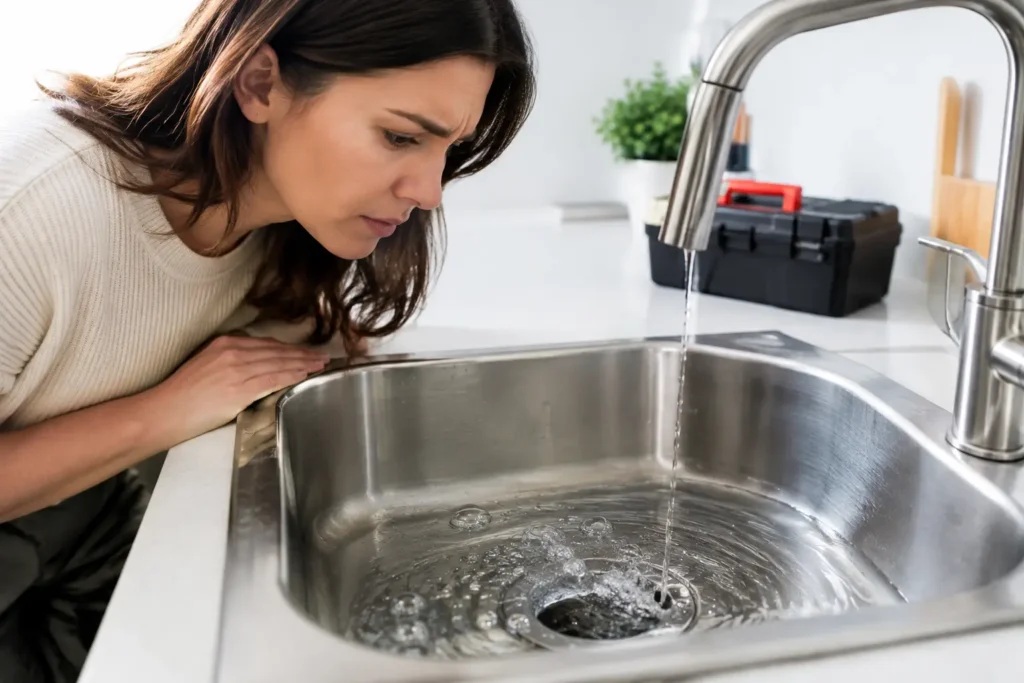
Why does my drain gurgle? That bubbling or glug-glug sound usually means air and wastewater are not moving through your plumbing system as intended.
Sometimes the cause is a small blockage near a sink or shower. Other times, gurgling can warn of a developing main sewer line stoppage, improper venting, or a problem affecting multiple fixtures.
The most important clue is which drain makes the noise and what happens immediately before it starts.
For example, a kitchen sink that gurgles while emptying may have a local restriction. But if your shower gurgles every time a toilet flushes, the problem may be farther down the drainage system.
For homeowners in Jacksonville, St. Johns County, Nocatee, Ponte Vedra, St. Augustine, and surrounding Northeast Florida communities, understanding these differences can help prevent a minor drainage problem from becoming a sewage backup.
Why Does My Drain Gurgle? The Quick Answer
Gurgling happens when air moves through water in a drain or plumbing trap because of pressure changes in the drainage system.
Common causes include:
- A partial drain clog
- A blocked or improperly functioning plumbing vent
- A developing main sewer line blockage
- A restricted branch drain
- A dry or siphoned plumbing trap
- A septic system problem
- Improperly installed or deteriorated drain piping
One noisy fixture may indicate a localized problem. Multiple gurgling fixtures deserve closer attention.
What Different Gurgling Sounds Can Mean
| What you notice | Possible cause | Recommended next step | |—|—|—| | Bathroom sink gurgles while draining | Hair, soap, or buildup near the fixture | Check accessible drain components | | Kitchen sink gurgles | Grease or food-related drain restriction | Evaluate the sink drain | | Shower gurgles when toilet flushes | Shared branch or downstream restriction | Arrange drain evaluation | | Toilet bubbles when washer drains | Possible shared drain or mainline blockage | Stop unnecessary water use and call a plumber | | Multiple fixtures gurgle | Branch, sewer, or venting problem | Professional diagnosis | | Gurgling with sewer odor | Trap seal, venting, or drainage defect | Prompt inspection | | Gurgling with wastewater backup | Significant drain or sewer restriction | Stop water use and seek urgent service |
These are diagnostic clues, not definitive conclusions.
1. A Partial Drain Clog
One of the most common reasons a drain gurgles is a partial blockage.
Water can still pass through the pipe, but accumulated material restricts normal flow.
As wastewater moves past the restriction, air may bubble through standing water.
Common Bathroom Drain Blockages
Bathroom sinks, tubs, and showers often collect:
- Hair
- Soap residue
- Toothpaste buildup
- Personal-care product residue
- Debris around stoppers
- Mineral deposits
Common Kitchen Drain Blockages
Kitchen drains may accumulate:
- Grease
- Cooking oils
- Food particles
- Soap buildup
- Other debris
A localized blockage may be cleared without major plumbing work.
However, recurring clogs may indicate a deeper problem that requires professional drain cleaning.
2. A Blocked Plumbing Vent
Plumbing vents help regulate air pressure inside the drainage system.
They allow wastewater to move while helping protect the water seals in fixture traps.
When venting is restricted or improperly configured, pressure changes may cause gurgling.
What Can Block a Plumbing Vent?
Possible causes include:
- Leaves
- Debris
- Animal nests
- Damaged vent piping
- Improper installation
- Alterations made during remodeling
Signs of a Possible Venting Problem
You may notice:
- Gurgling after fixtures drain
- Water levels changing in traps
- Sewer odors
- Multiple affected fixtures
- Recurring symptoms after a drain has been cleared
These symptoms can also occur with drain blockages.
A vent problem should not be diagnosed from sound alone.
Do not climb onto your roof to investigate a plumbing vent. Roof access and vent testing are best handled by qualified professionals.
3. A Developing Main Sewer Line Blockage
A main sewer line carries wastewater from the home’s connected drains toward the public sewer or septic system.
When the line becomes restricted, wastewater and air may not move normally.
Warning Signs of a Main Sewer Problem
Watch for:
- Multiple slow drains
- Toilets bubbling when other fixtures drain
- Shower or tub backups
- Wastewater appearing in a floor drain
- Repeated mainline stoppages
- Gurgling after washing machine discharge
- Sewage odors accompanied by drainage problems
What Causes Main Sewer Blockages?
Possible causes include:
- Accumulated waste
- Tree root intrusion
- Pipe deterioration
- Offset joints
- Sewer pipe bellies
- Cracked or collapsed piping
- Other obstructions
The correct repair depends on the actual condition of the line.
Drain cleaning may restore flow, but a damaged or improperly graded pipe may require additional work.
4. A Restricted Branch Drain
Not every multi-fixture problem involves the main sewer line.
Several fixtures may connect to a shared branch drain before joining the main line.
If that branch becomes restricted, the fixtures connected to it may gurgle or drain slowly.
Example: One Bathroom Group Is Affected
Suppose an upstairs toilet, shower, and sink share a drainage branch.
If those fixtures are experiencing problems while the downstairs plumbing operates normally, the issue may be isolated to the upstairs branch.
However, the exact piping layout must be evaluated.
A plumber should not automatically assume every multi-fixture stoppage is a main sewer blockage.
This distinction helps avoid unnecessary cleaning or repair work.
5. A Dry or Siphoned P-Trap
A plumbing trap holds water to help prevent sewer gas from entering the building.
Most sinks have a visible curved trap beneath the fixture.
Showers, tubs, and floor drains also have traps, although they may be concealed.
What Happens When a Trap Dries Out?
A rarely used drain can lose its water seal through evaporation.
This may allow sewer odors into the room.
A dry trap alone is not necessarily the cause of gurgling, but trap seal loss and gurgling can occur together when drainage or venting conditions are abnormal.
What Can You Do?
For a seldom-used fixture, carefully add water to the drain to restore the trap seal.
If odors or gurgling return, arrange an inspection.
The problem may involve siphoning, improper venting, leakage, or another plumbing defect.
6. A Septic System Problem
Not every Northeast Florida home is connected to a municipal sewer system.
Some properties use septic systems.
When a septic system is not accepting wastewater properly, symptoms may resemble a main sewer blockage.
Possible Septic-Related Symptoms
- Multiple slow drains
- Gurgling toilets
- Wastewater backups
- Sewage odors
- Problems after heavy household water use
Potential causes include a restricted outlet filter, a full or malfunctioning tank, or problems with the drain field.
A plumbing evaluation should establish whether the issue is in the home’s drainage piping or the septic system.
Septic tank and drain-field service may require an appropriately qualified septic contractor.
7. Damaged or Improperly Installed Drain Piping
Some gurgling problems are caused by the condition or configuration of the drain piping itself.
Possible issues include:
- Improper slope
- Damaged fittings
- Offset connections
- Cracked piping
- Poorly configured vent connections
- Deteriorated older drain lines
- Repeated restrictions at the same location
Cleaning may remove debris without correcting the underlying defect.
If the same symptoms return, further investigation may be warranted.
Why Does My Sink Gurgle When the Washing Machine Drains?
A washing machine can discharge a substantial amount of water over a short period.
If the connected drain piping is partially restricted, the discharge may cause pressure changes that produce gurgling in another fixture.
Possible causes include:
- A restricted shared branch drain
- A downstream sewer blockage
- Improper venting
- A drainage installation defect
If wastewater is rising in another fixture, stop using the washing machine until the drainage system has been evaluated.
Why Does My Shower Gurgle When I Flush the Toilet?
A shower and toilet may share part of the same drainage system.
When the toilet flushes, the sudden wastewater flow can reveal a restriction farther downstream.
The shower trap may gurgle as air moves through it.
If water actually rises into the shower, this is more concerning than sound alone.
Do not keep flushing to test the problem.
Repeated flushing can cause wastewater to overflow into the bathroom.
Why Does My Toilet Gurgle When the Washer Drains?
A gurgling toilet during a washing machine cycle may indicate that the connected drainage system is struggling to carry the discharge.
The cause may be a shared branch blockage, mainline restriction, or venting problem.
If the toilet bowl bubbles, the water level changes significantly, or another fixture backs up, arrange professional evaluation.
Can a Gurgling Drain Lead to a Sewer Backup?
Yes, depending on the cause.
Gurgling does not guarantee that a backup will occur.
However, if the noise is caused by a growing drain or sewer restriction, wastewater may eventually stop flowing normally.
Signs that the problem is becoming more serious include:
- Increasingly slow drainage
- Gurgling in several fixtures
- Water rising in a tub or shower
- Recurring toilet stoppages
- Sewage appearing at a floor drain
- Wastewater backing up during laundry cycles
When these symptoms occur, limit water use to reduce the risk of an overflow.
How to Stop a Gurgling Drain Safely
The appropriate response depends on whether the problem is limited to one fixture.
Check Visible Debris
If one sink or shower is affected, inspect accessible drain covers or stoppers for hair and debris.
Remove material that can be reached safely.
Observe the Drainage Pattern
Note whether the gurgling occurs:
- While the fixture drains
- After another fixture operates
- During washing machine discharge
- After flushing a toilet
- Only when several fixtures are used
These observations can help a plumber locate the problem.
Avoid Chemical Drain Cleaners
Chemical drain products may not correct the actual restriction.
They can also create hazards for homeowners and technicians.
Never mix drain-cleaning chemicals.
If a product has already been used, inform the plumber before service.
Do Not Open Sewage-Filled Piping
Opening a drain or cleanout when wastewater is backed up can release contaminated water.
Leave these conditions to a qualified professional.
Do Not Attempt Roof Vent Work
Roof access introduces fall hazards and may not address the actual cause.
Professional diagnosis is the safer approach.
When Should You Call a Plumber for a Gurgling Drain?
Professional service is appropriate when:
- Multiple fixtures are gurgling.
- Gurgling returns after basic cleaning.
- Toilets bubble when other fixtures drain.
- Slow drainage accompanies the noise.
- Sewer odors persist.
- The home has a history of recurring backups.
- Wastewater rises into showers or tubs.
- The problem appears to involve the main sewer line.
If wastewater is actively backing up, stop using water and contact an emergency plumber.
How a Professional Plumber Diagnoses Gurgling Drains
A proper diagnosis starts with the pattern of symptoms.
The plumber may ask:
- Which fixture makes the noise?
- Does the gurgling occur during or after drainage?
- Are other fixtures affected?
- Has wastewater backed up?
- Have previous drain-cleaning attempts helped?
- Does the property use municipal sewer or septic?
- Has recent remodeling changed the plumbing?
Drain Evaluation
The plumber may inspect accessible traps, cleanouts, and drain connections.
Drain Cleaning
If a blockage is identified, professional cleaning equipment may be appropriate.
Sewer Camera Inspection
A camera inspection may help evaluate suspected roots, damaged piping, standing water, or recurring obstructions.
Camera inspection is a separate diagnostic service when needed and is not automatically included with every drain-cleaning job.
Vent System Evaluation
If the symptoms suggest improper venting, further evaluation may be required.
Repair Recommendations
The recommended work should address the identified cause.
A localized clog, failed vent connection, and damaged sewer pipe require different solutions.
How to Prevent Gurgling Drains
Good drainage habits can reduce avoidable restrictions.
Keep Grease Out of Kitchen Drains
Dispose of cooking grease and oils appropriately rather than washing them into the plumbing.
Avoid Flushing Wipes
Even wipes marketed as flushable can contribute to drain and sewer problems.
Use Drain Strainers
Strainers can help catch hair and debris before they enter bathroom drains.
Address Slow Drains Early
A drain that repeatedly slows down should be evaluated before it becomes completely blocked.
Maintain Seldom-Used Fixtures
Running water into infrequently used drains can help maintain their trap seals.
Investigate Recurring Mainline Problems
If a sewer line requires repeated cleaning, further diagnosis may help identify the underlying cause.
Frequently Asked Questions About Gurgling Drains
Why does my drain gurgle?
Gurgling generally occurs when air moves through water in a plumbing trap because of pressure changes. Common causes include partial blockages, venting problems, and downstream drainage restrictions.
Is a gurgling drain serious?
Not always. One noisy sink may have a minor restriction. Multiple affected fixtures, sewage odors, or wastewater backups deserve prompt attention.
Why does my bathroom sink gurgle?
Hair, soap residue, stopper buildup, or a downstream restriction may affect drainage and airflow.
Why does my kitchen sink gurgle?
Grease buildup, food debris, restricted piping, or venting conditions may contribute to the sound.
Why does my shower gurgle when the toilet flushes?
The fixtures may share a drainage connection. A restriction or venting problem can cause pressure changes that produce gurgling in the shower trap.
Why does my toilet gurgle when the washing machine drains?
The washing machine’s discharge may reveal a restriction or venting issue in a shared branch or main sewer line.
Can a clogged plumbing vent cause gurgling?
Yes. Improper venting can affect pressure balance and trap seals. However, gurgling alone does not confirm a vent blockage.
Can a sewer line blockage cause gurgling?
Yes. A downstream restriction can interfere with normal wastewater and air movement.
Can a gurgling drain cause sewer gas to enter my home?
A related trap seal or venting problem may allow sewer gas to enter. Gurgling alone does not mean sewer gas is escaping.
Will drain cleaner fix a gurgling drain?
Not necessarily. Chemical products may fail to remove the actual restriction and can create safety hazards.
Should I stop using water if my drains gurgle?
If one drain makes a minor noise without other symptoms, immediate whole-home shutdown may not be necessary. If multiple fixtures are affected or wastewater is backing up, stop unnecessary water use and arrange service.
Can a plumber use a camera to find the problem?
A sewer camera may help identify structural defects or recurring obstructions in accessible drain piping. Other diagnostic methods may be needed for venting or fixture-specific issues.
Gurgling Drain Repair in Jacksonville and St. Johns County
A gurgling drain is a symptom worth understanding, especially when the sound returns or multiple fixtures are involved.
Kingdom Based Plumbing Inc. helps homeowners and businesses throughout Jacksonville, St. Johns County, Nocatee, Ponte Vedra, St. Augustine, and surrounding Northeast Florida communities diagnose drain stoppages, sewer concerns, and related plumbing problems.
Whether the cause is a localized clog, restricted branch drain, main sewer stoppage, or venting concern, our goal is to identify the problem and explain the appropriate next steps.
Call Kingdom Based Plumbing at 904-814-8541 to schedule drain service or discuss an urgent plumbing concern.
24/7 emergency plumbing service available, subject to technician availability.
Clean work. Proper installation. No shortcuts.