

Sewer Repair Versus Replacement: How to Make the Right Decision
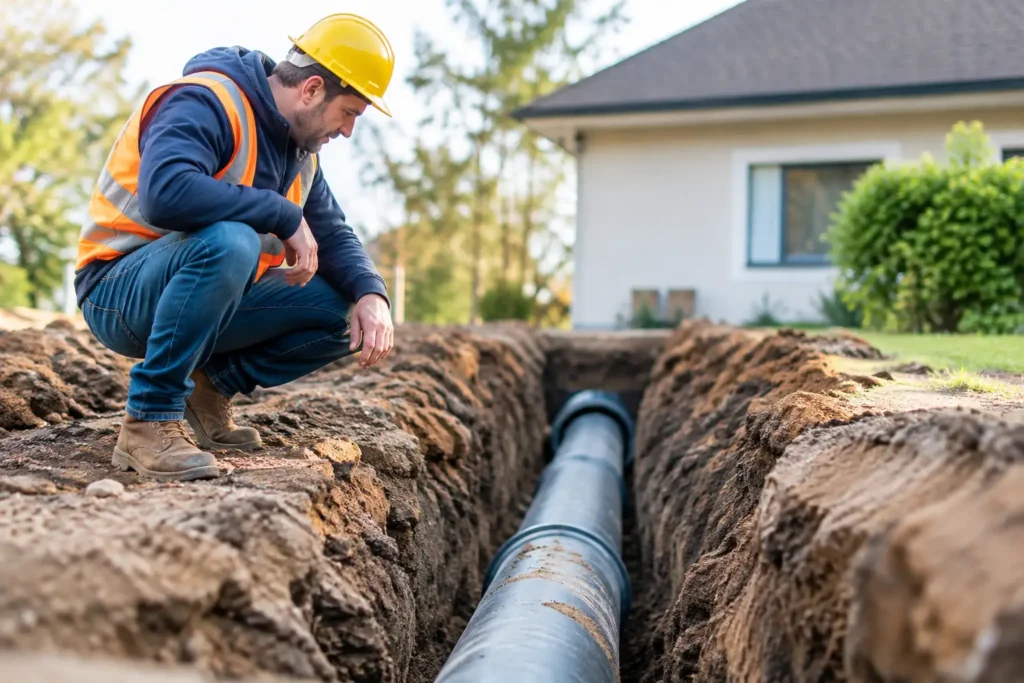
When an underground sewer line develops a problem, homeowners often face an important decision: sewer repair versus replacement.
Should you repair the damaged section, or would replacing a larger portion of the sewer line provide a more dependable long-term solution?
The answer depends on the actual condition of the piping.
A single damaged joint may be corrected with a targeted repair. A sewer line with widespread corrosion, multiple failures, or severe structural deterioration may require more extensive replacement.
For homeowners and property managers in Jacksonville, St. Johns County, Nocatee, Ponte Vedra, St. Augustine, and surrounding Northeast Florida communities, a professional sewer evaluation can help determine which approach makes sense.
At Kingdom Based Plumbing Inc., we believe the repair recommendation should follow the diagnosis—not the other way around.
Sewer Repair Versus Replacement: What’s the Difference?
Sewer repair generally involves correcting a specific defect or replacing a limited section of damaged piping.
Sewer replacement involves installing new piping across a larger section or, when necessary, the entire sewer lateral.
Both approaches can be appropriate.
The goal is to correct the underlying problem while avoiding unnecessary work.
What Is Sewer Line Repair?
A targeted sewer repair may address:
- A cracked pipe section
- A separated joint
- A localized root intrusion point
- A damaged fitting
- An isolated pipe offset
- A short section with improper slope
- A specific area of structural damage
A properly planned repair can preserve sound portions of the existing line.
What Is Sewer Line Replacement?
Sewer replacement involves removing or otherwise replacing a more extensive portion of the existing line.
It may be appropriate when multiple sections are damaged or the piping material has deteriorated throughout the system.
Replacement can also allow the contractor to correct grade, bedding, and alignment problems where the work provides access.
Sewer Repair vs Replacement: Quick Comparison
| Factor | Sewer repair | Sewer replacement | |—|—|—| | Best suited for | Localized damage | Widespread deterioration | | Amount of pipe addressed | Limited section | Larger section or entire line | | Excavation | Often localized | May be more extensive | | Existing pipe retained | Usually yes | Less or none in replaced area | | Corrects isolated defects | Yes | Yes | | Addresses widespread failing pipe | Usually not | Often | | Upfront disruption | May be lower | May be greater | | Long-term suitability | Depends on remaining pipe condition | Depends on design and installation |
A lower upfront repair cost does not automatically mean better value, and a full replacement is not automatically necessary because a sewer line is old.
The condition of the entire affected line matters.
1. Start With a Sewer Line Inspection
Underground sewer problems cannot always be diagnosed from surface symptoms alone.
A slow drain, recurring blockage, or sewage odor may have several possible causes.
Common Sewer Line Problems
- Root intrusion
- Grease and waste buildup
- Cracked piping
- Separated joints
- Offset pipe connections
- Corrosion
- Sewer pipe bellies
- Collapsed sections
- Improper installation
A professional evaluation begins by identifying which fixtures are affected, how frequently the problem occurs, and whether previous drain cleaning restored normal flow.
How a Sewer Camera Inspection Helps
A camera inspection may reveal the interior condition of an accessible sewer line.
Depending on visibility and access, the camera may show:
- Roots
- Cracks
- Pipe deterioration
- Standing water
- Joint separation
- Debris accumulation
- Suspected low sections
- Collapsed or obstructed areas
The line may need to be cleared before an effective inspection can be completed.
Why Sewer Locating Matters
Electronic locating equipment may help identify the approximate underground location of a camera or suspected defect.
This can assist with planning excavation and evaluating access.
A camera alone does not always establish precise pipe grade or the full extent of structural deterioration.
Additional measurements or physical verification may be necessary.
2. When Sewer Line Repair Makes Sense
A targeted sewer repair may be the practical option when damage is limited and the surrounding pipe remains in serviceable condition.
One Damaged Pipe Joint
A separated or offset joint may allow roots, soil, or groundwater to enter the pipe.
If the remaining line is sound, repairing the affected connection may resolve the problem.
A Localized Crack
A short damaged section may be replaceable without disturbing the entire sewer lateral.
The repair must address the actual cause and maintain appropriate connections and slope.
Limited Root Intrusion
Roots can enter through openings in sewer piping.
Cleaning may remove the roots temporarily, but it does not repair the opening.
When the intrusion is limited to one area, a targeted repair may provide a more lasting solution.
A Short Section With Improper Grade
If a low area is isolated and the surrounding pipe has suitable alignment, replacing and properly supporting the affected section may be appropriate.
Accessible Damage
A defect in an accessible yard area may be more practical to repair than a similar defect beneath a driveway or building.
However, accessibility alone should not determine the scope.
The overall pipe condition remains important.
3. When Sewer Replacement Is the Better Option
Replacement may make more sense when repairing one section leaves substantial known problems elsewhere.
Widespread Pipe Corrosion
Older cast-iron drain and sewer piping can deteriorate over time.
Severe corrosion, scaling, and structural weakening may make isolated repairs less practical.
Multiple Cracks or Joint Failures
A line with numerous damaged areas may continue developing problems after individual spot repairs.
Repeated Sewer Backups
If the line requires frequent cleaning and inspections reveal widespread deterioration, replacement may provide a more dependable solution.
Several Sewer Pipe Bellies
A sewer belly is a low section where wastewater and solids can collect.
When multiple low areas exist, correcting the grade may require replacing a larger section.
Collapsed Sewer Piping
A collapsed section may require excavation and replacement.
The remaining line should also be evaluated for other structural defects.
Aging Pipe With Repeated Repairs
An older pipe does not automatically require replacement.
However, repeated failures in different sections can indicate that the material is deteriorating more broadly.
4. How Pipe Material Affects the Decision
Different pipe materials develop different problems.
Cast-Iron Sewer Pipes
Older cast-iron piping may experience:
- Internal corrosion
- Heavy scaling
- Reduced internal diameter
- Joint deterioration
- Cracking
- Structural weakening
The severity and extent of deterioration influence whether a localized repair is worthwhile.
Clay Sewer Pipes
Clay piping may develop:
- Cracks
- Root intrusion at joints
- Joint displacement
- Broken sections
An isolated defect may be repairable, while multiple failures may justify replacement.
Orangeburg Sewer Pipes
Orangeburg is a historical pipe material found in some older drainage installations.
It can deteriorate, deform, or lose structural integrity.
When significant deterioration is present, replacement is often more practical than repeated spot repairs.
PVC Sewer Pipes
PVC is commonly used in modern drainage systems.
However, PVC piping can still experience problems caused by:
- Improper bedding
- Poor installation
- Joint failure
- Ground movement
- External damage
- Incorrect slope
The presence of PVC does not guarantee the sewer line is free from defects.
5. Can Drain Cleaning Fix the Problem Without Sewer Repair?
Sometimes.
Not every sewer stoppage means the pipe is damaged.
Accumulated waste or debris may be removable through professional cleaning.
When Cleaning May Be Enough
Drain cleaning may resolve the problem when the line is structurally sound and the blockage is caused by removable material.
When Cleaning Is Only Temporary
Cleaning may not permanently solve problems involving:
- Cracked piping
- Offset joints
- Root entry points
- Sewer pipe bellies
- Collapsed sections
- Widespread structural deterioration
What About Hydro Jetting?
Hydro jetting can remove certain types of buildup when the pipe condition allows it.
However, hydro jetting does not repair a cracked pipe, correct an offset joint, or restore the slope of a sewer belly.
Learn more about professional drain cleaning.
6. Does Trenchless Sewer Repair Eliminate Excavation?
Not necessarily.
Trenchless methods may reduce excavation for certain types of sewer work, but they are not appropriate for every pipe condition.
Pipe Lining
Certain lining systems can rehabilitate suitable existing piping.
However, lining generally follows the existing alignment and does not automatically correct a severe belly or improper slope.
Pipe Bursting
Pipe bursting may replace certain existing pipelines through access excavations.
Its suitability depends on site conditions, existing pipe characteristics, utilities, and the required alignment.
It should not be assumed to correct every grade problem.
Conventional Excavation
Excavation may be necessary when:
- A pipe has collapsed.
- Proper slope must be restored.
- A section requires new bedding.
- Access is needed to correct a connection.
- Existing conditions prevent a suitable trenchless approach.
The repair method should be chosen based on the defect, not simply on whether the work can be advertised as trenchless.
7. What Affects Sewer Repair or Replacement Cost?
The cost depends on the actual work required.
Factors That Influence Cost
- Length of damaged piping
- Depth of the sewer line
- Pipe material
- Accessibility
- Excavation requirements
- Soil and groundwater conditions
- Nearby underground utilities
- Driveways or sidewalks
- Landscaping
- Required permits
- Public connection requirements
- Additional pipe defects
- Restoration responsibilities
A short repair in an accessible yard differs substantially from replacing a deep sewer line beneath finished surfaces.
Is Repair Always Cheaper?
A localized repair often involves less work than replacing an entire line.
However, the least expensive immediate option may not be the best long-term choice if the remaining pipe has extensive deterioration.
Is Replacement Always Better?
No.
Replacing a sound sewer line because of one isolated defect may create unnecessary expense and disruption.
The best recommendation balances documented condition, expected reliability, and the scope of work.
8. Sewer Line Repair and Replacement in Northeast Florida
Sewer work in Northeast Florida can involve a range of property conditions.
Older neighborhoods may have aging sewer materials, while newer properties may experience installation-related defects, joint problems, or ground movement.
Jacksonville
Older homes may have cast-iron or other aging drainage materials.
The actual condition should be confirmed before recommending replacement.
St. Augustine
Some properties have older plumbing configurations or limited access around existing structures.
Planning may require special attention to the pipe route and surrounding improvements.
Nocatee and St. Johns County
Newer construction does not eliminate the possibility of damaged underground piping, improper support, or recurring sewer restrictions.
Ponte Vedra
Landscaping, driveways, and property layout can affect access and restoration planning.
Regardless of location, the diagnosis should determine the work.
9. What About Sewer Lines Under Driveways or Foundations?
Sewer piping may run beneath:
- Driveways
- Sidewalks
- Patios
- Landscaping
- Slabs
- Other structures
These conditions can complicate access.
A professional should evaluate the pipe location, depth, and available repair methods.
When excavation is required, the approved estimate should clearly identify the plumbing scope and any restoration responsibilities.
Concrete replacement, landscaping, flooring, drywall, and other finish restoration are separate unless specifically included.
10. Permits and Inspections for Sewer Work
Depending on the location and scope, sewer repair or replacement may require permits and inspections.
Requirements can differ among local jurisdictions and utility authorities.
Work involving a public connection, right-of-way, or significant piping modification may involve additional coordination.
The contractor should evaluate the applicable requirements before proceeding.
Warning Signs That Your Sewer Line Needs Professional Evaluation
Call a plumber when you notice:
- Recurring sewer stoppages
- Multiple slow drains
- Toilets gurgling when other fixtures operate
- Wastewater backing up into showers or tubs
- Sewage odors
- Unusual wet areas near the sewer route
- Repeated root intrusion
- Previous repairs that have not resolved the problem
These symptoms do not prove that replacement is necessary.
They indicate that further evaluation may be appropriate.
What If Sewage Is Backing Up Right Now?
Stop using water throughout the property.
Avoid flushing toilets, running washing machines, or using showers until the problem has been assessed.
Keep children and pets away from contaminated areas.
For urgent plumbing concerns, visit our emergency plumbing services page.
Questions to Ask Before Approving Sewer Repair or Replacement
Before authorizing work, ask:
- What is causing the sewer problem?
- Has the affected section been inspected?
- Is the damage localized or widespread?
- What condition is the remaining pipe in?
- Can the damaged section be repaired reliably?
- Why is replacement being recommended?
- Does the line have proper slope?
- Are there roots, cracks, offsets, or bellies elsewhere?
- What excavation will be required?
- Are permits or inspections necessary?
- What restoration work is excluded?
- What happens if additional damage is discovered?
A clear explanation helps homeowners understand what they are approving.
How to Reduce Future Sewer Problems
Good habits can reduce avoidable blockages, although they cannot correct structural pipe defects.
Avoid Flushing Wipes
Wipes, paper towels, and hygiene products can contribute to sewer restrictions.
Keep Grease Out of Drains
Cooking grease can accumulate inside drainage piping.
Investigate Recurring Stoppages
A sewer line that repeatedly backs up may need additional evaluation rather than repeated cleaning alone.
Consider Sewer Inspection Before Major Renovations
If a property has older piping or a history of backups, evaluating the sewer line before installing new landscaping, patios, or driveways may help avoid future disruption.
Address Known Structural Problems
A confirmed damaged joint, severe belly, or deteriorated pipe should be evaluated for appropriate corrective work.
Frequently Asked Questions About Sewer Repair Versus Replacement
Is it better to repair or replace a sewer line?
It depends on the extent of damage and condition of the remaining pipe. Localized defects may be repairable, while widespread deterioration may justify replacement.
Can a broken sewer pipe be repaired?
Often, yes. A damaged section may be replaced if the surrounding piping remains sound and the repair can be completed properly.
When should a sewer line be replaced?
Replacement may be appropriate when there are multiple failures, extensive deterioration, repeated structural problems, or widespread damage.
Does a sewer camera show whether replacement is necessary?
A camera can provide important information about accessible pipe conditions. Additional locating or evaluation may be needed before finalizing the repair plan.
Can tree roots be removed without replacing the sewer line?
Roots may be cleared, but the opening that allowed them to enter may remain. Repair or replacement depends on the condition of the pipe.
Can a sewer belly be fixed without replacing pipe?
Cleaning does not correct improper grade. A significant belly may require replacing or regrading the affected section.
Does hydro jetting repair sewer damage?
No. Hydro jetting is a cleaning method, not a structural pipe repair.
Is trenchless sewer repair always an option?
No. Suitability depends on pipe condition, alignment, access, and the specific method.
Can an old sewer line still be repaired?
Yes. Age alone does not determine whether repair is appropriate. The condition of the pipe matters.
Will sewer repair damage my yard?
Some repairs require excavation. The extent depends on pipe depth, location, access, and the selected method.
Do sewer replacements require permits?
Permits or inspections may be required depending on the jurisdiction and scope of work.
How do I know if a sewer backup is an emergency?
Wastewater entering occupied or finished areas, uncontrolled sewage discharge, or a complete mainline stoppage generally requires prompt attention.
Sewer Repair and Replacement in Jacksonville and St. Johns County
A recurring sewer problem should be diagnosed before deciding whether to repair one section or replace a larger portion of the line.
Kingdom Based Plumbing Inc. helps homeowners and businesses throughout Jacksonville, St. Johns County, Nocatee, Ponte Vedra, St. Augustine, and surrounding Northeast Florida communities evaluate sewer and drain problems.
Whether the issue involves a blockage, root intrusion, damaged joint, sewer belly, or deteriorated piping, our goal is to identify the cause and explain practical options.
Call Kingdom Based Plumbing at 904-814-8541 to discuss recurring sewer problems or schedule a plumbing evaluation.
24/7 emergency plumbing service available, subject to technician availability.
Clean work. Proper installation. No shortcuts.