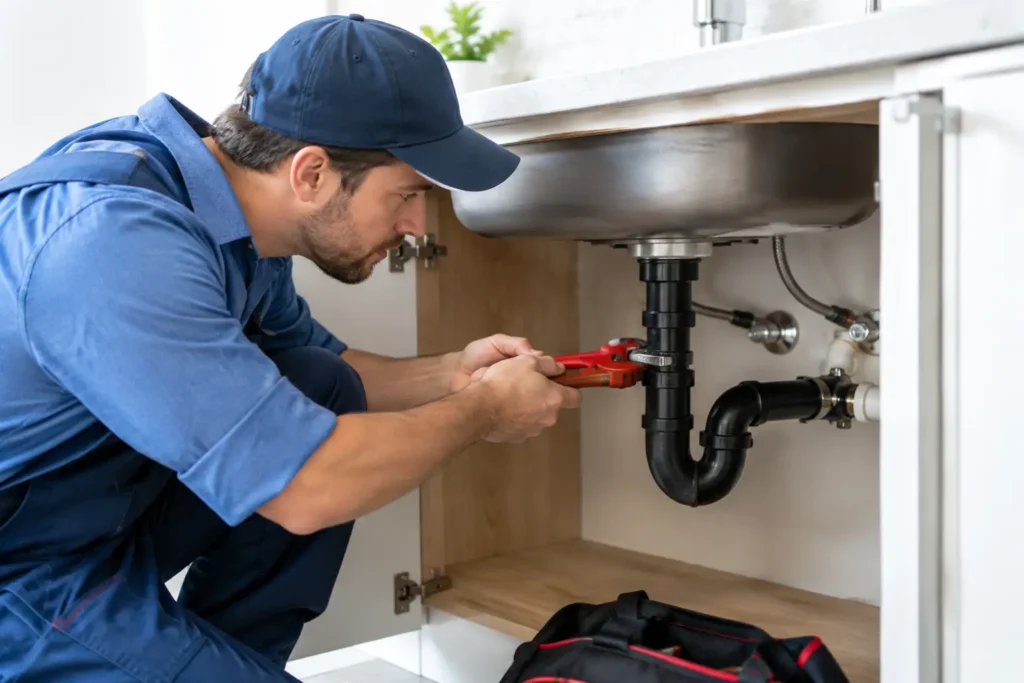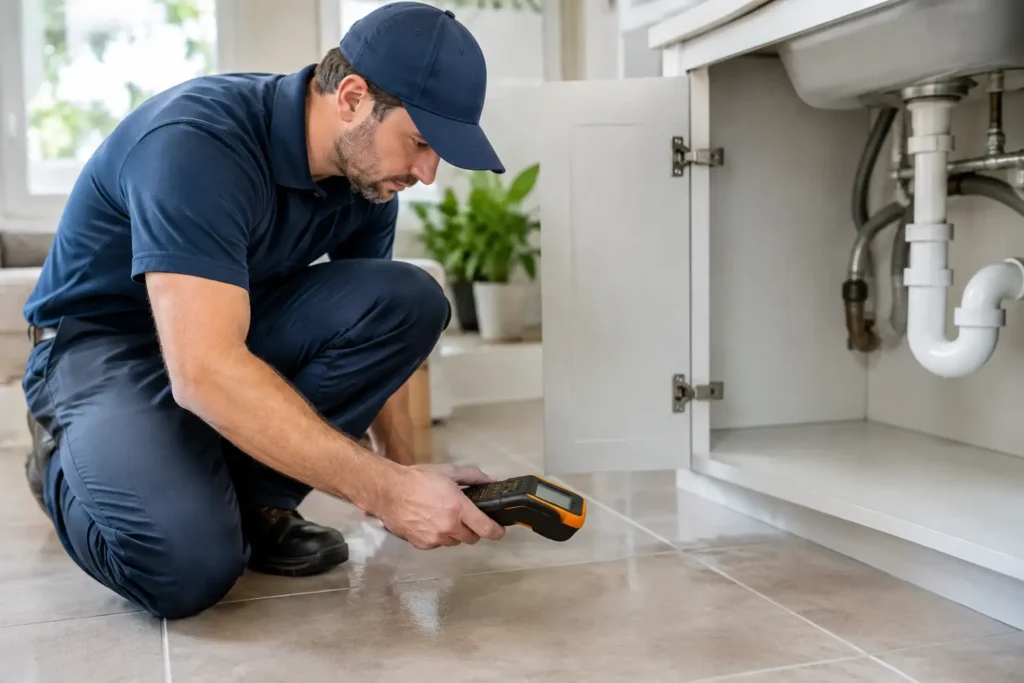


A slab leak rarely announces itself with a broken pipe or a flooded room. More often, it starts with a water bill that does not make sense, a warm patch on the floor, or the quiet sound of water moving when every fixture is off. Slab leak detection Jacksonville homeowners need should begin with finding the true source of the problem, not guessing at what is happening below the concrete.
A leak beneath or within a home’s concrete slab can waste water, affect flooring, and create moisture problems that spread beyond the original pipe failure. The right response is calm, timely diagnosis followed by a repair plan that fits the home, the pipe condition, and the location of the leak.
What Is a Slab Leak?
A slab leak is a leak in a water line or drain line located beneath a concrete foundation. In Northeast Florida homes, the term most often refers to a pressurized water line leaking below the slab. Because the pipe is hidden, the water may travel before it becomes visible indoors.
This is why the place where you see moisture is not always where the pipe has failed. Water can move through soil, along the slab, or into nearby walls and flooring. Breaking concrete at the first visible sign without proper testing can create unnecessary damage and still miss the actual problem.
Signs You May Have a Leak Beneath the Slab
No single symptom proves there is a slab leak. A professional diagnosis looks at the complete pattern, including plumbing use, meter activity, visible moisture, and test results. Still, several warning signs deserve attention.
A higher-than-normal water bill is often one of the first clues, especially when household water use has not changed. You may also notice that the water meter continues to register usage after faucets, appliances, and irrigation are off.
Warm or unusually cool areas on a floor can point to a leaking hot or cold water line below the slab. Damp carpet, warped flooring, loose tile, or a musty smell may indicate moisture is reaching the living area. In some cases, homeowners hear a faint rushing or hissing sound with no fixtures operating.
Other signs can include reduced water pressure, recurring moisture at the base of a wall, or cracks that seem to be worsening near affected flooring. These symptoms can have other causes, so they should not be treated as a final diagnosis on their own.
Why Proper Slab Leak Detection Matters
The repair decision depends on knowing what line is leaking, where it is located, and how the pipe is performing overall. A water line leak, a drain line issue, condensation, roof intrusion, and a failing appliance connection can all create moisture concerns that look similar at first.
Professional slab leak detection in Jacksonville helps separate those possibilities before repair work begins. The goal is to avoid opening floors or concrete based on assumptions. A clear diagnosis also helps a homeowner understand whether the issue is isolated or whether aging or damaged piping could make a broader solution more practical.
This diagnostic-first approach protects more than the slab. It can reduce disruption to finished flooring, walls, cabinets, and daily routines by keeping the repair focused on the actual issue.
How a Professional Diagnoses a Slab Leak
The process typically begins with questions about the symptoms: when they started, whether the water bill changed, where moisture appears, and whether there have been past pipe repairs. A plumber will also inspect accessible plumbing, fixtures, water heaters, and visible supply connections. Sometimes the source is above the slab and can be corrected without more invasive work.
If a hidden leak remains likely, the plumber may use a combination of water meter checks, pressure testing, isolation testing, and other location methods appropriate for the plumbing system. The exact testing method depends on the home and the suspected line. The purpose is not simply to confirm that water is being lost, but to narrow down where and why.
Once findings are available, a qualified plumber should explain them in plain language. You should understand what is known, what remains uncertain, what repair paths are available, and what areas of the home could be affected by the selected approach.
Repair Options Depend on the Pipe and the Home
There is no one repair method that fits every slab leak. The best option depends on pipe material, accessibility, the location of the failure, the age and condition of the system, and whether the line has leaked before.
For an isolated, accessible failure, a direct repair may be appropriate. This can involve accessing the affected area and repairing the damaged section of pipe. It can be a sensible option when testing supports a localized issue and the surrounding piping is in sound condition.
In other situations, rerouting a line may avoid opening a larger section of slab. A reroute changes the path of a water line through accessible areas of the home rather than repairing the original line beneath the concrete. This option may make sense when access is difficult or when the original route is no longer a good long-term choice.
If testing and pipe history suggest more widespread concerns, repiping may deserve consideration. Repiping is a larger project, but it can be the more practical path when repeated spot repairs would leave the homeowner with an unreliable system. A professional plumber should present these as options, not pressure a homeowner toward a one-size-fits-all answer.
What to Do When You Suspect a Slab Leak
Do not ignore the signs while waiting for a larger wet area to appear. Continued water loss can add to property damage and may make restoration more involved. Contact a licensed plumbing contractor for an inspection and let the diagnosis guide the next step.
If water is actively surfacing, a ceiling or wall is becoming wet, or you see damage developing quickly, treat it as an urgent plumbing issue. Avoid using affected areas if flooring feels unstable or moisture is near electrical components. A professional can advise you on immediate steps for your specific situation and inspect the plumbing safely.
It is also useful to document what you have noticed. Take photos of damp areas, note the date you first saw the problem, and keep recent water bills available if the bill has changed. These details can help establish the pattern without requiring you to make assumptions about the cause.
Questions Worth Asking Before Repair Begins
Clear communication matters when a repair may involve flooring, walls, or concrete. Ask what testing identified, which pipe is affected, and whether the proposed repair addresses a single failure or a larger piping concern. You should also ask what access will be needed and what portion of the plumbing work is included.
A good plumbing contractor will explain the practical trade-offs. Direct access may be the least extensive plumbing repair for one localized failure, but it can affect finished surfaces. A reroute may reduce slab access but require work in other parts of the home. The right choice depends on the evidence, not on a standard sales pitch.
Before authorized work starts, request transparent pricing and a clear scope of work. That gives you the information needed to make a confident decision without surprises.
Local Help for Hidden Plumbing Leaks
Homes across Jacksonville and St. Johns County can have very different plumbing layouts, pipe materials, and foundation conditions. That is why careful testing matters more than a quick assumption. Kingdom Based Plumbing Inc. approaches hidden leak concerns by identifying the source, explaining the findings, and presenting repair options based on the condition of the system and the needs of the property.
If a warm floor, unexplained water use, or recurring moisture is raising questions, getting it checked early can protect your home and give you a clearer path forward before a hidden leak becomes a larger repair.