

A hidden plumbing leak rarely announces itself with a burst pipe or flooded floor. More often, it starts with an unexpectedly high water bill, a faint musty odor near a wall, or a section of flooring that never seems to dry.
Knowing how to find hidden water leaks can help homeowners recognize problems before moisture spreads into drywall, cabinets, flooring, and other building materials.
The challenge is that water does not always appear directly beneath the leaking pipe. It can travel along framing, collect beneath flooring, or move through building materials before becoming visible.
At Kingdom Based Plumbing Inc., we believe the right approach starts with identifying the actual source of the problem—not opening walls or replacing plumbing based on guesswork.
If you suspect a concealed plumbing problem, professional leak detection services can help determine the appropriate next step.
Signs You May Have a Hidden Water Leak
Some hidden water leaks develop gradually, making the warning signs easy to overlook.
A small leak can remain concealed behind a wall, beneath a floor, or underground while moisture continues affecting the surrounding property.
Common warning signs include:
- An unexplained increase in your water bill.
- Water meter movement when fixtures are not being used.
- Damp drywall, bubbling paint, or peeling finishes.
- Soft baseboards or warped wood flooring.
- Persistent musty odors in bathrooms, kitchens, or laundry rooms.
- Water stains on ceilings or walls.
- Unexplained sounds of running water.
- Wet soil or unusually green patches of grass during dry weather.
- Warm areas of flooring that may indicate a leaking hot-water line.
These symptoms do not always mean a pressurized plumbing pipe is leaking. Drainage problems, condensation, roof leaks, irrigation issues, and other moisture sources can create similar conditions.
The goal is to identify the cause before recommending a repair.
Unusually High Water Bills
An unexpected increase in water consumption can be an early warning sign of a concealed plumbing leak.
However, higher usage does not automatically indicate a broken pipe.
Running toilets, irrigation system problems, outdoor faucets, and water treatment equipment can also increase consumption.
Comparing your current water bill with previous billing periods may help identify unusual changes.
If usage has increased without an obvious explanation, a water meter check can provide additional information.
Water Stains, Damp Walls, and Damaged Flooring
A water leak behind a wall may cause discoloration, peeling paint, softened drywall, or moisture around baseboards.
Leaks beneath flooring can contribute to warped wood, damaged underlayment, loose flooring materials, or persistent dampness.
Water may travel away from its original source before leaving visible damage.
For example, a ceiling stain beneath an upstairs bathroom could involve a supply connection, drain piping, shower assembly, toilet connection, or another source of moisture.
Finding the stain is only the beginning. Identifying the source is what allows the proper repair to be made.
Musty Odors and Persistent Moisture
A persistent musty smell can indicate moisture accumulating in an area with limited ventilation.
Bathrooms, laundry rooms, kitchens, closets, and under-sink cabinets are common places to notice these odors.
Moisture can also collect in concealed building cavities.
A musty odor does not prove that a plumbing pipe is leaking, but it deserves investigation, especially when accompanied by visible dampness or changes in water consumption.
Running Water Sounds When Fixtures Are Off
Hissing, dripping, or running-water sounds when no fixtures are operating may indicate water movement somewhere in the plumbing system.
A toilet that refills intermittently is one possible cause.
A concealed supply-line leak is another.
Before assuming a pipe has failed, check whether appliances, irrigation systems, or water treatment equipment are operating automatically.
If the sound continues without an obvious explanation, professional evaluation may be appropriate.
How to Find Hidden Water Leaks Using Your Water Meter
A water meter test is one of the simplest ways to screen for possible water loss in a plumbing system.
It does not locate the leak, but it may help determine whether water is moving when the property is not intentionally using it.
Step 1: Stop Normal Water Use
Choose a time when no one needs to use water for approximately 30 to 60 minutes.
Make sure faucets, showers, toilets, washing machines, dishwashers, and outdoor watering equipment are not operating.
Be aware that ice makers, water softeners, irrigation systems, and other equipment may use water automatically.
Step 2: Locate and Record the Water Meter Reading
Find the property’s water meter and record the current reading or take a clear photograph.
Some meters include a small leak indicator that responds to low water flow.
Other meters may have a digital display or require comparing readings over time.
Do not force open a damaged meter enclosure or interfere with utility equipment.
Step 3: Check for Unexpected Water Movement
If the meter continues registering water use while all known fixtures and equipment are inactive, there may be an active leak or another source of unintended consumption.
If no leak indicator is available, compare the meter reading after the waiting period.
A change may indicate water usage that deserves further investigation.
Step 4: Understand What the Test Can and Cannot Tell You
A water meter test can suggest that water is being used unexpectedly.
It generally cannot identify whether the source is:
- A running toilet.
- A leaking faucet or fixture connection.
- A concealed water supply pipe.
- An underground water service line.
- An irrigation system.
- Water treatment or other automatically operating equipment.
Some leaks are intermittent, and some moisture problems involve drains or other sources that a water meter test will not identify.
Treat the results as a useful clue rather than a complete diagnosis.
Check Accessible Plumbing Before Assuming a Hidden Pipe Has Failed
Some plumbing leaks are difficult to see simply because they occur inside cabinets, behind appliances, or around fixtures that homeowners rarely inspect.
Checking accessible areas may help identify an obvious problem before more extensive diagnostics are considered.
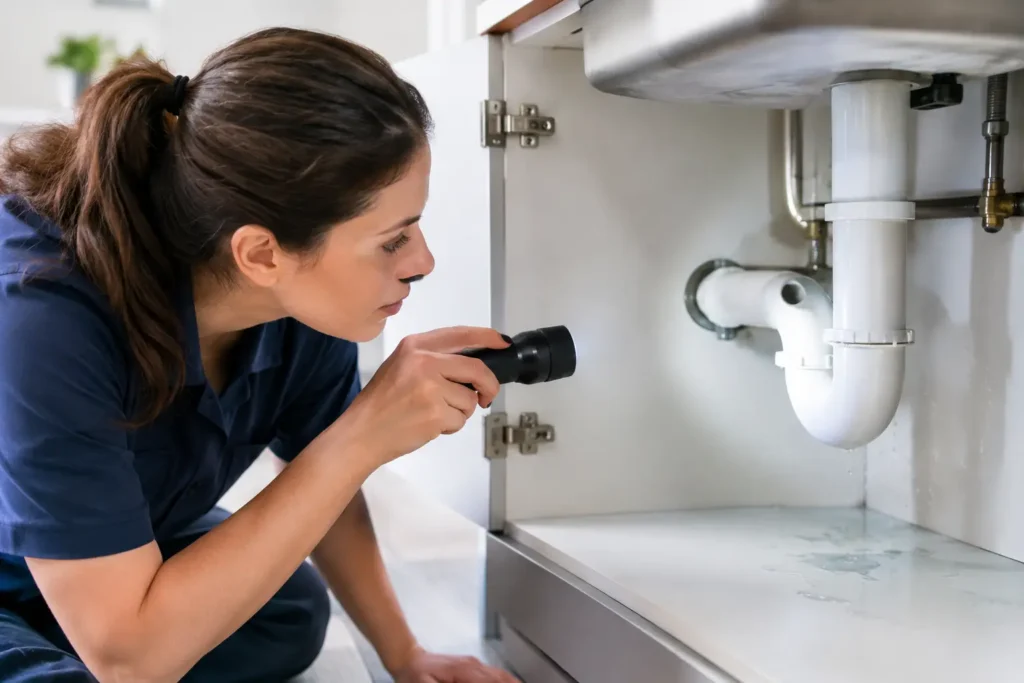
Inspect Faucets and Under-Sink Connections
Look beneath kitchen and bathroom sinks for damp cabinet surfaces, dripping connections, corrosion, or water staining.
Inspect visible supply connections and drain piping without disturbing fragile or deteriorated components.
A leaking faucet connection can cause significant cabinet damage over time.
Learn more about faucet and fixture repair.
Check Toilets for Silent Leaks
Toilets can waste water without leaving a visible puddle.
A deteriorated flapper, fill valve problem, or improperly adjusted tank component may allow water to flow continuously or intermittently.
Listen for unexpected refilling and look for movement in the toilet bowl when the fixture has not been flushed.
Moisture around the toilet base may indicate a different problem requiring evaluation.
A toilet leak and a concealed pipe leak require different repair approaches.
Look Around the Water Heater
Inspect the visible area around the water heater for moisture, staining, corrosion, or dripping connections.
A wet floor near a water heater does not automatically mean the tank has failed.
Water may originate from a nearby fitting, valve, piping connection, condensate source, or another component.
Avoid removing electrical covers, adjusting gas components, or attempting to repair pressurized connections without appropriate training.
How to Identify a Possible Water Leak Behind a Wall
A concealed water leak behind drywall can be difficult to locate because the visible damage may appear some distance from the actual plumbing failure.
Warning signs can include:
- Repeated dampness in the same location.
- Bubbling paint or soft drywall.
- Water stains that continue spreading.
- Moisture around trim or baseboards.
- Running-water sounds inside a wall.
- Unexplained water meter activity.
A plumber may evaluate accessible fixtures, supply connections, and related plumbing before determining whether specialized leak-location methods or limited access openings are necessary.
Opening a wall without first narrowing down the possible source can create unnecessary damage.
The objective should be to identify the likely failure location and develop a practical repair plan.
What Are the Signs of a Slab Leak?
A slab leak generally refers to a plumbing leak involving piping beneath or within a concrete slab foundation.
Potential warning signs include unexplained water consumption, moisture appearing near flooring, or unusual warm areas associated with leaking hot-water piping.
Other possible symptoms include changes in water pressure or persistent dampness near floor edges.
However, these signs are not exclusive to slab leaks.
Condensation, exterior drainage, irrigation, and other plumbing problems can produce similar symptoms.
A suspected slab leak should be evaluated carefully before concrete is opened or piping is replaced.
Depending on the condition and layout of the plumbing, the appropriate solution may involve a targeted repair, rerouting a section of piping, or a broader replacement discussion.
How to Recognize a Possible Underground Water Line Leak
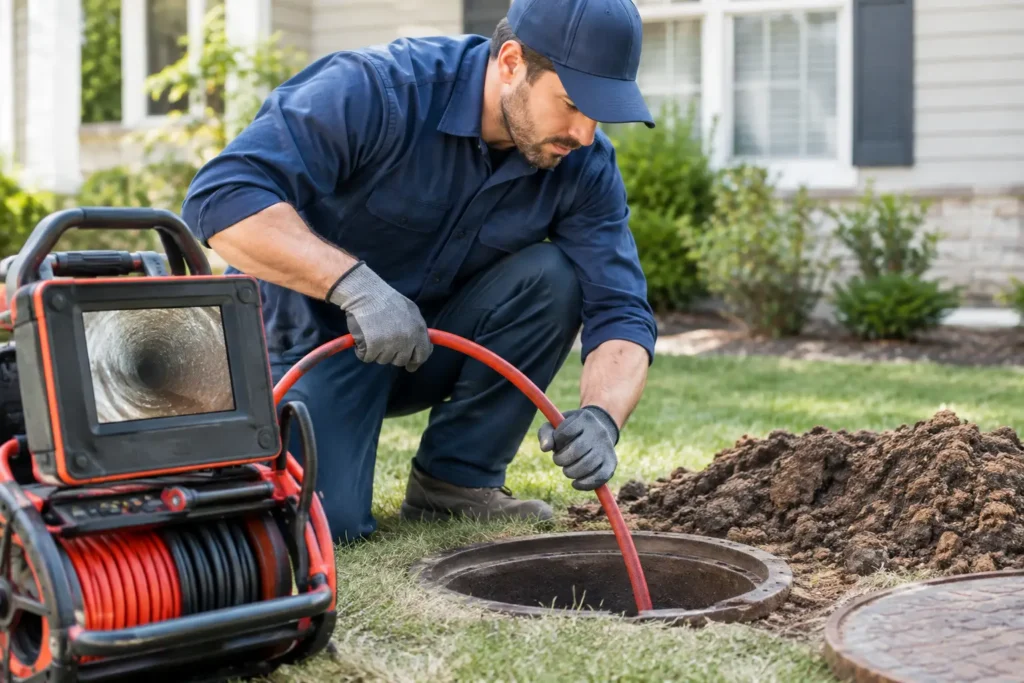
Underground water service lines can develop leaks that remain hidden beneath soil, landscaping, driveways, or other exterior areas.
Warning signs may include:
- Unusually wet soil during otherwise dry conditions.
- Persistent puddles near the water service route.
- Unexpected water meter movement.
- Reduced water pressure.
- Unexplained increases in water consumption.
- Isolated areas of unusually vigorous grass growth.
In Northeast Florida, frequent rainfall and irrigation can make these symptoms harder to interpret.
A wet yard alone does not prove that an underground plumbing line is leaking.
A professional evaluation helps distinguish plumbing-related water loss from irrigation, stormwater, or other site conditions.
Why Professional Hidden Water Leak Detection Matters
Finding moisture and finding the source of a leak are two different tasks.
Water can move through framing, beneath flooring, and along building materials before becoming visible.
A diagnostic-first plumbing evaluation may involve reviewing water consumption, inspecting accessible plumbing, testing fixtures, and narrowing down possible leak locations.
Depending on the situation, specialized equipment or additional testing may be appropriate.
The objective is to gather reliable information before recommending unnecessary demolition or extensive plumbing replacement.
A single failed fitting may require a targeted repair. Repeated failures involving aging piping may justify discussing a more comprehensive solution.
The correct recommendation depends on the actual condition of the plumbing system.
When Should You Call a Plumber for a Hidden Water Leak?
Some water leak situations deserve prompt professional attention.
Contact a licensed plumber when:
- Water is actively spreading through walls, ceilings, or floors.
- The water meter indicates unexplained continuous consumption.
- Water pressure has dropped unexpectedly along with signs of leakage.
- Moisture continues returning after an area has been dried.
- A concealed leak is suspected beneath a slab or underground.
- Water is threatening cabinets, flooring, drywall, or other property.
If water is actively damaging the property, shutting off the appropriate water supply may help limit further damage when the shutoff can be reached safely.
Avoid touching wet electrical equipment, outlets, or panels.
For urgent plumbing concerns, visit our emergency plumbing services.
What Happens After a Hidden Water Leak Is Repaired?
Repairing the plumbing failure is an important step, but the surrounding materials may also need attention.
Water-damaged drywall, insulation, cabinetry, flooring, or other materials should be evaluated and dried appropriately.
A plumbing repair does not automatically resolve moisture already trapped inside building materials.
When water damage is present, Kingdom Based Plumbing can help homeowners understand when a professional restoration evaluation may be appropriate.
A restoration company may be needed to assess drying, sanitation, and affected materials.
After repairs, monitoring the water meter and future water bills can also help determine whether unexpected water consumption continues.
Hidden Water Leak Detection in St. Johns County and Northeast Florida
Kingdom Based Plumbing Inc. is a family-owned plumbing company serving St. Johns County, Jacksonville, St. Augustine, Ponte Vedra, Nocatee, Fleming Island, and surrounding Northeast Florida communities.
We understand how frustrating it can be to discover water damage without knowing where the water is coming from.
Our approach begins with understanding the symptoms, identifying the likely source, and explaining practical repair options before authorized work begins.
Whether the concern involves a fixture connection, concealed water piping, an underground service line, or a suspected slab leak, the goal is to make informed decisions based on the condition of the plumbing.
We believe professional workmanship, clear communication, and no shortcuts are especially important when plumbing problems are hidden behind finished surfaces.
Schedule a Hidden Water Leak Evaluation With Kingdom Based Plumbing
If you’ve noticed an unexplained increase in your water bill, damp drywall, unusual flooring moisture, or water meter activity that you cannot explain, don’t ignore the warning signs.
A professional plumbing evaluation can help identify the source of the problem and determine the appropriate next step.
Call Kingdom Based Plumbing Inc. at 904-814-8541 to discuss your leak concerns and schedule service.
Finding the source early can help protect your property and prevent an overlooked plumbing problem from becoming a larger disruption.