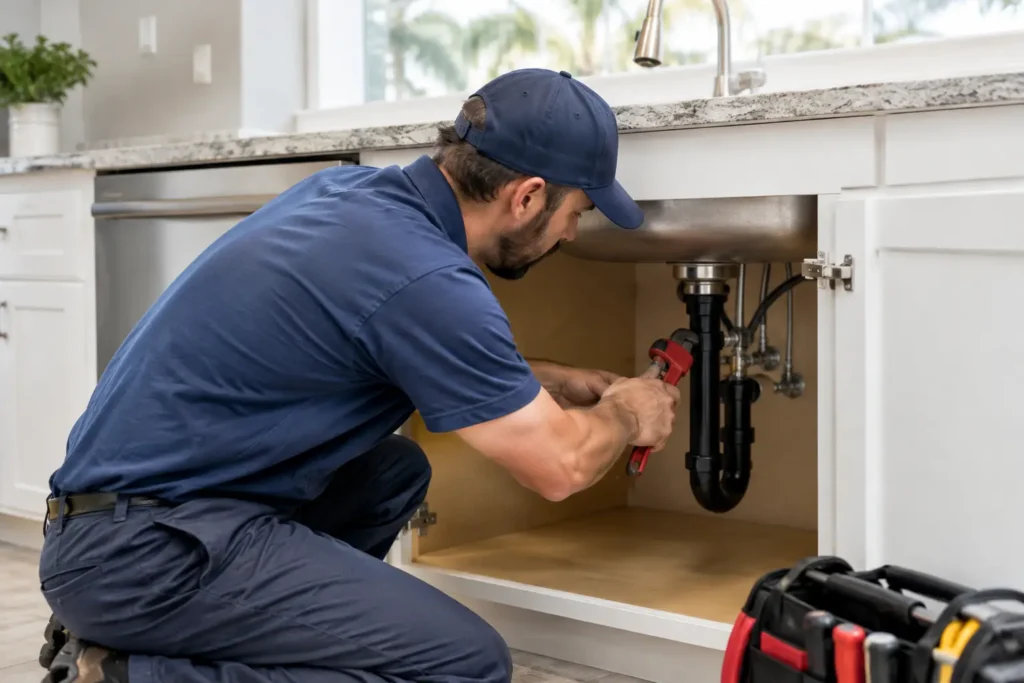


A dripping kitchen faucet, leaking bathroom fixture, or wet cabinet beneath the sink may seem like a small plumbing problem. However, even a minor leak can waste water, damage cabinetry, and create unnecessary frustration.
When homeowners search for faucet repair Jacksonville, they are usually looking for more than someone to stop a drip. They want to know what is leaking, whether the faucet can be repaired, and whether replacing it makes better long-term sense.
At Kingdom Based Plumbing Inc., we believe the right solution starts with identifying the source of the problem, explaining the available options, and performing professional work without unnecessary repairs.
Whether your faucet is dripping, leaking around the base, delivering weak water flow, or becoming difficult to operate, an accurate diagnosis helps protect your plumbing and your property.
What Causes a Leaking Faucet?
Kitchen and bathroom faucets contain several components that can wear over time.
Depending on the faucet design, these may include cartridges, stems, seals, washers, aerators, mounting hardware, and supply connections.
Common causes of faucet problems include:
- Worn or damaged faucet cartridges.
- Deteriorated internal seals or washers.
- Mineral buildup in aerators or valve components.
- Loose or leaking water supply connections.
- Corroded faucet components.
- Damaged mounting hardware.
- Excessive water pressure or other plumbing conditions.
- Aging or deteriorated fixture materials.
The location of the leak often provides useful clues.
A faucet dripping from its spout may have a different problem than one leaking beneath the sink.
Replacing the wrong component can leave the original issue unresolved.
Why Does My Faucet Drip When It Is Turned Off?
A faucet that continues dripping after the handle is closed may have a worn internal sealing component.
Many modern single-handle faucets use cartridges to control water flow and temperature.
Some two-handle faucets use stems, washers, or other sealing mechanisms.
Over time, these components can deteriorate, develop mineral buildup, or stop sealing properly.
A professional plumber can identify the faucet design and determine whether a compatible replacement component is available.
Not every dripping faucet requires complete replacement.
When the faucet body remains in good condition and the appropriate parts are available, a targeted repair may restore dependable operation.
Why Is Water Leaking Around the Faucet Base?
Water collecting around the base of a faucet can have several causes.
Depending on the fixture design, worn seals, loose mounting components, or internal leakage may allow water to escape.
However, moisture around the faucet does not always originate inside the faucet itself.
Water may also travel from:
- A loose supply connection.
- A countertop or sink opening.
- A leaking sprayer hose.
- A nearby accessory connection.
- Water splashing around the sink.
- A separate drain or plumbing issue.
Identifying the actual water path helps avoid unnecessary fixture replacement.
If moisture has reached the cabinet or surrounding materials, those areas should also be evaluated for damage.
What Causes Low Water Pressure at a Faucet?
Weak water flow at a single faucet often indicates a restriction near that fixture.
A clogged aerator, deteriorated cartridge, partially closed shutoff valve, or restricted supply connection may be responsible.
If multiple faucets throughout the home have weak flow, the cause may be farther upstream in the plumbing system.
Possible concerns include pressure regulator problems, restricted piping, water treatment equipment, or an issue with the incoming water supply.
Low water flow and low water pressure are not always the same condition.
A plumber can help determine whether the problem is isolated to the faucet or involves a larger plumbing component.
Faucet Repair vs. Faucet Replacement: Which Makes More Sense?
The right decision depends on the faucet’s age, condition, design, and availability of replacement parts.
When Faucet Repair Is a Good Option
Repair may be appropriate when:
- The faucet body remains structurally sound.
- A compatible cartridge or replacement component is available.
- The problem is limited to a serviceable internal part.
- The faucet finish and mounting components are in acceptable condition.
- The homeowner wants to preserve an existing matching fixture.
- The expected repair will provide dependable operation.
Replacing a worn cartridge, seal, or supply connection can sometimes restore the faucet without changing the entire fixture.
When Faucet Replacement May Be Better
Replacement may be worth considering when:
- The faucet has recurring leaks.
- Internal corrosion is extensive.
- Replacement parts are unavailable.
- The faucet body is cracked or deteriorated.
- Multiple components are failing.
- The homeowner wants to upgrade the fixture.
- Repair would not provide a dependable long-term result.
A professional recommendation should consider the condition of the existing faucet rather than automatically recommending replacement.
What Should Homeowners Know Before Buying a Replacement Faucet?
Not every faucet fits every sink or countertop.
Before purchasing a replacement, consider:
- The number and spacing of mounting holes.
- The sink or countertop mounting configuration.
- Faucet height and surrounding clearance.
- The available space beneath the sink.
- The type of sprayer or accessory connections.
- Compatibility with existing water supply connections.
- Whether additional accessories or mounting components are required.
A pull-down kitchen faucet, for example, needs adequate clearance beneath the sink for the hose and weight to move properly.
A faucet that looks attractive online may not fit the existing installation without additional work.
Reviewing the fixture specifications before installation can help prevent unnecessary delays.
Why Undermount Sinks and Tight Cabinets Can Affect Installation
Some faucet installations are more difficult because of restricted access beneath the sink.
Undermount sinks, deep sink bowls, cabinet framing, garbage disposals, and other equipment can limit the space available for removing and installing faucet mounting hardware.
Older mounting nuts may also be corroded or difficult to reach.
These conditions can require additional labor or specialized access methods.
At Kingdom Based Plumbing, we believe customers should understand these circumstances before additional work is performed.
If unusually restricted access requires additional labor, the scope and pricing should be discussed before proceeding.
Are Touchless and Specialty Faucets Different?
Yes. Motion-sensor, touchless, electronic, and specialty faucets may require additional installation steps compared with standard mechanical faucets.
Some models include battery packs, control modules, electrical connections, or manufacturer-specific components.
These systems can also have different troubleshooting requirements.
A standard faucet installation should not automatically be assumed to include specialty electronic features, electrical work, or modifications to the surrounding countertop.
The faucet model and installation requirements should be reviewed before work is authorized.
Don’t Overlook the Shutoff Valves and Supply Lines
A faucet repair or replacement may reveal related plumbing concerns beneath the sink.
The hot and cold water shutoff valves, sometimes called angle stops, control water delivery to the fixture.
Older valves may become difficult to operate, develop leaks, or fail to shut off completely.
Flexible supply connections can also deteriorate or become damaged.
A new faucet does not automatically correct an existing problem with the shutoff valves or supply piping.
If these components need additional work, the homeowner should receive an explanation and an opportunity to approve the repair.
Can a Faucet Leak Damage Cabinets and Flooring?
Yes. A small leak beneath a kitchen or bathroom sink can affect surrounding materials over time.
Cabinet bottoms, shelving, baseboards, flooring, and nearby drywall may absorb moisture before the leak becomes obvious.
Warning signs include:
- Damp or swollen cabinet materials.
- Water staining.
- Persistent musty odors.
- Corrosion around plumbing connections.
- Moisture beneath stored items.
- Peeling finishes or deteriorating cabinet surfaces.
The source may be a faucet connection, drain assembly, garbage disposal, filtration connection, or another nearby plumbing component.
If the source is unclear, professional leak detection services may help determine the appropriate next step.
When water damage is present, a professional restoration evaluation may also be appropriate.
Does Faucet Replacement Include Drain or Countertop Work?
Not automatically.
A standard faucet installation generally focuses on removing the existing faucet, installing the approved replacement, and connecting it to suitable existing water supply connections.
Depending on the project, additional work may be necessary.
Examples include:
- Replacing deteriorated shutoff valves.
- Correcting damaged supply connections.
- Modifying sink drain piping.
- Removing or relocating a garbage disposal.
- Altering countertop openings.
- Performing electrical work for specialty fixtures.
- Addressing unusually restricted installation access.
These items should be evaluated and discussed separately when they fall outside the approved faucet installation scope.
Clear expectations help prevent misunderstandings and allow homeowners to make informed decisions.
When Should You Call a Plumber for Faucet Repair?
Professional service is appropriate when:
- The faucet continues dripping after being shut off.
- Water leaks around the base or beneath the sink.
- Handles are difficult to operate.
- Hot or cold water flow becomes restricted.
- The faucet has recurring mechanical problems.
- Shutoff valves or supply connections appear damaged.
- A replacement faucet needs professional installation.
If a supply connection fails and water is actively damaging the property, shut off the appropriate water supply if it can be done safely.
For urgent plumbing leaks, visit our emergency plumbing services.
Faucet Repair in Jacksonville and St. Johns County
Kingdom Based Plumbing Inc. is a family-owned plumbing company serving Jacksonville, St. Johns County, St. Augustine, Ponte Vedra, Nocatee, Fleming Island, and surrounding Northeast Florida communities.
We understand that homeowners want plumbing repairs completed correctly, with clear communication and respect for their property.
Our approach begins with identifying the actual problem and explaining the available options.
Whether your kitchen faucet needs a cartridge replacement, your bathroom faucet is leaking, or you’re ready to install a new fixture, we focus on professional workmanship and practical solutions.
We believe in clean work, proper installation, transparent pricing, and no shortcuts.
Schedule Faucet Repair With Kingdom Based Plumbing
If your faucet is dripping, leaking beneath the sink, or no longer operating properly, don’t wait for a small plumbing issue to create additional damage.
A professional evaluation can help determine whether a targeted repair or complete faucet replacement is the better choice.
Call Kingdom Based Plumbing Inc. at 904-814-8541 to discuss your faucet problem and schedule service.
The right repair starts with understanding the source of the problem and choosing a solution that makes sense for your home.