

Heat Pump Water Heater: Is It Worth It in Florida?
A heat pump water heater can dramatically change how much electricity your home uses to produce hot water. Instead of relying primarily on electric resistance elements, it moves heat from the surrounding air into a storage tank.
For homeowners in Jacksonville, St. Johns County, Nocatee, Ponte Vedra, and St. Augustine, Florida’s warm climate makes this technology particularly interesting.
But is a heat pump water heater worth the investment?
The answer depends on more than the efficiency rating. Your household’s hot-water demand, installation location, available airflow, condensate drainage, electrical setup, and equipment size all affect the decision.
At Kingdom Based Plumbing Inc., we help homeowners compare conventional electric, hybrid, and tankless water heaters based on their homes and actual usage.
If you’re planning a replacement, explore our water heater repair and installation services or call 904-814-8541.
What Is a Heat Pump Water Heater?
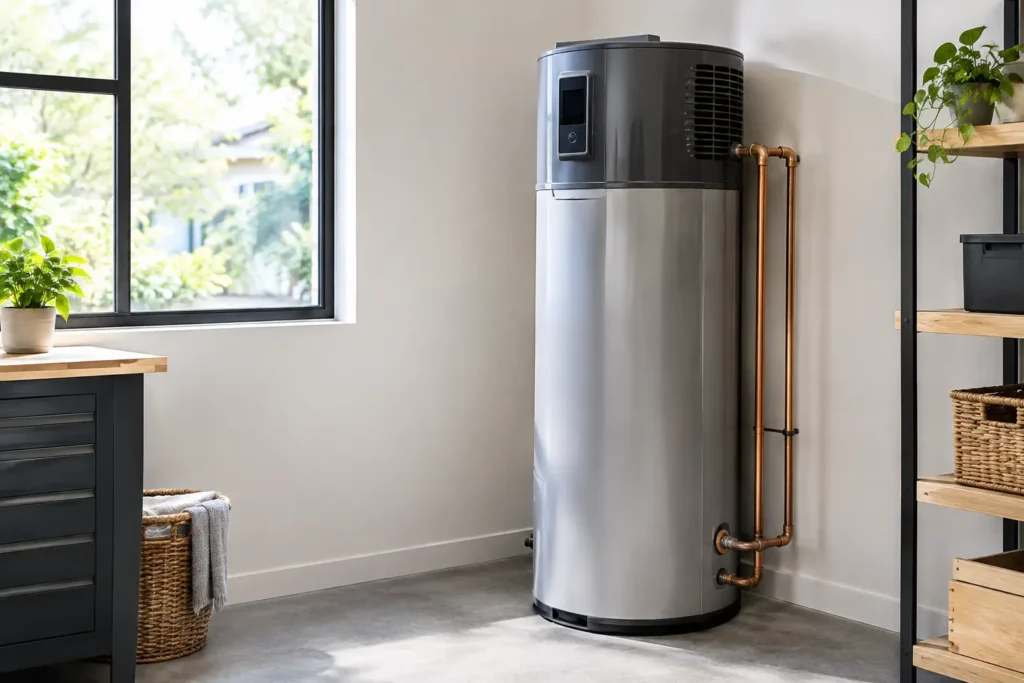
A heat pump water heater uses refrigeration technology to collect heat from the surrounding air and transfer it into stored water.
This differs from a conventional electric tank, which primarily generates heat through electric resistance elements.
Moving existing heat can require substantially less electricity than generating the same amount of heat directly.
The U.S. Department of Energy explains how heat pump water heaters operate and why installation conditions matter.
Heat Pump Water Heater vs. Hybrid Water Heater
The terms are often used interchangeably.
Most residential hybrid water heaters combine a heat pump with electric resistance elements.
The heat pump provides efficient heating during normal operation, while supplemental electric elements can help during periods of heavy demand.
If you’re unfamiliar with the technology, our guide to hybrid water heaters explains the basic operation and homeowner considerations.
This article focuses on choosing the right equipment, understanding installation requirements, and evaluating the investment.
Why Heat Pump Water Heaters Make Sense in Florida
Florida’s generally warm climate can support efficient heat pump operation.
These systems work by extracting heat from the air around them, making installation conditions especially important.
Warm Garages Can Be Suitable Locations
Many Northeast Florida homes have water heaters in garages.
A properly sized garage may provide enough air volume and favorable ambient temperatures for efficient operation.
However, the installation must meet the specific manufacturer’s requirements for airflow, temperature, clearances, and service access.
The Unit Cools and Dehumidifies Nearby Air
During heat pump operation, the system removes heat and some moisture from surrounding air.
This can make the immediate installation area cooler and drier.
That effect may be welcome in a garage, but it may be less desirable inside a conditioned living space.
A heat pump water heater should not be considered a replacement for a dedicated air-conditioning or dehumidification system.
Florida Humidity Makes Drainage Important
Because the system removes moisture from air, it produces condensate.
That water needs a properly designed discharge route.
Depending on the installation, this may involve a gravity drain, condensate pump, or another approved arrangement.
Poor drainage can create standing water, damage finishes, or cause moisture problems.
At Kingdom Based Plumbing, we evaluate condensate routing before recommending an installation.
How Much Money Can a Heat Pump Water Heater Save?
A heat pump water heater can use significantly less electricity for water heating than a conventional electric resistance tank.
However, actual savings vary by household.
The most important factors include:
- Existing water heater efficiency
- Household hot-water consumption
- Local electricity rates
- Equipment efficiency
- Ambient air temperature
- Operating mode
- Installation conditions
- Frequency of supplemental electric heating
For example, a household that frequently uses high-demand or electric-only operation may see smaller savings than one that primarily operates in heat pump mode.
Understanding the EnergyGuide Label
When comparing equipment, review the yellow EnergyGuide label.
It provides standardized estimates of energy use and operating cost.
You can also compare eligible models through ENERGY STAR’s water heater resources.
These estimates help compare equipment, but they are not a guarantee of your actual utility bill.
What About Rebates and Tax Incentives?
Incentives can affect the total investment, but programs change over time.
Eligibility may depend on the purchase date, equipment efficiency, household qualifications, utility provider, and installation requirements.
Before making a purchasing decision, check current federal, state, and utility programs.
Do not assume that an older advertised tax credit or rebate is still available.
Heat Pump Water Heater Installation Cost: What Affects It?
Heat pump water heaters often cost more upfront than conventional electric tanks.
However, the equipment price is only one part of the installation.
The total scope may depend on several conditions.
Existing Water Heater Location
A garage installation with adequate space and accessible connections may be simpler than an installation inside a restricted closet.
Moving the water heater to another location can increase the amount of plumbing, drainage, and electrical work required.
Condensate Drainage
The installation must include a suitable way to handle condensate.
If an approved drain is not available nearby, additional piping or a condensate pump may be necessary.
The termination location matters. Condensate should not be discharged where it can damage the foundation, flooring, landscaping, or other materials.
Electrical Requirements
Many residential hybrid models require a dedicated electrical circuit.
However, requirements vary by manufacturer and model.
An existing conventional electric water heater circuit may be suitable for some replacements, but compatibility should be verified.
If electrical upgrades are required, they should be evaluated and performed by a qualified electrician.
Plumbing Connections and Valves
The condition of the existing shutoff valve, supply piping, fittings, drain pan, and relief discharge arrangement can affect the installation.
A replacement should address applicable installation requirements rather than automatically copying an outdated configuration.
Equipment Size and Accessibility
Hybrid units can be taller or larger than conventional tanks.
Door openings, overhead clearance, weight, and maintenance access should be evaluated before the equipment is purchased.
For a broader explanation of replacement planning, read our Jacksonville water heater replacement cost guide.
What Size Heat Pump Water Heater Do You Need?
Choosing the correct capacity is one of the most important decisions.
Common residential sizes include approximately 50, 65, and 80 gallons, although available capacities vary.
The right size depends on the household’s actual hot-water demand.
50-Gallon Heat Pump Water Heater
A 50-gallon model may be appropriate for households with moderate hot-water usage.
However, multiple consecutive showers, large tubs, and frequent laundry can increase demand.
65-Gallon Heat Pump Water Heater
A 65-gallon model provides additional stored hot water.
It may be worth considering for families with busy morning routines or households that frequently exhaust a smaller tank.
80-Gallon Heat Pump Water Heater
An 80-gallon model may suit larger households or homes with substantial back-to-back hot-water use.
The trade-offs include greater equipment size, weight, and upfront cost.
First-Hour Rating Matters More Than Tank Size Alone
A water heater’s first-hour rating estimates how much hot water it can deliver during a high-demand hour under standardized conditions.
Two models with similar tank capacities may perform differently.
The first-hour rating, recovery characteristics, operating mode, and household demand should all be considered.
Our recommendation: Choose a heat pump water heater based on how your family actually uses hot water, not simply the number of bathrooms.
Will a Heat Pump Water Heater Keep Up With Multiple Showers?
It can, provided the equipment is properly sized and operated.
However, heat pump-only operation generally recovers more slowly than electric resistance heating.
A household with multiple consecutive showers may need additional stored capacity or supplemental heating.
Why Recovery Time Changes
In efficient heat pump mode, the system prioritizes energy savings.
When the unit uses supplemental electric elements, recovery can be faster, depending on the model.
This means the same water heater can perform differently in different operating modes.
What If Your Family Runs Out of Hot Water?
Before assuming the equipment is defective, consider:
- Tank capacity
- First-hour rating
- Current operating mode
- Shower duration and flow rate
- Simultaneous appliance usage
- Incoming water temperature
- Whether the unit is recovering properly
A correctly sized unit should meet reasonable household demand without forcing constant use of the least-efficient settings.
Understanding Heat Pump Water Heater Operating Modes
Most hybrid water heaters offer several modes.
Names and functions vary by manufacturer.
Heat Pump or Energy Saver Mode
This setting generally prioritizes efficient heat pump operation.
It can reduce electricity consumption but may recover more slowly during heavy demand.
Hybrid Mode
Hybrid mode usually combines heat pump operation with supplemental electric heating when needed.
For many households, this provides a practical balance between efficiency and hot-water availability.
High Demand Mode
High Demand mode typically prioritizes additional heating capacity.
It can be useful during periods with multiple showers or unusually heavy hot-water use.
However, increased electric resistance heating can reduce energy savings.
Electric-Only Mode
Some units allow operation using electric resistance elements rather than the heat pump.
This may be useful under certain operating conditions, but it generally consumes more electricity than efficient heat pump operation.
Can You Schedule Operating Modes?
Some connected water heaters allow operating modes or schedules to be adjusted through a manufacturer app.
The exact features vary.
If automatic scheduling is supported, homeowners may be able to use higher-recovery settings during predictable high-demand periods and return to efficient operation afterward.
Confirm these features for the specific model before purchasing.
Heat Pump Water Heater Installation Requirements
A professional installation should account for more than simply connecting hot and cold water lines.
Airflow and Clearance
Heat pump water heaters need adequate airflow.
Manufacturers specify minimum clearances, ambient operating conditions, and sometimes room-volume or ventilation requirements.
Installing equipment in an unsuitable closet can restrict airflow and reduce performance.
Condensate Drainage
The condensate line must be routed and terminated appropriately.
Depending on the location, additional piping or a condensate pump may be required.
The drain should remain accessible for appropriate maintenance.
Water Connections
The existing water supply piping, shutoff valves, and fittings should be evaluated.
Deteriorated connections may need replacement.
Temperature and Pressure Relief Protection
The installation must include appropriate temperature and pressure relief protection and discharge piping.
Safety components should never be capped, obstructed, or modified improperly.
Drain Pan and Water Damage Protection
A suitable drain pan and drainage arrangement may be required depending on the location and applicable code.
Leak detection or automatic shutoff equipment may also be worth discussing where appropriate.
Electrical Compatibility
The electrical supply must match the selected equipment.
Any necessary wiring, breaker, circuit, or panel modifications should be performed by a qualified electrician.
Permits and Inspections
Applicable permits and inspections depend on the jurisdiction and scope of work.
A proper installation should comply with manufacturer instructions and applicable requirements.
Where Should You Install a Heat Pump Water Heater?
Location can determine whether a hybrid water heater performs well.
Garage Installation
A garage is often a practical option in Northeast Florida when airflow, temperature, drainage, and clearances are suitable.
Utility Room Installation
A utility room may work if it meets the equipment’s airflow and service requirements.
Noise and the cooling effect should be considered.
Closet Installation
A closet may require ventilation modifications or may be unsuitable for a particular model.
Never assume that a conventional water heater closet automatically meets hybrid equipment requirements.
Conditioned Interior Spaces
A heat pump water heater removes heat from the surrounding air.
In conditioned living space, this can interact with the home’s heating and cooling system.
A site evaluation should consider comfort, airflow, noise, and overall efficiency.
Are Heat Pump Water Heaters Noisy?
Heat pump water heaters produce some sound during normal operation.
The fan and compressor may create a steady hum.
Sound levels vary by model and installation.
A garage installation may be less noticeable than equipment installed next to a bedroom or office.
Consider the manufacturer’s published sound rating and the equipment’s proximity to living spaces.
Grinding, scraping, persistent alarms, or sudden changes in sound should be evaluated.
Heat Pump Water Heater Maintenance
Hybrid systems generally require more maintenance attention than basic electric tanks because they include heat pump components and condensate management.
Air Filter Cleaning
Many models have an air filter that should be inspected and cleaned according to manufacturer instructions.
A clogged filter can restrict airflow and reduce performance.
Condensate Drain Maintenance
Condensate drainage should remain clear and properly routed.
A blocked line can cause water accumulation or equipment faults.
Sediment Management
Mineral deposits can accumulate inside storage tanks.
Flushing or other maintenance should follow manufacturer recommendations and account for the equipment’s age and condition.
Older, deteriorated tanks may require additional caution before maintenance procedures.
Plumbing Connection Inspection
Visible piping, valves, fittings, and the surrounding area should be checked for leaks or corrosion.
Equipment-Specific Servicing
Internal refrigeration, electrical, control, and appliance components may require a qualified or manufacturer-authorized service provider.
Kingdom Based Plumbing’s plumbing installation work does not automatically include specialized internal equipment servicing.
Heat Pump Water Heater vs. Standard Electric Tank
| Feature | Heat Pump Water Heater | Standard Electric Tank | |—|—|—| | Heating method | Heat transfer with supplemental electric heating | Electric resistance heating | | Energy efficiency | Generally higher in suitable conditions | Generally lower | | Upfront cost | Usually higher | Usually lower | | Airflow needs | Important | Generally minimal | | Condensate drain | Typically required | Not normally produced by heating | | Noise | Fan and compressor | Usually relatively quiet | | Recovery | Varies by operating mode | Based on element capacity | | Maintenance | Tank and heat pump components | Primarily tank and electrical components |
A standard electric tank may remain a sensible option when installation constraints or upfront cost are the primary concerns.
A heat pump water heater may offer greater long-term value when the location and household demand support efficient operation.
Heat Pump Water Heater vs. Tankless Water Heater
Tankless water heaters heat water as it flows through the equipment.
They do not rely on a large storage tank, but their hot-water output is limited by flow rate and temperature rise.
Gas tankless models may require appropriate gas capacity, combustion air, venting, and condensate arrangements.
Electric tankless models may require substantial electrical capacity.
A heat pump water heater can be a strong option for homeowners who want efficient electric water heating while retaining stored hot-water capacity.
Neither technology is universally better.
The correct choice depends on household demand, available utilities, installation conditions, and long-term priorities.
Heat Pump Water Heater Pros and Cons
Advantages
- Can substantially reduce electricity used for water heating
- Well suited to many warm-climate installations
- Provides stored hot-water capacity
- Offers flexible operating modes on many models
- Can cool and dehumidify the immediate installation area
- May offer attractive long-term operating savings
Disadvantages
- Higher upfront equipment cost in many cases
- Requires adequate airflow and clearance
- Produces condensate
- Makes fan and compressor noise
- Can recover more slowly in efficient modes
- Requires maintenance of additional components
- May need plumbing or electrical modifications
The advantages are most valuable when the installation conditions are appropriate.
How to Choose the Right Heat Pump Water Heater
Before purchasing, ask these questions:
- Does the installation location provide sufficient airflow and clearance?
- Is there a suitable condensate drain route?
- Is the existing electrical supply compatible?
- What tank capacity and first-hour rating match the household’s demand?
- How much hot water is used during the busiest hour?
- Will operating noise be noticeable in nearby living areas?
- What maintenance does the manufacturer require?
- What warranty applies to the equipment, and what workmanship coverage applies to installation?
- Are current rebates or incentives available for this specific model and installation?
- How does the total installed cost compare with a conventional electric tank?
A professional evaluation should answer these questions before equipment is ordered.
Frequently Asked Questions
Is a heat pump water heater worth it in Florida?
For many homes, yes. Warm ambient conditions can support efficient operation, especially in suitable garages and utility spaces. Actual value depends on installation cost, household demand, electricity rates, and equipment selection.
Is a hybrid water heater the same as a heat pump water heater?
Most residential hybrid water heaters combine heat pump technology with supplemental electric resistance elements.
How much electricity does a heat pump water heater use?
Electricity consumption depends on the model, operating mode, household demand, and installation conditions. Compare EnergyGuide estimates for specific models rather than relying on a universal savings claim.
What size heat pump water heater do I need?
The appropriate size depends on household hot-water demand, first-hour rating, recovery characteristics, and operating mode. Common capacities include approximately 50, 65, and 80 gallons.
Can a heat pump water heater go in a garage?
Yes, many garages are suitable when the manufacturer’s airflow, temperature, clearance, and drainage requirements are met.
Does a heat pump water heater need a drain?
Most residential heat pump water heaters produce condensate during heat pump operation and require an appropriate drainage arrangement.
Can a heat pump water heater go in a closet?
Sometimes. The closet must meet the manufacturer’s specific installation requirements. Modifications may be necessary.
Will a heat pump water heater keep up with several showers?
It can when correctly sized and operated. Tank capacity, first-hour rating, recovery, and household usage all affect performance.
Are heat pump water heaters noisy?
They produce some fan and compressor noise during operation. The amount varies by model and installation.
Do heat pump water heaters work during winter?
Yes, within the manufacturer’s specified operating range. Performance and heating behavior may change as ambient temperatures decrease.
Is a heat pump water heater better than tankless?
Neither is automatically better. A heat pump water heater offers efficient electric storage heating, while tankless equipment has different capacity and installation characteristics.
How long does a heat pump water heater last?
Service life varies with equipment quality, water conditions, installation, maintenance, and usage. Manufacturer warranties and expected service life should be evaluated separately.
Heat Pump Water Heater Installation in Jacksonville and St. Johns County
If your existing water heater is aging, leaking, struggling to keep up with demand, or using more energy than expected, a heat pump model may be worth considering.
Kingdom Based Plumbing Inc. helps homeowners throughout Jacksonville, St. Johns County, Nocatee, Ponte Vedra, St. Augustine, and surrounding Northeast Florida communities evaluate water heater replacement options.
Our approach includes reviewing the existing plumbing, installation location, condensate drainage, equipment sizing, and other relevant requirements.
Whether you’re comparing conventional electric tanks, hybrid heat pump water heaters, or tankless systems, we focus on practical recommendations and proper plumbing installation.
Learn more about our water heater repair and replacement services.
Call Kingdom Based Plumbing at 904-814-8541 to discuss your water heater installation or replacement.
Clean work. Proper installation. No shortcuts.