

Water Heater Anode Rod: Signs, Lifespan, and Replacement
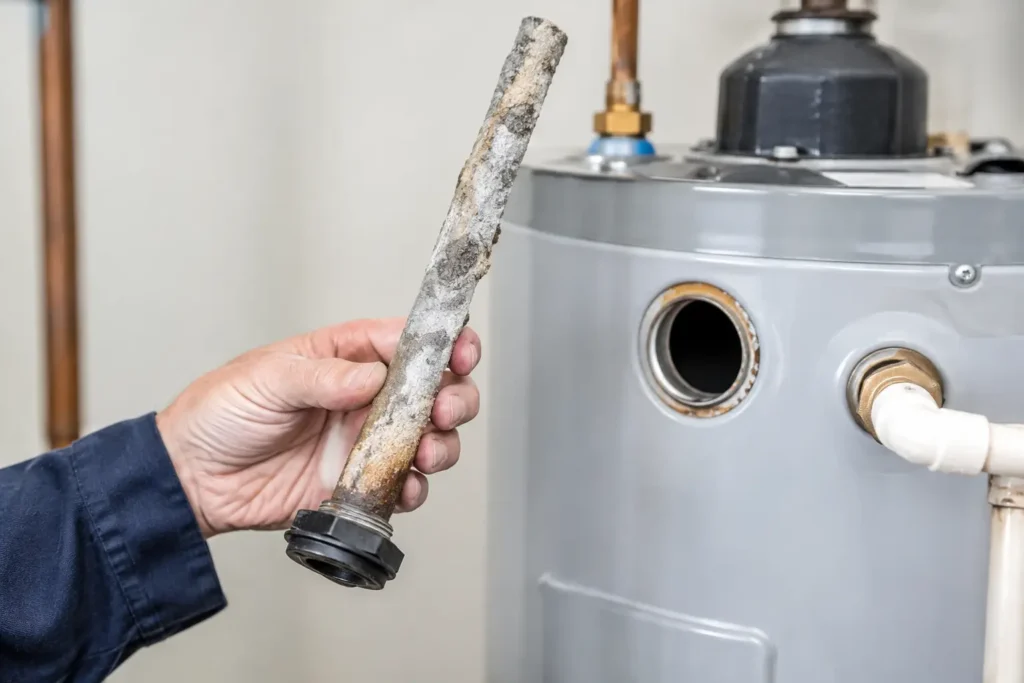
A water heater anode rod is one of the most important corrosion-protection components inside a conventional storage-tank water heater.
Most homeowners never see it, but the anode helps protect the steel tank from rusting internally.
Over time, the rod gradually deteriorates as it performs its job. Once its protective material becomes depleted, the tank may become more vulnerable to corrosion and premature failure.
Understanding how an anode works, when it should be inspected, and whether replacement makes sense can help homeowners make better water heater maintenance decisions.
For homes in Jacksonville, St. Johns County, Nocatee, Ponte Vedra, St. Augustine, and surrounding Northeast Florida communities, water chemistry, household usage, and equipment condition can all affect anode performance.
What Is a Water Heater Anode Rod?
A water heater anode rod is a corrosion-protection component found in many conventional storage-tank water heaters.
It typically consists of a metal core surrounded by a sacrificial material such as magnesium or aluminum.
The rod is installed through an opening in the tank, often near the top.
Its purpose is to help protect the steel tank from electrochemical corrosion.
Why Is It Called a Sacrificial Anode?
The anode is designed to corrode preferentially, helping protect exposed steel surfaces inside the water heater.
Most conventional storage tanks have a protective lining, but small imperfections or exposed areas may still exist.
The anode helps reduce corrosion at these vulnerable locations.
What Happens When the Anode Wears Out?
As the protective material is consumed, the rod becomes less effective.
If insufficient active material remains, exposed steel inside the tank may become more vulnerable to corrosion.
A depleted anode does not prove the tank has failed, but it may indicate that maintenance is needed.
Why Is a Water Heater Anode Rod Important?
Corrosion is one of the factors that can shorten the service life of a storage-tank water heater.
A functioning anode helps reduce internal corrosion and supports the tank’s long-term durability.
Helps Protect the Steel Tank
The anode provides corrosion protection where the tank lining may have imperfections.
Supports Water Heater Longevity
Maintaining an effective anode may help extend the usable life of an otherwise sound storage tank.
Helps Reduce Premature Tank Failure
Internal corrosion can eventually contribute to tank leakage.
Anode maintenance may reduce corrosion risk, although it cannot prevent every type of failure.
Provides a Useful Maintenance Indicator
The condition of the anode can offer information about how the heater is responding to the property’s water conditions.
How Long Does a Water Heater Anode Rod Last?
There is no universal replacement interval.
Anode lifespan varies depending on the water heater, rod material, water chemistry, and household demand.
Some rods may last several years, while others can deteriorate more quickly.
Factors That Affect Anode Lifespan
- Water chemistry
- Anode material
- Hot-water consumption
- Water heater design
- Water treatment equipment
- Temperature and operating conditions
- Manufacturer specifications
When Should You Inspect an Anode Rod?
Follow the water heater manufacturer’s maintenance instructions.
Some manufacturers recommend an initial inspection within the first few years, followed by periodic inspections based on the rod’s condition.
There is no single schedule appropriate for every model.
Does a Water Softener Affect Anode Rod Life?
Water treatment can change the chemistry of the water entering the heater.
In some conditions, softened water may accelerate consumption of certain sacrificial anodes.
That does not mean every water softener will cause premature anode failure.
The specific water conditions and heater design matter.
Seven Signs Your Water Heater Anode Rod May Need Attention
A worn anode often produces no obvious symptoms.
Physical inspection is generally more reliable than attempting to diagnose anode condition from water appearance or sound.
However, several warning signs may justify professional evaluation.
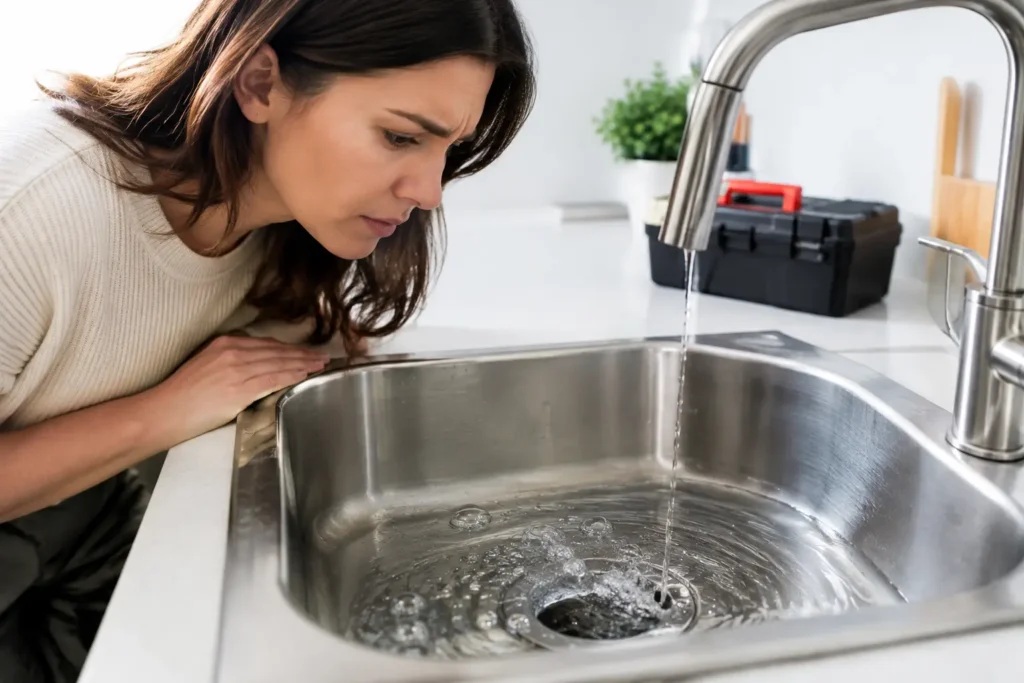
1. Rust-Colored Hot Water
Discolored hot water can indicate corrosion in the water heater or hot-water distribution piping.
If both hot and cold water are discolored, the source may be elsewhere.
Rusty water alone does not prove the anode is depleted.
2. Rotten-Egg Odor in Hot Water
A sulfur-like smell may occur because of interactions among water chemistry, microorganisms, and certain anode materials.
The problem may be more noticeable in hot water.
Anode material can be one factor, but odor diagnosis should consider the entire water system.
3. Visible Corrosion Around the Heater
Rust or staining near fittings, valves, or the tank jacket deserves attention.
External corrosion does not necessarily establish the condition of the internal anode.
4. An Aging Water Heater
As a conventional tank water heater gets older, checking its overall condition becomes increasingly important.
Anode inspection may be appropriate depending on the model and maintenance history.
5. A History of Rapid Anode Wear
If previous inspections showed unusually rapid consumption, more frequent monitoring may be justified.
6. Water Quality Changes
Changes in water treatment or supply conditions may affect corrosion behavior.
These changes can justify reviewing the maintenance plan.
7. Evidence of Tank Deterioration
A tank showing signs of leakage or significant deterioration requires professional evaluation.
At that stage, replacing the anode alone may not be a practical solution.
Magnesium vs. Aluminum vs. Powered Anode Rods
Not every anode rod is the same.
The appropriate type depends on equipment compatibility, water conditions, and manufacturer guidance.
| Anode type | Characteristics | Considerations | |—|—|—| | Magnesium | Common sacrificial anode material | May be consumed faster under certain water conditions | | Aluminum | Sacrificial corrosion protection | May be used where compatible and appropriate | | Aluminum-zinc | Used in some applications involving hot-water odor concerns | Must be compatible with the heater | | Powered anode | Uses an electrical system for corrosion protection | Requires compatible equipment and proper power supply |
Magnesium Anode Rods
Magnesium is commonly used in storage-tank water heaters.
It provides sacrificial corrosion protection but may deteriorate relatively quickly in certain water conditions.
Aluminum Anode Rods
Aluminum rods are another common option.
They may perform differently from magnesium rods depending on water chemistry.
Aluminum-Zinc Anode Rods
Certain aluminum-zinc rods are marketed for use where hot-water odor is a concern.
However, changing the rod is not guaranteed to eliminate odor.
Powered Anode Rods
Powered anodes use an impressed electrical current to provide corrosion protection rather than relying on sacrificial metal consumption in the same way.
They may be suitable for certain compatible water heaters.
However, they require the correct installation and power arrangement.
Do not assume an aftermarket anode is approved for every water heater. Manufacturer compatibility and warranty requirements should be checked before making changes.
Can a Bad Anode Rod Cause Smelly Hot Water?
Certain hot-water odor problems can involve reactions associated with anode materials and water chemistry.
A rotten-egg smell is often described as a sulfur odor.
Possible contributing factors include:
- Water chemistry
- Sulfate-related conditions
- Microbial activity
- Anode material
- Water treatment equipment
- Periods of low water use
A change in anode material may help in some cases, but it is not a universal solution.
If both hot and cold water smell unusual, the source may involve the incoming water supply rather than the water heater alone.
Water testing and professional evaluation may be appropriate.
Can a Worn Anode Rod Cause a Water Heater to Leak?
A depleted anode can reduce the tank’s corrosion protection.
Over time, internal corrosion may contribute to tank deterioration and leakage.
However, anode depletion does not automatically mean a leak will occur.
Other conditions can also cause water heater leaks.
Leaking Plumbing Connections
Supply connections and valves can develop leaks without the tank itself failing.
Temperature and Pressure Relief Discharge
Water at the relief discharge may indicate a pressure, temperature, valve, or other system concern requiring evaluation.
Never cap or block a relief valve discharge pipe.
Drain Valve Leakage
A drain valve can leak independently of the tank’s internal condition.
Tank Corrosion
When the tank vessel itself has corroded through, replacement is generally necessary.
Learn more about detecting plumbing leaks.
Should You Replace the Anode Rod or the Entire Water Heater?
The decision depends on the condition of the equipment.
| Water heater condition | What may make sense | |—|—| | Sound tank with depleted anode | Evaluate anode replacement | | Relatively new heater with rapid anode wear | Investigate water conditions and compatibility | | Hot-water odor without tank damage | Diagnose water chemistry and equipment | | Older heater with multiple failures | Compare maintenance with replacement | | Significant corrosion and deterioration | Evaluate replacement | | Leaking tank vessel | Usually replace the water heater |
When Anode Replacement Makes Sense
Replacing the rod may be worthwhile when:
- The tank is structurally sound.
- The equipment is otherwise operating properly.
- The rod is depleted.
- A compatible replacement is available.
- Access allows safe removal and installation.
- The manufacturer permits the procedure.
When Replacement May Not Be Worthwhile
Anode replacement may be impractical when:
- The tank is already leaking.
- Significant deterioration is present.
- The heater has multiple other failures.
- The anode cannot be safely removed.
- The equipment is near the end of its useful service life.
The overall condition of the water heater matters more than the condition of one component.
How Is a Water Heater Anode Rod Replaced?
Anode replacement is not always a simple maintenance task.
The water heater contains hot water under pressure and may be connected to gas or electrical systems.
The process generally requires:
- Confirming the equipment model and anode compatibility
- Evaluating the tank’s condition
- Safely shutting down and isolating the heater
- Relieving pressure as appropriate
- Accessing the anode connection
- Removing the existing rod
- Installing an approved compatible replacement
- Returning the system to service correctly
- Checking the affected connections for leaks
The exact process depends on the heater design.
Why Access Matters
Some water heaters are installed beneath low ceilings or inside tight closets.
Removing a long anode may require substantial vertical clearance.
Certain models have different anode configurations.
What If the Anode Is Seized?
Anode fittings may become difficult to remove.
Excessive force can damage the heater or connected piping.
A professional should evaluate whether removal is practical before proceeding.
Can Every Anode Rod Be Replaced?
No.
Accessibility, equipment design, manufacturer requirements, and tank condition may limit replacement options.
Does a Tankless Water Heater Have an Anode Rod?
Most conventional tankless water heaters do not use a sacrificial anode rod like a storage-tank water heater.
Tankless equipment heats water as it passes through a heat exchanger rather than storing a large volume in a steel tank.
Its maintenance requirements are different.
Depending on the equipment, maintenance may involve water-side flushing, filter cleaning, and other manufacturer-specified procedures.
Tankless service should not be confused with anode maintenance on a storage-tank heater.
What About Hybrid Water Heaters?
Many hybrid heat-pump water heaters use a storage tank and may include an anode or another corrosion-protection arrangement.
The exact design varies by manufacturer and model.
Hybrid units also have additional components associated with heat-pump operation.
Maintenance should follow the manufacturer’s instructions.
Learn more about hybrid water heaters.
What Should a Water Heater Inspection Include?
A water heater evaluation should consider more than the anode rod.
Depending on the equipment and approved service scope, relevant conditions may include:
- Age and model
- Visible corrosion
- Tank leakage
- Water supply connections
- Shutoff valve condition
- Drainage arrangements
- Temperature and pressure relief discharge
- Hot-water performance
- Water quality concerns
- Manufacturer maintenance requirements
Gas venting, combustion systems, electrical components, and internal appliance repairs may require additional qualified service beyond a plumbing-only inspection.
At Kingdom Based Plumbing, the approved estimate determines which services are included.
How to Help Your Water Heater Last Longer
Follow Manufacturer Maintenance Recommendations
Use the maintenance schedule appropriate for the specific equipment.
Monitor for Leaks
Inspect accessible connections and surrounding areas periodically.
Address Unusual Water Conditions
Persistent odor, discoloration, or mineral buildup may warrant evaluation.
Keep the Heater Accessible
Maintain appropriate access for inspection and service.
Review Water Treatment Equipment
Water softeners and filtration systems can affect water conditions.
Watch for Performance Changes
Reduced hot-water capacity, unusual noise, and inconsistent temperatures should be evaluated.
Maintain Service Records
Keep documentation of installation, inspections, and maintenance.
This may be helpful for warranty questions and future replacement decisions.
Frequently Asked Questions About Water Heater Anode Rods
What does a water heater anode rod do?
It helps protect the steel storage tank from electrochemical corrosion by providing sacrificial corrosion protection.
How long does a water heater anode rod last?
Lifespan varies with water chemistry, rod material, equipment design, and usage. Follow manufacturer inspection recommendations rather than relying on a universal interval.
How do I know if my anode rod is bad?
A worn anode often has no obvious symptoms. Physical inspection is generally the most reliable way to assess its condition.
Can I replace an anode rod myself?
The work involves hot, pressurized water and potentially gas or electrical equipment. Professional service is advisable when the homeowner is unfamiliar with the procedure or access is difficult.
What happens if I never replace my anode rod?
As the sacrificial material becomes depleted, the tank may lose corrosion protection and become more vulnerable to internal deterioration.
Will replacing an anode rod stop rusty water?
Not necessarily. Rusty water can come from the tank or other plumbing components. Existing corrosion cannot be reversed by installing a new rod.
Can an anode rod cause rotten-egg-smelling water?
Certain anode materials can contribute to conditions associated with sulfur-like hot-water odors. Water chemistry and microbial activity may also be involved.
Is a powered anode better than a regular anode?
Powered anodes may be useful in some compatible systems, but they are not automatically the best option for every water heater.
Can I put a magnesium anode in any water heater?
No. The replacement must be compatible with the equipment and manufacturer requirements.
Does a water softener wear out an anode rod faster?
Softened water can affect sacrificial anode consumption under some conditions. Actual performance depends on the water chemistry and heater.
Do tankless water heaters have anode rods?
Most conventional tankless systems do not use traditional storage-tank anode rods.
Can an anode rod repair a leaking tank?
No. Replacing an anode cannot repair a storage tank that has already corroded through.
Is anode rod replacement worth it on an older heater?
It depends on tank condition, remaining service life, accessibility, and the cost and practicality of the work.
Water Heater Maintenance and Replacement in Jacksonville and St. Johns County
An anode rod is an important part of a storage-tank water heater, but it is only one factor in the equipment’s overall condition.
Kingdom Based Plumbing Inc. helps homeowners throughout Jacksonville, St. Johns County, Nocatee, Ponte Vedra, St. Augustine, and surrounding Northeast Florida communities evaluate water heater concerns and plumbing installation needs.
Whether you’re dealing with a leaking water heater, corroded connections, declining hot-water performance, or considering a planned replacement, our goal is to identify the problem and explain the practical options.
Anode inspection or replacement is subject to equipment compatibility, accessibility, condition, and the approved service scope.
Call Kingdom Based Plumbing at 904-814-8541 to discuss your water heater or schedule a plumbing evaluation.
24/7 emergency plumbing service available, subject to technician availability.
Clean work. Proper installation. No shortcuts.