

If you’re dealing with a clogged drain in Jacksonville or Northeast Florida, one of the first questions you’re probably asking is:
How much is this going to cost to clear?
It’s a fair question. It’s also one of the hardest plumbing questions to answer accurately without first understanding what’s actually happening inside the drainage system. That’s because “drain cleaning” can describe several completely different plumbing problems.
A bathroom sink draining slowly because of hair and soap buildup is not the same problem as a kitchen line restricted by years of grease accumulation. A clogged toilet isn’t necessarily the same problem as multiple toilets, showers, and drains backing up at the same time.
And a main sewer line that repeatedly stops flowing because of roots, buildup, damaged piping, or another underlying condition is very different from a one-time localized clog. All of those situations may begin with the same phone call:
“My drain is clogged.”
But they aren’t necessarily the same job. That’s why professional drain-cleaning costs in Jacksonville can vary depending on where the blockage is located, what’s causing it, how accessible the drainage system is, what equipment is required, and whether additional diagnostic work is necessary.
Rather than giving homeowners a generic national price that may have nothing to do with their home, this guide will explain what actually determines the cost—and how to understand what you’re paying for.
The Quick Answer
The cost of professional drain cleaning in Jacksonville depends primarily on the type, location, severity, and cause of the blockage. A localized stoppage affecting one sink may require a relatively straightforward drain-cleaning service. A main sewer blockage affecting several fixtures may require different equipment and more extensive work.
And when a sewer problem repeatedly returns, additional diagnostic services such as sewer camera inspection or pipe locating may be appropriate to determine why the blockage keeps happening.
Some drainage problems can be resolved through mechanical cabling or snaking. Others may benefit from hydro jetting. Some require camera inspection. And occasionally, drain cleaning reveals a larger problem with the sewer piping itself.
The important thing is that these services shouldn’t automatically be treated as interchangeable.
The right service depends on the problem.
Why We Don’t Publish a One-Size-Fits-All Drain Cleaning Price
Homeowners searching online will find plenty of websites publishing “average drain-cleaning prices.” Those numbers can look helpful. But there’s a problem.
- They don’t know anything about your plumbing system.
- They don’t know which drain is clogged.
- They don’t know how far away the blockage is.
- They don’t know whether this is the first stoppage you’ve experienced or the fifth one this year.
- They don’t know whether the blockage is hair, grease, roots, debris, a foreign object, heavy buildup, or a damaged section of piping.
- And they don’t know what equipment will actually be necessary.
Giving homeowners a number without knowing those things can create the wrong expectation before anyone understands the problem.
At Kingdom Based Plumbing, we’d rather explain what affects the price so homeowners understand why one drain-cleaning call may be completely different from another.
What Actually Affects the Cost of Drain Cleaning?
There are several major factors.
Which Drain Is Clogged?
This is one of the first things we want to know. A home contains multiple branches of drainage piping. Problems can occur at:
- Bathroom sinks
- Kitchen sinks
- Bathtubs
- Showers
- Toilets
- Laundry drains
- Floor drains
- Main sewer lines
If only one fixture is affected, the blockage may be relatively localized. If multiple fixtures are affected at the same time, the problem may be farther downstream. That distinction changes how we approach the service.
Where Is the Blockage?
The location of the obstruction matters. A blockage close to an accessible fixture is different from one located farther inside a branch drain. And both are different from a blockage inside the home’s main sewer line. The farther into the drainage system the problem is located, the more important proper access and diagnostic information can become.
What’s Causing It?
This is often more important than homeowners realize. Common causes of drain problems include:
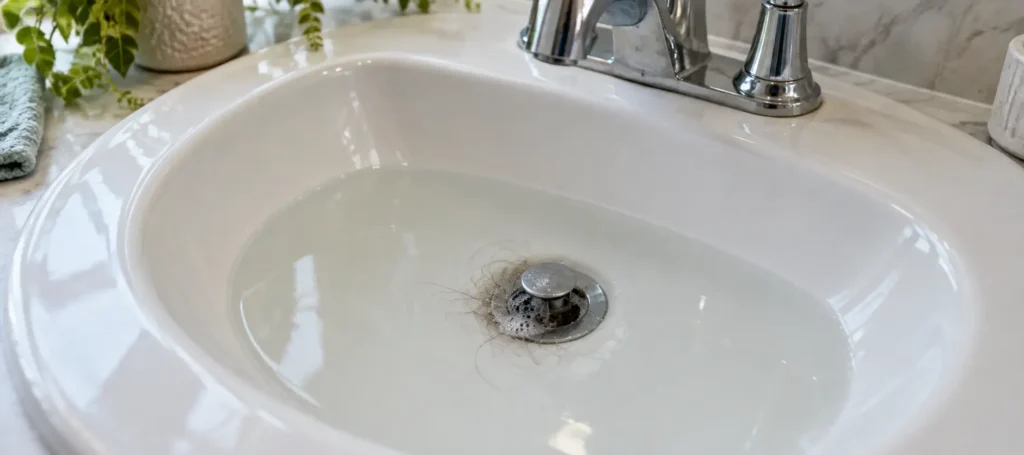
- Hair
- Soap buildup
- Grease
- Food debris
- Foreign objects
- Heavy accumulation inside piping
- Roots entering underground sewer piping
- Aging pipe interiors
- Damaged or shifted piping
- Improper drainage conditions
Two blockages in approximately the same location can require completely different solutions depending on what caused them.
Has It Happened Before?
A first-time clog and a sewer line that backs up every few months shouldn’t automatically be approached the same way. Recurring problems give us valuable information.
If the same drain keeps requiring service, eventually the question needs to change from “How do we clear this again?” to “Why does this keep happening?” That question can save homeowners money over the long term.
Is It One Clogged Drain or the Main Sewer Line?
Understanding this distinction can help homeowners recognize when a seemingly simple clog may deserve more attention.
Signs of a Localized Drain Problem
Suppose your bathroom sink is draining slowly. But:
- Your toilet flushes normally.
- Your shower drains normally.
- Your kitchen sink works normally.
- Nothing else in the house has changed.
That may point toward a localized problem affecting that fixture or branch drain.
Now imagine something different. You flush a toilet. The shower gurgles. Another toilet doesn’t flush correctly. Water begins appearing in a bathtub. Now we’re looking at a very different set of symptoms.
Signs the Main Sewer Line May Be Involved
Pay particular attention when:
- Several drains slow down simultaneously.
- Multiple toilets experience problems.
- Flushing one toilet affects another fixture.
- Water backs into tubs or showers.
- Drains gurgle when other fixtures are used.
- Sewage odors appear.
- The problem repeatedly returns after previous drain cleaning.
Those symptoms can indicate that the restriction is farther downstream. And when that’s the case, repeatedly treating individual fixtures may never solve the actual problem.
A Northeast Florida Example
Imagine a family in St. Johns County wakes up and discovers the master bathroom toilet isn’t flushing properly. At first, it looks like a toilet problem. Then someone uses another bathroom. That toilet begins gurgling. A few minutes later, water appears in the shower.
The first toilet wasn’t necessarily the problem. It may simply have been the first place the larger drainage problem became noticeable. That’s why we pay attention to what the entire plumbing system is doing.
Clearing a Drain and Diagnosing a Drain Are Not Always the Same Thing
This may be the most important concept in this entire guide. Getting water flowing again is important. But water flowing again doesn’t necessarily tell us why the blockage happened.
Imagine a sewer line has a significant obstruction. A drain-cleaning cable creates an opening. Water begins flowing again. Problem solved? Possibly.
But what if roots entered the piping? What if significant grease or buildup remains along the pipe walls? What if the pipe has deteriorated? What if the same sewer line has already been cleared several times? The drain can be open today while the condition responsible for the blockage remains.
That’s why the history of the problem matters.
KBP Insight
One of the biggest misconceptions we encounter is that once water begins flowing, everything inside the drainage system must be back to normal. Sometimes that’s exactly what happened. Other times, restoring flow only addressed the immediate obstruction.
When a stoppage keeps returning, your plumbing system is telling you something. Our job is to listen to it.
Drain Snaking, Sewer Cameras, Locating, and Hydro Jetting: What’s the Difference?
Homeowners sometimes hear these terms used interchangeably. They’re not the same thing. Each tool has a different purpose.
Mechanical Drain Cleaning (Snaking)
Mechanical drain-cleaning equipment uses a cable and appropriate attachments to work through many types of obstructions. For straightforward stoppages, this may be exactly what’s needed. But there’s an important distinction between opening an obstruction and cleaning accumulated material from the inside of a pipe.
Those aren’t always identical objectives.
Sewer Camera Inspection
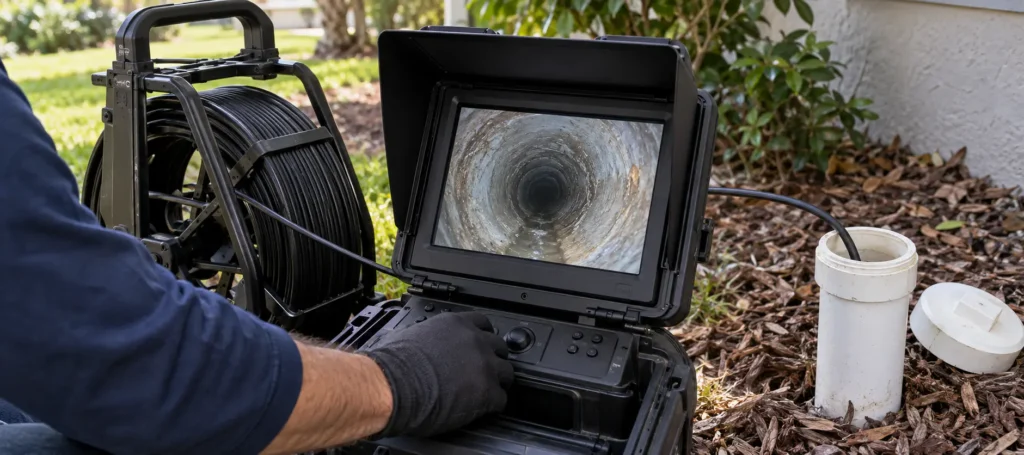
A professional sewer camera allows a plumber to visually inspect accessible portions of drain and sewer piping. Instead of guessing about what’s happening inside the pipe, the camera can provide additional information. Camera inspections can be particularly useful when dealing with:
- Recurring stoppages
- Suspected root intrusion
- Unknown sewer conditions
- Older piping
- Suspected damaged piping
- Problems that return after previous drain cleaning
A camera isn’t necessary for every clogged sink. The symptoms and history should justify using it.
Pipe Locating
Sometimes seeing the problem isn’t enough. We also need to determine where it is. Locating equipment can help identify the physical location of accessible underground piping or an area identified during a camera inspection. This becomes especially valuable if a repair is being considered.
Before anyone starts digging, knowing where the problem actually exists matters.
Hydro Jetting
Hydro jetting uses specialized equipment and high-pressure water to clean certain types of buildup from suitable drain and sewer piping. It can be especially useful when dealing with conditions such as significant grease or accumulated material along pipe walls.
But hydro jetting isn’t automatically better than mechanical drain cleaning. And it isn’t appropriate for every piping system. The condition of the pipe matters. The cause of the problem matters. The objective matters. The goal isn’t to use the biggest machine available.
The goal is to use the right method for the plumbing system in front of us.
Why Does My Drain Keep Clogging?
If you’ve had the same drain cleared multiple times, this is the question worth asking. Recurring stoppages can have several causes.
Grease and Buildup
Kitchen drainage systems can gradually accumulate grease, oils, soap residue, food material, and other debris. Over time, material can build up along the interior walls of the piping. The available opening becomes smaller. Additional debris catches more easily.
Eventually, the drain slows or stops. Clearing the immediate blockage may restore flow, but heavy accumulation may require a different long-term approach.
Hair and Soap
Bathroom drains frequently collect hair, soap residue, shaving products, and other materials. These can combine inside the drain and create surprisingly stubborn obstructions.
Roots
Roots can sometimes enter compromised underground sewer piping. And here’s something homeowners should understand:
Roots inside a sewer line are information. The important question isn’t simply how to remove them. It’s how they got there. Root intrusion may indicate an opening or compromised area in underground piping that deserves further evaluation.
Aging or Damaged Piping
Older piping can develop rough interior surfaces, deterioration, scale, corrosion, shifting, or other conditions that make recurring stoppages more likely. In those situations, repeatedly clearing the blockage may restore service without correcting the condition that allows the blockage to return.
Foreign Objects
Sometimes the answer is much simpler. Something went down the drain that never belonged there.
- Children’s toys.
- Personal-care products.
- Excessive paper products.
- Food debris.
- Objects accidentally dropped into fixtures.
Drainage systems are designed to carry specific materials. They aren’t garbage disposals for the entire house.
Why Is One Drain Cleaning Company So Much Cheaper?
Homeowners often see advertisements offering extremely inexpensive drain cleaning. There’s nothing wrong with looking for a good value. But make sure you’re comparing the same service. Before choosing based on an advertised price, consider asking:
- What type of drain does the offer cover?
- Is there a service-call charge?
- Is there a limit on how far the technician will cable?
- What happens if the blockage cannot be cleared?
- Is diagnostic work included?
- Does the advertised price apply to a main sewer line?
- Are there additional equipment charges?
- What happens if the technician discovers a larger problem?
- Will I approve additional work before it’s performed?
A low advertised price isn’t automatically bad. A higher estimate isn’t automatically better. The question is:
What am I actually receiving for the price?
KBP Philosophy
At Kingdom Based Plumbing, we believe homeowners should understand what they’re paying for before work begins. If straightforward drain cleaning is all that’s necessary, that’s what should be recommended. If the symptoms indicate something more complicated, we should explain why additional diagnostic work may make sense.
And if something changes after work begins, we’d rather explain what we found than surprise someone afterward. Price matters. Understanding the scope matters just as much.
Do You Need a Sewer Camera Every Time a Drain Clogs?
No. And we think that’s important for homeowners to understand. A slow bathroom sink doesn’t automatically need a sewer camera. A toilet stoppage doesn’t automatically mean the sewer line is damaged. And a one-time clog doesn’t need to become a major diagnostic project simply because more technology is available.
The equipment should fit the problem. A camera becomes much more valuable when:
- The same blockage keeps returning.
- Several fixtures are affected.
- Previous drain cleaning hasn’t identified the cause.
- Root intrusion is suspected.
- The condition of the sewer line is unknown.
- Damaged piping is suspected.
- Repair or excavation is being considered.
The purpose of the camera isn’t to create more work. It’s to replace assumptions with information.
What We Want to Know During a Camera Inspection
We’re not simply looking for “a clog.” We’re trying to better understand the piping system. Depending on the situation and visibility available, we’re looking for conditions such as:
- Significant buildup
- Root intrusion
- Pipe deterioration
- Damaged areas
- Restrictions
- Foreign objects
- Changes in the pipe’s condition
The information gathered can help determine what should happen next. Sometimes the answer is:
Nothing else. The drain is clear.
Sometimes additional cleaning makes sense. Sometimes maintenance should be considered. And sometimes the camera identifies a condition that deserves a conversation about repair. The important part is allowing the evidence to guide the recommendation.
When Does Hydro Jetting Make Sense?
Hydro jetting has become one of the most talked-about drain-cleaning services. And like many plumbing technologies, it’s sometimes marketed as the answer to everything. It isn’t. Hydro jetting can be extremely effective when used for the right problem and appropriate piping.
It may be particularly useful when heavy grease, sludge, or other accumulated material needs to be cleaned from pipe walls rather than simply opened through. Commercial kitchens are an obvious example. Residential drainage systems can sometimes benefit as well.
But before hydro jetting, the plumbing system should be appropriately evaluated. Older or compromised piping may require additional consideration before high-pressure cleaning is recommended. That’s why we don’t believe homeowners should choose between “snaking” and “jetting” based on which one sounds more powerful.
The better question is:
Which method makes sense for the condition we’re trying to correct?
Residential vs. Commercial Drain Cleaning
Residential and commercial drainage systems can experience very different demands. A family kitchen may see several meals a day. A commercial kitchen may process hundreds. A residential bathroom serves a household. A commercial restroom may serve hundreds of people.
That additional usage changes the way drainage systems need to be maintained. Restaurants, theaters, commercial kitchens, offices, retail properties, and other facilities may experience:
- Significant grease accumulation
- Larger drainage systems
- Longer piping runs
- Heavy daily usage
- Multiple affected fixtures
- More frequent stoppages
- Greater consequences when drainage fails
For businesses, a clogged drain isn’t simply inconvenient. It can interrupt operations. That’s why preventative drain maintenance can become particularly valuable in commercial settings. Instead of waiting for a complete stoppage, some businesses benefit from establishing a cleaning schedule based on the conditions found in their system.
The objective is simple:
Solve problems before customers or employees ever know they exist.
What Should You Do When a Drain Backs Up?
First, pay attention to the rest of the home. Ask yourself:
Is this one fixture? Or are several fixtures behaving differently?
That information can help a plumber understand what’s happening before arriving. If multiple fixtures are backing up, avoid continuing to send unnecessary water into the drainage system. If sewage or wastewater is actively overflowing, protecting the home becomes the priority.
And if wastewater has affected flooring, drywall, cabinetry, ceilings, or other building materials, controlling the plumbing source is only the first step. Those materials may also need to be evaluated for moisture and contamination after the plumbing problem has been stopped.
Should You Use Chemical Drain Cleaner?
It’s tempting. The drain is slow. There’s a bottle on the shelf. Pour it in and hope for the best. Sometimes homeowners try several products before calling a plumber. The problem is that chemical drain cleaners aren’t appropriate for every blockage or every piping system.
They also don’t tell you why a recurring problem exists. If you have already used a chemical drain product, tell the plumber before they begin working. That’s important information for the technician servicing the drain.
How to Avoid Paying for the Same Clog Again and Again
If a blockage happens once, clear it and pay attention. If it happens again, remember it. If it keeps happening, start asking why. Keep track of:
- Which fixtures are affected.
- How frequently the problem occurs.
- Whether previous drain cleaning temporarily solved it.
- Whether other fixtures gurgle or drain slowly.
- Whether the problem appears during heavy water usage.
- What previous plumbers found.
That history can be extremely valuable. The goal shouldn’t be paying someone to clear the same obstruction forever. The goal should be understanding why it continues to happen.
Frequently Asked Questions About Drain Cleaning in Jacksonville
How much does drain cleaning cost in Jacksonville, Florida?
There isn’t one price that accurately represents every drain-cleaning service. Cost depends on which drain is affected, the location and severity of the blockage, accessibility, the cause of the problem, the equipment required, and whether additional diagnostic work is appropriate.
A localized fixture stoppage and a recurring main sewer blockage are different plumbing problems and should be evaluated accordingly.
Can a plumber give me an exact drain-cleaning price over the phone?
Sometimes the symptoms allow a plumbing company to explain likely service options, but accurately determining the full scope may require evaluating the system and understanding where the blockage is located.
How do I know if my main sewer line is clogged?
Multiple slow drains, toilets affecting other fixtures, water backing into tubs or showers, gurgling drains, sewage odors, and problems affecting several fixtures simultaneously can indicate a restriction farther downstream.
Does snaking completely clean a drainpipe?
Not necessarily. Mechanical drain cleaning can be extremely effective for opening many obstructions. However, opening a blockage and removing accumulated material from the entire interior surface of a pipe aren’t always the same objective.
When should I consider a sewer camera inspection?
Camera inspection can be particularly useful for recurring stoppages, suspected roots, unknown sewer conditions, older piping, suspected damage, or when a larger repair is being considered.
Is hydro jetting better than snaking?
Neither method is universally better. They serve different purposes. The appropriate method depends on the blockage, condition of the piping, and what the service is intended to accomplish.
Can roots clog a sewer line?
Yes. Roots can enter compromised underground sewer piping and contribute to repeated blockages. Their presence may also provide important information about the condition of the sewer line.
Why does my kitchen sink keep clogging?
Recurring kitchen drain problems can involve grease, food debris, soap residue, accumulated material inside the pipe, or other drainage conditions. Repeated problems deserve additional investigation.
Why does my shower gurgle when I flush the toilet?
When using one plumbing fixture affects another, the drainage system may have a restriction farther downstream rather than a problem isolated to one fixture.
Do recurring clogs mean I need a new sewer line?
No. Recurring clogs mean the cause deserves investigation. Sewer replacement should be based on confirmed conditions and appropriate diagnosis—not simply the fact that a drain has clogged more than once.
How Do You Avoid Overpaying for Drain Cleaning?
Don’t simply ask, “What’s your cheapest price?”
Ask:
- What do you believe is clogged?
- Where is the blockage likely located?
- What service are you recommending?
- What does that service include?
- What happens if the problem returns?
- Does the history suggest that additional diagnosis is appropriate?
A professional plumber should be able to answer those questions in language you understand. You shouldn’t need to be a plumber to understand your own plumbing estimate.
A Clogged Drain Shouldn’t Be a Guessing Game
Sometimes a clogged drain is exactly what it appears to be. A blockage. Clear it properly and move on. Other times, that clogged drain is the first visible symptom of something larger developing inside the drainage system. The difference matters.
At Kingdom Based Plumbing, our goal isn’t simply to get water moving long enough to leave your property. We want to understand what happened, restore proper drainage, and tell you when the evidence suggests something else deserves attention.
If you’re dealing with:
- A slow drain
- A completely clogged drain
- A backed-up toilet
- Multiple clogged fixtures
- A recurring sewer stoppage
- Gurgling drains
- Sewage odors
- A suspected main sewer problem
our team can evaluate the situation, explain what we find, and help you understand the available options.
Kingdom Based Plumbing proudly serves homeowners and businesses throughout Jacksonville, St. Johns County, St. Augustine, Ponte Vedra, Nocatee, Fruit Cove, Julington Creek, Fleming Island, World Golf Village, and surrounding Northeast Florida communities.