

Sewer Root Intrusion: Warning Signs, Removal, and Repair Options
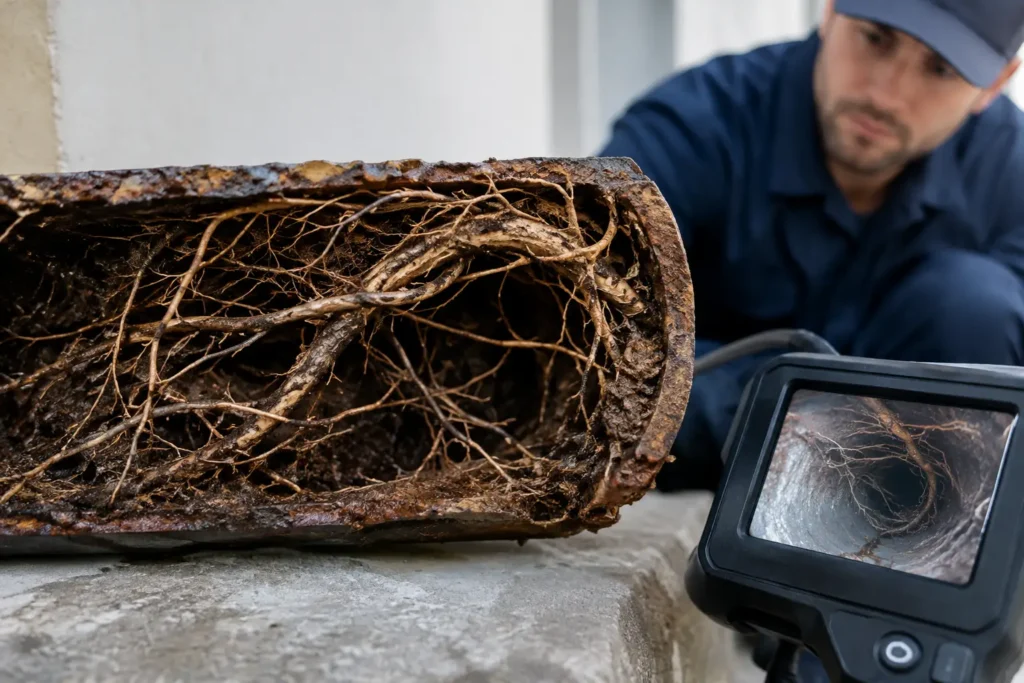
Sewer root intrusion occurs when tree or shrub roots enter an underground sewer pipe through an opening, damaged joint, crack, or other defect.
Once inside, roots can grow and collect toilet paper, grease, and wastewater debris, eventually creating a partial or complete blockage.
For homeowners in Jacksonville, St. Johns County, Ponte Vedra, St. Augustine, Nocatee, and surrounding Northeast Florida communities, recurring sewer backups can be especially frustrating when drain cleaning temporarily restores flow but the same problem returns.
The important question is not simply how to remove the roots.
It is why the roots entered the sewer line and whether the damaged pipe needs repair or replacement.
A professional sewer camera inspection can help identify the root entry point, evaluate the pipe’s condition, and determine an appropriate next step.
What Is Sewer Root Intrusion?
Sewer root intrusion happens when roots enter a sewer or drain line through an existing opening.
Roots naturally grow toward areas where moisture, oxygen, and nutrients are available.
A leaking sewer joint or damaged pipe can create favorable conditions for root growth.
How Do Tree Roots Get Into Sewer Pipes?
Roots may enter through:
- Cracked sewer piping
- Separated pipe joints
- Damaged fittings
- Deteriorated seals
- Offset connections
- Collapsed or broken pipe sections
Once roots enter the line, they may continue growing and spread through the available opening.
Over time, they can trap waste and reduce the pipe’s drainage capacity.
Can Tree Roots Break Through a Sewer Pipe?
Roots commonly exploit existing defects or weaknesses rather than penetrating an intact, properly installed pipe.
However, root growth can worsen an existing opening and contribute to further damage.
The presence of a tree near a sewer line does not automatically prove root intrusion.
A sewer inspection is needed to confirm the cause.
What Causes Sewer Root Intrusion?
Several factors can increase the likelihood of roots entering underground sewer piping.
1. Aging Sewer Pipe Materials
Older piping materials may develop cracks, corrosion, deteriorated joints, or other defects over time.
Examples include:
- Clay sewer pipe
- Cast-iron sewer pipe
- Orangeburg pipe
- Older plastic piping systems
Newer PVC piping can also experience root intrusion when joints or fittings are damaged.
2. Cracked or Separated Sewer Joints
Pipe movement, settling, installation defects, or deterioration can create openings at connections.
Roots may enter through those openings.
3. Soil Movement
Shifting soil can affect underground pipe alignment and connections.
Depending on the conditions, movement may contribute to offsets, cracks, or separations.
4. Mature Trees and Landscaping
Trees and shrubs with established root systems may extend roots toward areas where water is available.
The location and extent of root growth depend on the vegetation, soil, moisture, and underground conditions.
5. Existing Sewer Leaks
A sewer line leaking into surrounding soil may provide a favorable environment for nearby roots.
Correcting the damaged pipe is important when root intrusion is associated with a confirmed defect.
7 Warning Signs of Tree Roots in a Sewer Line
Root intrusion can develop gradually.
A sewer may continue draining while roots collect debris, then begin backing up as the obstruction becomes more severe.
1. Multiple Slow Drains
When several fixtures drain slowly, the problem may involve a shared drain or main sewer line.
2. Toilets Gurgling or Bubbling
A toilet that gurgles when another fixture drains may indicate restricted drainage or a venting-related issue.
Root intrusion is one possible cause, but it is not the only explanation.
3. Recurring Sewer Backups
If the same main line repeatedly backs up after cleaning, further inspection is appropriate.
4. Wastewater Backing Into a Shower or Tub
Wastewater may appear at lower fixtures when a shared drain or main sewer line is obstructed.
5. Sewer Odors Around the Property
Persistent sewage odors may indicate a drainage or sewer defect.
Odors alone do not confirm roots.
6. Wet or Unusually Green Areas in the Yard
A damaged sewer line may release wastewater into surrounding soil.
However, irrigation leaks, groundwater, and drainage conditions can produce similar signs.
7. Drain Cleaning Provides Only Temporary Relief
When a line drains normally after cleaning but repeatedly clogs again, an underlying structural defect or recurring obstruction may be present.
A camera inspection can help determine whether roots are involved.
How Do Plumbers Diagnose Sewer Root Intrusion?
Professional diagnosis begins with the symptoms and the property’s plumbing layout.
A plumber may evaluate:
- Which fixtures are affected
- When backups occur
- Whether a sewer cleanout is accessible
- Previous drain cleaning history
- Approximate sewer line age
- Existing pipe materials
- Prior sewer repairs
- The route of the underground line
Sewer Camera Inspection
A sewer camera allows the plumber to examine accessible portions of the pipe’s interior.
It may reveal:
- Fine root strands
- Dense root masses
- Cracked pipe sections
- Separated or offset joints
- Corrosion and deterioration
- Standing water
- Collapsed piping
- Other blockages
A heavily obstructed line may need cleaning before the camera can adequately inspect the affected area.
Why Sewer Line Locating Matters
When a defect is identified, locating equipment may help determine its approximate underground position and depth.
This information can help plan a targeted repair and reduce unnecessary excavation.
Does a Sewer Camera Show Every Problem?
Not always.
Visibility can be limited by standing water, debris, severe blockages, or inaccessible sections.
Camera findings should be interpreted together with the symptoms and other available diagnostic information.
Sewer Root Removal: What Are the Options?
The appropriate method depends on the extent of root growth, pipe condition, accessibility, and equipment requirements.
1. Mechanical Root Cutting
A professional drain machine equipped with an appropriate cutting attachment may remove roots from inside the sewer line.
This can restore flow when roots are restricting drainage.
However, mechanical cutting does not repair the crack or joint that allowed roots to enter.
2. Hydro Jetting
Hydro jetting uses high-pressure water to clean certain drain and sewer lines.
Depending on the equipment, nozzle selection, and pipe condition, it may help remove debris and some root-related obstructions.
Hydro jetting is not appropriate for every damaged or deteriorated sewer pipe.
The line should be evaluated to determine whether the cleaning method is suitable.
3. Chemical Root Treatments
Certain products are marketed for root control in sewer lines.
However, chemical treatment does not repair broken piping, separated joints, or structural defects.
Product suitability, labeling, environmental considerations, and local requirements must be considered.
Chemical treatment should not be assumed to provide a permanent solution.
4. Excavation and Pipe Repair
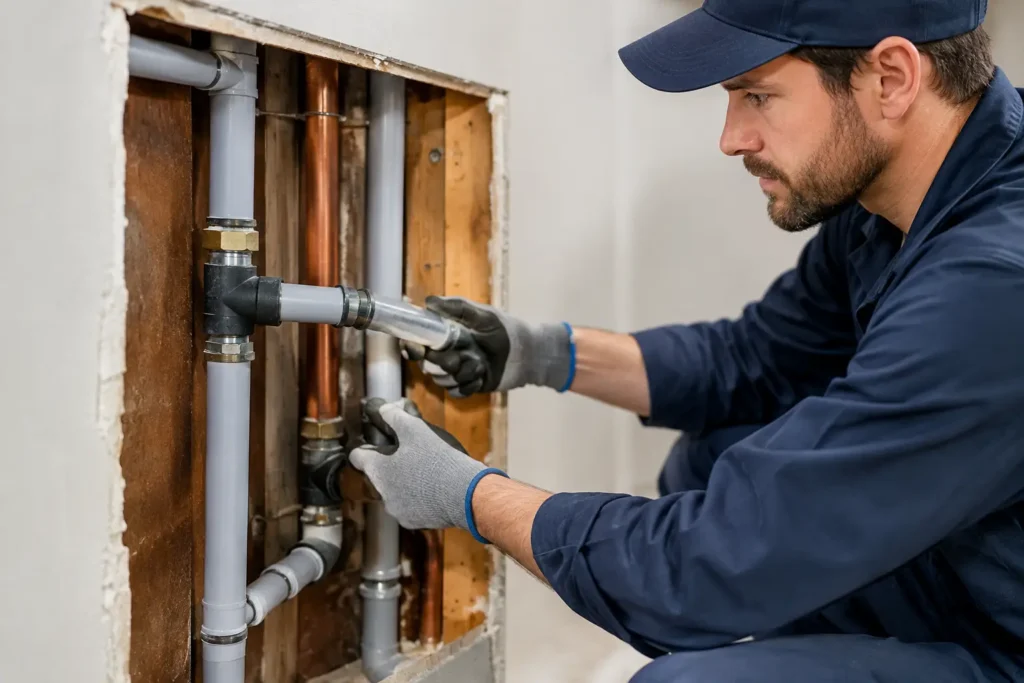
When roots enter through a damaged section, excavation may allow that portion of the sewer line to be replaced.
This can address the entry point rather than repeatedly removing the roots.
Which Root Removal Method Is Best?
The method should follow the diagnosis.
A structurally sound line with limited intrusion may be managed differently from a collapsed or severely deteriorated sewer.
Can Tree Roots Be Removed Permanently From a Sewer Line?
Roots can be removed from inside the pipe, but removal alone does not necessarily prevent them from returning.
If the original opening remains, new root growth may enter the same location.
Why Roots Return After Drain Cleaning
Mechanical cleaning removes an obstruction but generally leaves the pipe defect unchanged.
The timing of recurrence depends on factors such as:
- Pipe condition
- Root growth
- Location of the opening
- Nearby vegetation
- Extent of cleaning
- Other drainage conditions
What Provides a More Permanent Solution?
Repairing or replacing the damaged pipe section can eliminate the identified entry point.
However, a spot repair does not correct other defects that may exist elsewhere in the sewer line.
That is why evaluating the surrounding pipe is important before deciding on a limited repair.
Sewer Root Intrusion Repair vs. Replacement
Not every root problem requires a complete sewer replacement.
The appropriate solution depends on how much of the line is affected and whether the remaining pipe is structurally sound.
| Sewer condition | Possible approach | Important limitation | |—|—|—| | Limited roots in otherwise serviceable piping | Root cutting and monitoring | Roots may return through the opening | | One damaged joint or short pipe section | Targeted sewer repair | Other existing defects may remain | | Roots entering at multiple defective joints | Broader repair or replacement | Limited repairs may not resolve all entry points | | Severe corrosion or widespread cracking | Sewer replacement evaluation | Cleaning cannot restore pipe integrity | | Collapsed pipe | Replacement of affected section | Cleaning alone cannot correct collapse | | Pipe belly with recurring buildup | Evaluate regrading or replacement | Cleaning does not correct improper slope |
When Is a Spot Sewer Repair Appropriate?
A targeted repair may make sense when:
- The defect is limited to one location.
- The remaining line is in acceptable condition.
- Proper slope can be maintained.
- The damaged section is accessible.
- Suitable connections can be installed.
When Is Sewer Replacement the Better Choice?
Replacement may be appropriate when:
- Root intrusion affects multiple joints.
- Pipe deterioration is widespread.
- Backups continue despite repeated maintenance.
- Several structural defects are present.
- The pipe has collapsed.
- Improper slope contributes to repeated blockages.
The goal is to recommend work based on documented pipe condition rather than assuming every root problem requires a complete replacement.
How Much Does Sewer Root Intrusion Repair Cost?
The cost depends on the type of work required.
Important factors include:
- Severity of root intrusion
- Sewer pipe material
- Pipe depth
- Location of the damaged section
- Cleanout accessibility
- Equipment needed
- Whether camera inspection is required
- Excavation requirements
- Underground utilities
- Driveways, patios, or landscaping above the line
- Permit and inspection requirements
- Extent of pipe replacement
Root Cutting vs. Sewer Repair Costs
Mechanical cleaning is generally a different scope of work from excavating and replacing damaged piping.
A lower initial cleaning cost may be appropriate when the line is serviceable and maintenance is the chosen approach.
However, repeated cleanings can become costly and disruptive when a structural defect remains unresolved.
Does Sewer Repair Require Digging?
Sometimes.
A damaged section may require excavation to restore the pipe’s integrity and proper slope.
Other repair methods may be evaluated depending on pipe condition, access, and available equipment.
No repair method is suitable for every sewer line.
How to Prevent Tree Roots From Entering Sewer Lines
Tree roots cannot be stopped from growing naturally, but property owners can take steps to reduce the likelihood of serious sewer problems.
Know Where Your Sewer Line Runs
Before planting large trees or making major landscaping changes, identify the approximate sewer route.
Avoid Planting Directly Over Sewer Piping
Tree placement should consider mature root growth and the location of underground utilities.
Schedule Inspections for Known Root Problems
Properties with previous root intrusion may benefit from periodic professional evaluation.
Keep Grease and Wipes Out of Drains
Grease, wipes, and other debris can become trapped in existing root masses and accelerate blockages.
Repair Known Sewer Defects
Cleaning roots without correcting a damaged joint or pipe may allow the problem to return.
Keep Records of Previous Backups
Documenting when blockages occur and what was found can help identify patterns.
Sewer Root Intrusion in Northeast Florida
Underground sewer conditions vary throughout Jacksonville, St. Johns County, Ponte Vedra, St. Augustine, and surrounding communities.
Jacksonville
Established neighborhoods with mature trees and older sewer piping may warrant evaluation when backups recur.
St. Augustine
Older properties may contain aging sewer materials or previous repairs that affect the condition of the line.
Ponte Vedra and Fruit Cove
Mature landscaping and underground sewer routes can make accurate locating important when a damaged section needs repair.
St. Johns County and Nocatee
Newer sewer piping can still develop problems from damaged connections, installation defects, or ground movement.
The age of the neighborhood does not establish the cause of a sewer blockage.
A camera inspection provides more useful information than assumptions about the surrounding trees.
What Should You Do if Sewage Backs Up Into Your Home?
An active sewage backup requires prompt attention.
1. Stop Using Water
Avoid running showers, washing machines, dishwashers, or other fixtures that discharge into the affected drainage system.
2. Keep People and Pets Away
Wastewater may contain harmful microorganisms and other contaminants.
Avoid contact with affected areas.
3. Avoid Chemical Drain Cleaners
Chemical products are unlikely to correct a dense root obstruction and may create additional hazards for anyone servicing the line.
4. Do Not Open Sewer Piping Indoors
Opening a backed-up sewer line may release wastewater into the building.
5. Arrange Professional Drain and Sewer Service
A plumber can evaluate the blockage and determine the appropriate next step.
For urgent concerns, visit our emergency plumbing services page.
If wastewater has damaged building materials, professional water-damage or sewage restoration may also be appropriate.
Frequently Asked Questions About Sewer Root Intrusion
What is sewer root intrusion?
Sewer root intrusion occurs when roots enter underground sewer piping through cracks, damaged joints, or other openings.
Can tree roots clog a sewer line?
Yes. Roots can grow inside the pipe and collect debris until drainage becomes restricted.
How do I know if roots are in my sewer line?
Recurring main-line backups, multiple slow drains, and gurgling fixtures may indicate an obstruction. A sewer camera inspection can help confirm whether roots are present.
Can roots grow through PVC sewer pipe?
Roots may enter PVC piping through damaged fittings, separated joints, or other defects.
Will drain cleaning remove tree roots?
Appropriate professional equipment can often cut or remove root obstructions, depending on the pipe condition.
Do roots grow back after sewer cleaning?
They can return when the original entry point remains open.
Can hydro jetting remove sewer roots?
Hydro jetting may be useful in certain circumstances, but its suitability depends on the obstruction, equipment, and pipe condition.
Will chemical root killer permanently fix my sewer line?
No. Chemical treatment does not repair cracks, separated joints, or damaged piping.
Do I need to replace my entire sewer line?
Not necessarily. A targeted repair may be appropriate when the defect is localized and the remaining pipe is sound.
Can a sewer camera locate root damage?
A camera may identify roots and visible pipe defects. Locating equipment can help determine the approximate underground position.
Can roots cause a sewer pipe to collapse?
Root intrusion may contribute to worsening existing defects. Collapse can also result from pipe deterioration, soil movement, or other structural problems.
How often should a root-prone sewer line be cleaned?
There is no universal schedule. Maintenance frequency depends on the pipe condition, previous blockages, and inspection findings.
Are sewer roots an emergency?
An active sewage backup or loss of usable drainage requires prompt attention. Limited root growth without a backup may allow time for planned evaluation.
Sewer Root Intrusion Repair in Jacksonville and St. Johns County
Recurring sewer backups deserve more than another temporary clearing.
Kingdom Based Plumbing Inc. helps homeowners, property managers, and businesses throughout Jacksonville, St. Johns County, Ponte Vedra, Fruit Cove, St. Augustine, Nocatee, and surrounding Northeast Florida communities diagnose drain and sewer problems.
Depending on the condition of the line, the appropriate next step may involve professional drain cleaning, sewer camera inspection, root removal, targeted pipe repair, or replacement.
Our approach is to identify the problem, explain the findings, and recommend work based on the condition of the plumbing system.
For more information, explore our drain cleaning services and drain problem solutions.
Call Kingdom Based Plumbing at 904-814-8541 to discuss recurring sewer backups or schedule a plumbing evaluation.
24/7 emergency plumbing service available, subject to technician availability.
Clean work. Proper diagnosis. No shortcuts.